2025-08-13 インペリアル・カレッジ・ロンドン
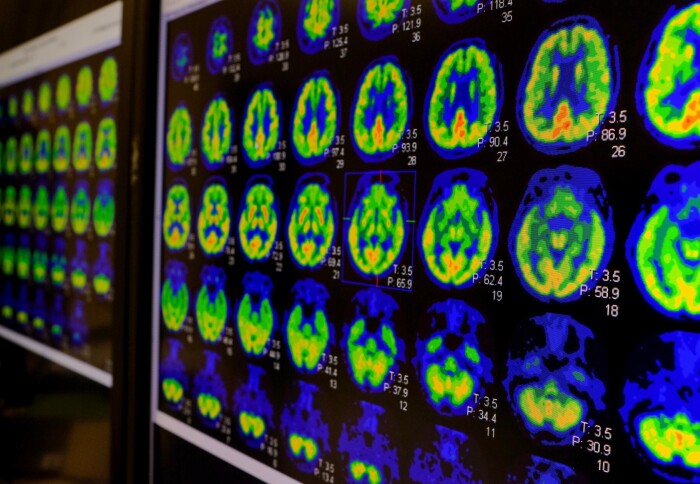
The findings of a new brain study could change the way doctors treat mood disorders involving psychosis in patients.
<関連情報>
- https://www.imperial.ac.uk/news/267275/new-brain-scan-study-could-change/
- https://jamanetwork.com/journals/jamapsychiatry/article-abstract/2837253
ドーパミンと気分障害における気分 18F-DOPA PET研究 Dopamine and Mood in Psychotic Disorders An 18F-DOPA PET Study
Sameer Jauhar, PhD; Robert A. McCutcheon, PhD; Matthew M. Nour, PhD;et al
JAMA Psychiatry Published: August 13, 2025
DOI:10.1001/jamapsychiatry.2025.1811
Key Points
Question Is dopamine synthesis capacity altered in the presence of mood symptoms in individuals with a psychotic disorder, and is there an association with positive psychotic symptoms across affective syndromes?
Findings In this cross-sectional study among individuals with psychosis, decreased striatal dopamine synthesis capacity was observed in depression episodes compared with mixed/mania syndromes, most notably in the limbic striatum. Across affective syndromes, an association was observed between positive psychotic symptoms and dopamine synthesis capacity, most pronounced in the associative striatum.
Meaning Dopamine function differed across psychotic disorders when different mood states were present, particularly in the limbic striatum, and, transdiagnostically, positive psychotic symptoms were associated with dopamine synthesis capacity in the associative striatum; these findings have relevance for understanding the etiology of psychosis and therapeutic agents for people with comorbid affective syndromes and psychotic disorders.
Abstract
Importance There is limited neurobiological or trial evidence guiding treatment of comorbid affective syndromes in psychotic disorders. Given the use of dopamine-blocking antipsychotics, understanding dopamine function across these mood states is warranted.
Objective To test for differences in dopamine synthesis capacity (Kicer) between affective syndromes across psychotic disorders and for association with psychotic symptom severity.
Design, Setting, and Participants In this cross-sectional study using fluorine F 18–labeled fluorodopa (18F-DOPA) positron emission tomography (PET), individuals with first-episode psychosis and comorbid affective syndromes, including a current major depressive episode (MDE) or mixed/mania syndromes, and matched controls were recruited from early intervention services in inner-city London, United Kingdom. Data were collected from March 2013 to February 2022 and analyzed from October 1, 2023, to January 1, 2025.
Exposure Striatal Kicer measured by 18F-DOPA PET.
Main Outcomes and Measures Striatal Kicer and scores on the Positive and Negative Syndrome Scale, Hamilton Depression Rating Scale, Montgomery-Åsberg Depression Rating Scale, and Young Mania Rating Scale were determined.
Results The study included a total of 76 individuals (38 with first-episode psychosis and comorbid affective syndromes [25 with MDE and 13 with mixed/mania syndromes] and 38 matched controls). The mean (SD) age was 27.2 (8.9) years overall, 30.7 (12.8) years among those with MDE, 23.7 (3.1) years among those with mixed/mania syndromes, and 26.0 (6.0) years among controls. Sex distribution did not differ (MDE, 13 [52%] male; mixed/mania syndromes, 8 [62%] male; controls, 25 [66%] male; P = .56). Kicer (controlling for age and sex) was significant across groups in whole striatum (F2,71 = 4.04; P = .02; R2 = 0.13). People with psychosis and MDE had lower Kicer compared with those with psychosis and mixed/mania syndromes (β [SE], 0.014 [0.001]; P = .02), with the largest difference observed in the limbic striatum (Cohen d = 1.57; P < .001). In the overall psychosis sample, higher striatal Kicer was associated with greater positive psychotic symptoms (R2 = 0.13; β [SE], 0.000066 [0.000030]; P = .03), notably in the associative striatum (R2 = 0.15; P = .02). No significant association was found in the limbic striatum.
Conclusions and Relevance Kicer was lower in psychosis and comorbid MDE than mixed/mania syndromes, and transdiagnostically, greater positive psychotic symptoms were associated with higher Kicer in the associative, but not limbic, striatum. This subregion dopamine dysregulation has relevance for dopamine-modulating therapeutic agents and drug discovery.