2025-10-16 東京大学,国立環境研究所,長崎大学
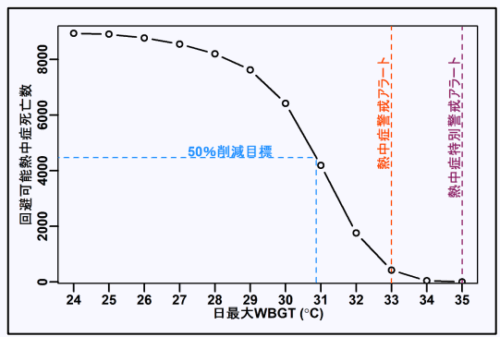
回避可能熱中症死亡数の 50%削減を達成する発表基準のイメージ
<関連情報>
日本における熱中症死亡率を軽減するための暑熱警報システムの地域別閾値の決定 Determining Location-Specific Thresholds for Heat Warning Systems to Mitigate Heatstroke Mortality in Japan
Vera Ling Hui Phung,Yasushi Honda,Kazutaka Oka,Lina Madaniyazi,Chris Fook Sheng Ng,Aurelio Tobias,and Masahiro Hashizume
Environment & Health Published: October 15, 2025
DOI:https://doi.org/10.1021/envhealth.5c00113
Abstract
The current nationwide wet bulb globe temperature (WBGT) threshold (33 °C) of Japan’s heat warning system (HWS) does not adequately account for regional variations in heat sensitivity and heatstroke mortality. In this study, we aimed to determine the critical WBGT threshold for effectively mitigating preventable heatstroke mortality across Japan. To this end, daily heatstroke mortality data (ICD-10: X30; 2010–2019) for all 47 prefectures of Japan were analyzed using a time-stratified case-crossover design based on a conditional quasi-Poisson regression combined with a distributed lag nonlinear model. Assuming that heatstroke mortality is preventable via interventions when prompted by Japan’s HWS, the WBGT threshold required to reduce 50% of preventable heatstroke mortalities (“target50”) was estimated; subgroup analyses by age, sex, and summer phase were also conducted. According to the results, 9702 heatstroke mortalities were recorded during the study period, with more cases observed in late summer and among older individuals. Further, the current HWS threshold (WBGTmax 33 °C) only accounted for 2%–3% of preventable heat-related deaths during summer months. However, a new critical threshold (WBGTmax approximately 31 °C), enabling the realization of target50 in most prefectures, was identified. Notably, northern regions required lower thresholds. Significant differences between summer phases (lower thresholds for early summer than those for late summer), as well as regional and demographic variations in heat sensitivity, were also observed. The application of the identified critical threshold, WBGTmax approximately 31 °C, aligned with the national target of reducing preventable heatstroke mortalities by half. Therefore, the findings of this study provide a scientific basis for revisiting Japan’s HWS and improving mitigation measures.