2026-02-23 リンショーピング大学

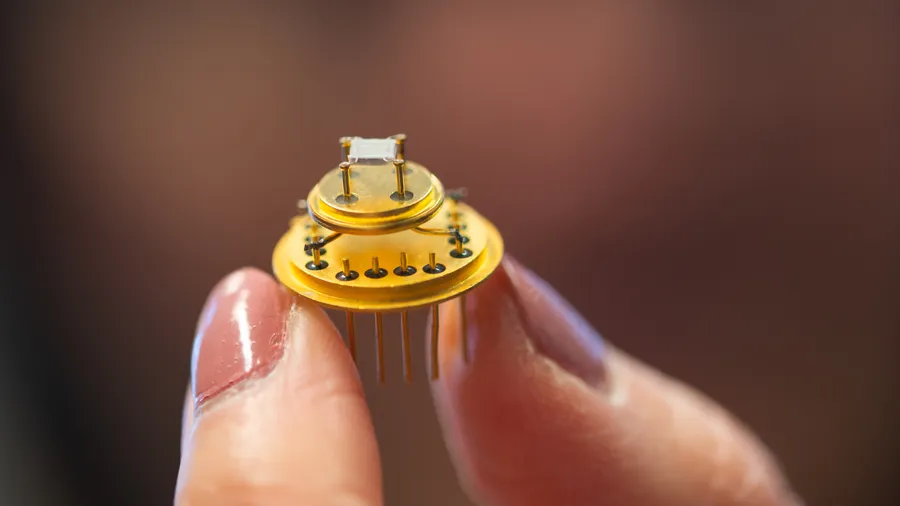
One of 32 sensors in the electronic nose.
<関連情報>
- https://liu.se/en/news-item/ai-boostad-elektronisk-nasa-hittar-aggstockscancer
- https://advanced.onlinelibrary.wiley.com/doi/10.1002/aisy.202500838
機械学習駆動型電子鼻を用いた血漿からのバイオマーカー非依存型卵巣癌検出 Biomarker-Agnostic Detection of Ovarian Cancer from Blood Plasma Using a Machine Learning-Driven Electronic Nose
Ivan Shtepliuk, Lingyin Meng, Christer Borgfeldt, Jens Eriksson, Donatella Puglisi
Advanced Intelligent Systems Published: 06 January 2026
DOI:https://doi.org/10.1002/aisy.202500838
Abstract
Early-stage ovarian cancer (OC) detection remains a major clinical challenge due to the limitations of existing diagnostic methods, which often lack sufficient sensitivity, specificity, or practicality for routine screening. Here, this study introduces a biomarker-agnostic, machine learning-driven diagnostic platform based on a 32-element metal-oxide semiconductor electronic nose, designed to analyze total volatile organic compound emissions from blood plasma. Custom feature extraction algorithms and a sensor utility assessment technique enable the development of a robust, interpretable, and explainable ensemble boosting model, achieving 97.0% sensitivity and 97.0% specificity in distinguishing OC patients from healthy controls. Patient-level classification using a majority-vote strategy results in 100% diagnostic accuracy. Furthermore, the model’s adaptability to related diagnostic tasks is demonstrated—accurate OC staging and differentiation between ovarian and endometrial cancers—using the same feature extraction and sensor evaluation framework. This approach offers a rapid, noninvasive, and affordable diagnostic solution with high throughput potential. Its strong performance and transferability highlight its promise as a versatile tool in oncological diagnostics, supporting earlier intervention and improved patient outcomes. By enhancing early detection and diagnosis capabilities, this intelligent electronic nose system could significantly advance global OC screening strategies and reduce disease burden.