
2026-03-04 基礎生物学研究所,京都大学
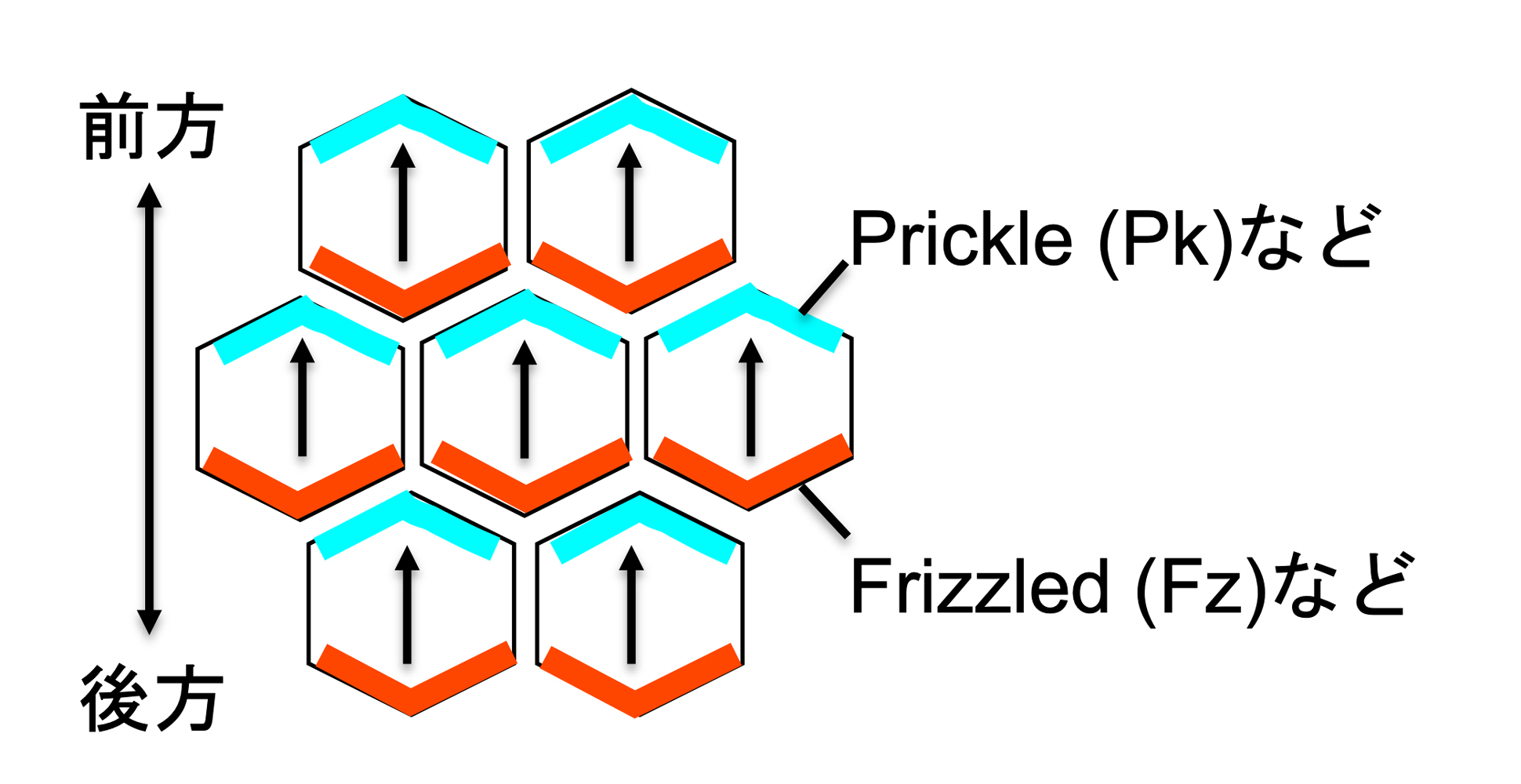
図1:PCP因子の局在による平面内細胞極性(PCP)の形成
<関連情報>
平面細胞極性はWnt11の極性蓄積によって出現する Planar cell polarity emerges through polarized accumulation of Wnt11
Yusuke Mii, Minako Suzuki, Hiroshi Koyama, Kei Nakayama, […] , and Shinji Takada
Science Advances Published:25 Feb 2026
Abstract
Planar cell polarity (PCP) is established by asymmetric localization of core PCP components in each cell. Because some Wnt proteins can induce PCP in vertebrates, it has been proposed that Wnt concentration gradients provide spatial cues for polarization. However, here, we present evidence that Wnt11 can regulate PCP in a gradient-independent manner. In the neural plate of Xenopus embryos, endogenous Wnt11 does not form an obvious gradient in the direction of PCP, but is polarized at cell boundaries together with core PCP components. Wnt11 polarization is dependent on core PCP components, while polarization of core PCP components can also be induced by Wnt11, indicating a mutual amplification loop between Wnt11 and core PCP components in PCP formation. Furthermore, Wnt11 and core PCP components compose an intercellular loop to coordinate the direction of polarity. Thus, we propose that local and reciprocal interactions between Wnt11 and core PCP components can generate PCP.

