2026-03-30 北海道大学
<関連情報>
- https://www.hokudai.ac.jp/news/2026/03/em.html
- https://www.hokudai.ac.jp/news/pdf/260330_pr.pdf
- https://www.nature.com/articles/s44323-026-00075-3
運動の時間帯が生物時計のペースを変える:マウスで明らかになったEM振動体間の相互協調調節 Timed exercise modulates inter-coupling strength between evening and morning oscillators in mice
Nagomi Miyagi,Noriko Matsuura & Yujiro Yamanaka
npj Biological Timing and Sleep Published:27 March 2026
DOI:https://doi.org/10.1038/s44323-026-00075-3
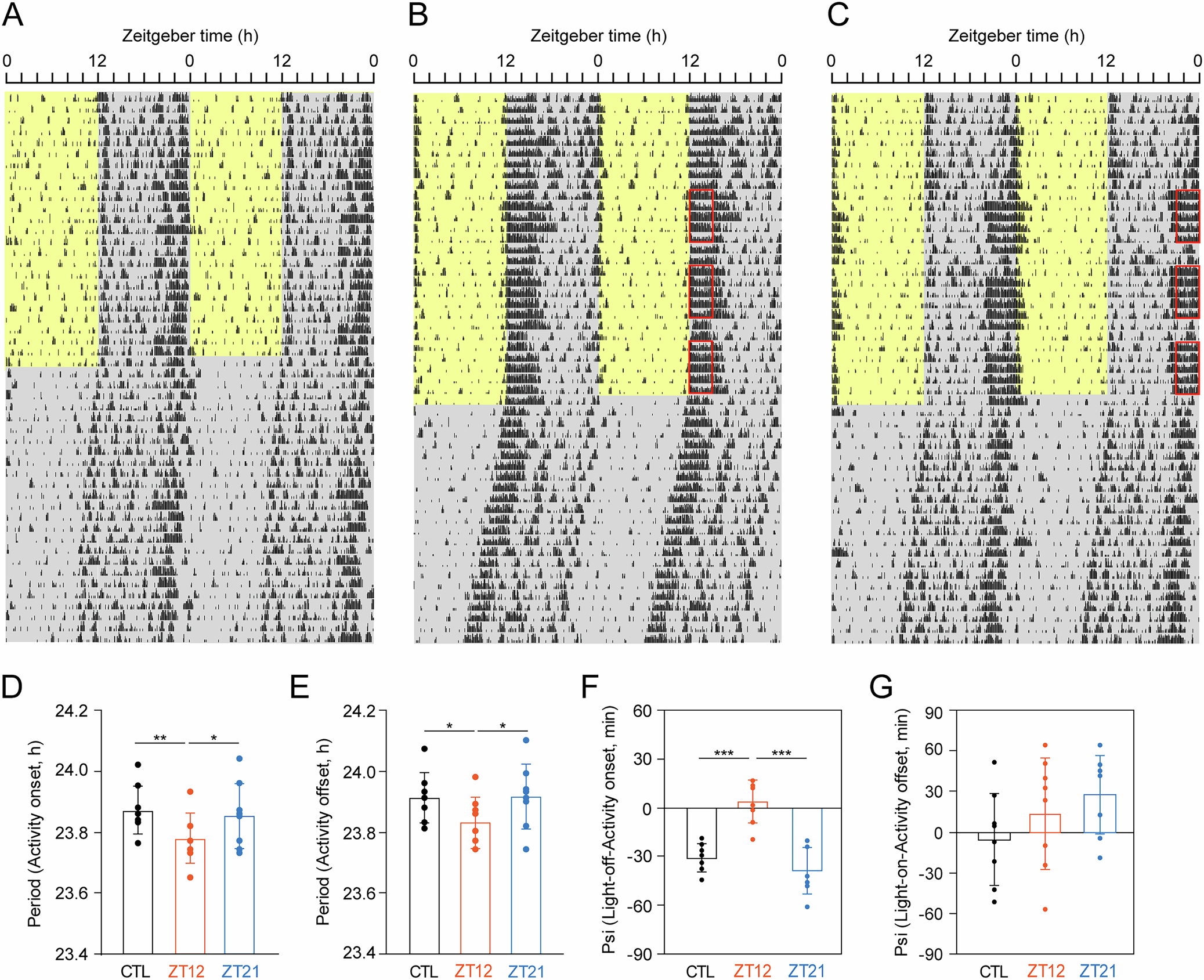
Abstract
The present study examined the effect of daily exposure to a novel cage equipped with a running wheel (NCRW) at two different times of day on the coupling strength between the evening (E) and morning (M) oscillators in nocturnal rodents. Adult male C57BL/6 mice (2–4 months old) were individually housed in cages without running wheels and maintained under a 12:12 h light-dark (LD) cycle with ad libitum access to food and water. Daily 3‑h exposure to the NCRW was conducted on five consecutive days per week for three weeks (19 days total) at either ZT12 (zeitgeber time: ZT, ZT12 = dark onset of the LD cycle) or ZT21. To assess effects on circadian behavioral rhythms, we performed three experiments: (1) measurement of the free-running period under constant darkness (DD), (2) assessment of the reentrainment rate to an 8-h phase advance of the LD cycle, and (3) analysis of phase shifts induced by a single 8-h advanced LD cycle. Exposure to NCRW at ZT12 significantly shortened the free-running period and facilitated reentrainment of activity onset to the advance of the LD cycle. In contrast, exposure to the NCRW at ZT21 lengthened the free-running period and significantly decelerated reentrainment of activity onset compared with the control condition. These results suggest that exposure to NCRW at ZT12 enhances the coupling strength of the E oscillator to the M oscillator, whereas exposure to NCRW at ZT21 enhances the coupling strength of the M oscillator to the E oscillator. These findings indicate that timed exercise under the LD cycle phase dependently modulates inter-oscillator coupling strengths and light-induced phase resetting, thereby influencing the regulation of activity onset and offset in nocturnal rodents.