2026-04-10 バッファロー大学(UB)
<関連情報>
- https://www.buffalo.edu/news/releases/2026/04/lee-inflammation-digital-socializing.html
- https://www.nature.com/articles/s41598-026-39242-8
炎症は、対面での交流よりもソーシャルメディアの使用頻度が高いことと関連しており、特に内向性や神経症傾向の高い人にその傾向が顕著である Inflammation is associated with greater social media use over face-to-face interaction, especially among individuals high in introversion or neuroticism
David S. Lee,Tao Jiang & Baldwin M. Way
Scientific Reports Published:17 February 2026
DOI:https://doi.org/10.1038/s41598-026-39242-8
Abstract
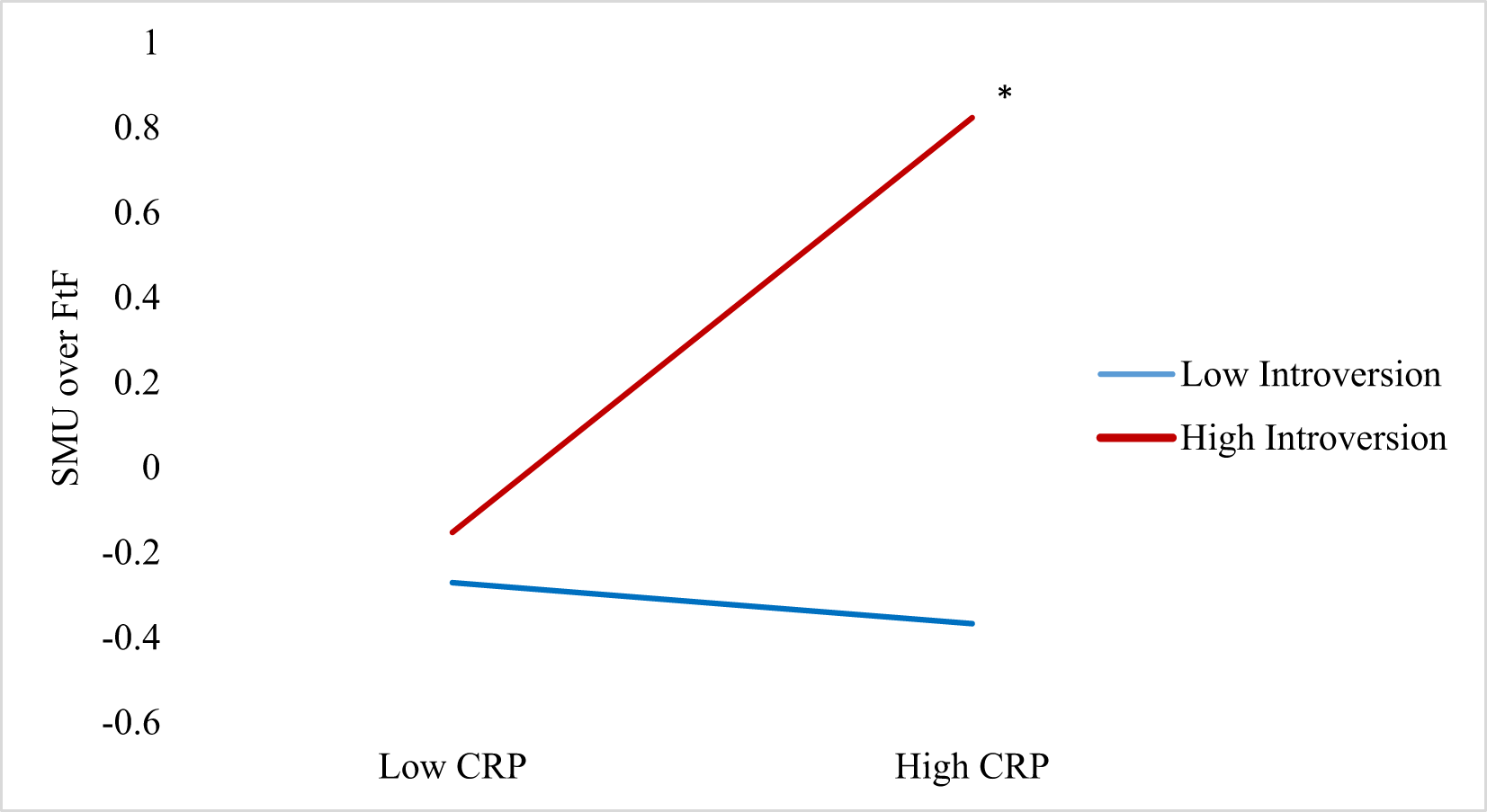
Emerging research suggests that whether inflammation promotes social approach or social avoidance behavior may depend on the context. However, little is known about what such contexts are. Addressing this gap, the present research examined how inflammation is associated with two common daily social behaviors varying in interaction modality. Building on work showing inflammation’s role in psychological states such as fatigue and vigilance toward physical and psychological threats and research on social media’s role as an energy efficient, mediated communication tool, we hypothesized that inflammation would be associated with more social media use (SMU) over face-to-face interactions (FtF) and with more social media use for social interaction (SMUSI) over FtF. To test our hypotheses, we recruited college students who provided their blood samples to be assayed for C-reactive protein (CRP), a biomarker of systemic inflammation, and completed questionnaires assessing personality, SMU, SMUSI, FtF, and other measures. Extending prior work, CRP was associated with SMU over FtF and SMUSI over FtF. Importantly, these patterns were stronger among individuals with higher introversion and individuals with higher neuroticism. These results provide initial evidence that naturally occurring inflammation may be linked to a stronger preference for a particular social behavior (SMU) over another (FtF) and suggest that such tendency may vary by people with different personality traits. Broadly, the present research contributes to the burgeoning research on inflammation and social behavior and highlights for whom and when social media may be used to fulfill affiliative needs.