2026-04-30 東京科学大学
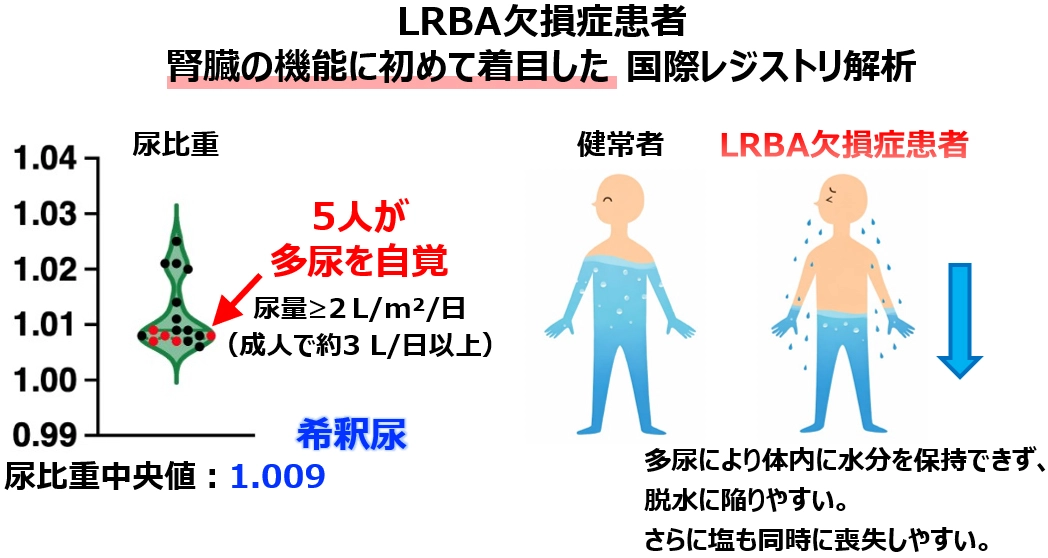
図. 日本とイランの多施設共同研究-LRBA欠損症患者の腎表現型を評価
<関連情報>
LRBAは遠位尿細管セグメントにおいて、水分とナトリウムの保持のために、それぞれ異なる小胞輸送システムを組織する LRBA organizes distinct vesicular trafficking systems in distal nephron segments for water and sodium conservation
Kanako Nagaoka, Fumiaki Ando, Tamami Fujiki, +21 , and Shinichi Uchida
Proceedings of the National Academy of Sciences Published:April 28, 2026
DOI:https://doi.org/10.1073/pnas.2525505123
Significance
Lipopolysaccharide-responsive and beige-like anchor protein (LRBA)-deficient patients are at high risk of dehydration due to chronic diarrhea and recurrent infections; however, approximately 20% of patients in a multicenter registry also presented with polyuria. This observation suggests that LRBA is involved in renal water and sodium regulation beyond its role in cytotoxic T lymphocyte-associated antigen 4 (CTLA-4) vesicular recycling in immune cells. Using Lrba knockout and knock-in (R1442Q) mouse models and patient registry data, the study revealed that LRBA facilitates renal water and sodium reabsorption by regulating vesicular trafficking of aquaporin-2 (AQP2), AQP4, and sterile 20/SPS1-related proline/alanine-rich kinase (SPAK). These molecular and physiological findings emphasize the need for fluid and sodium management in LRBA-deficient patients, particularly during sick days.
Abstract
Lipopolysaccharide-responsive and beige-like anchor protein (LRBA) deficiency is a rare genetic disorder characterized by immune dysregulation. The immune checkpoint molecule cytotoxic T lymphocyte-associated antigen 4 (CTLA-4) fails to perform proper membrane trafficking in the absence of LRBA. In addition to immune cells, LRBA localizes to intracellular vesicles in various epithelial cells; however, its physiological roles have not been accurately deciphered. It was observed in this study that LRBA facilitates water and sodium transport by promoting vesicular trafficking of aquaporin-2 (AQP2) and AQP4 in renal collecting duct cells and that of sterile 20/SPS1-related proline/alanine-rich kinase (SPAK) in distal convoluted tubule cells. Consequently, Lrba knockout mice exhibited vasopressin-resistant polyuria and hypotension under sodium-restricted conditions. This registry study revealed a polyuric phenotype in a subset of patients with LRBA deficiency, characterized by inappropriately low urine specific gravity despite the presence of chronic diarrhea. Notably, desmopressin treatment ameliorated impaired urinary concentration in a mouse model of human LRBA deficiency. LRBA functions as a central coordinator of fluid and sodium homeostasis by organizing segment-specific vesicular trafficking systems in renal epithelial cells.