2026-06-11 コペンハーゲン大学(UCPH)
◆研究では、デンマーク生まれの若者約10万人のデータを分析した結果、家庭でデンマーク語以外の言語も使用するバイリンガルの受験者は、モノリンガル(単一言語話者)より平均して低いスコアを示した。しかし、その差は認知能力そのものではなく、検査に含まれる言語的・文化的要素の影響による可能性が高いことが示唆された。特に語彙や言語理解に依存する設問が、デンマーク語を主言語としない家庭環境の若者に不利に働くと考えられる。
◆研究者らは、現在の知能検査結果を能力の純粋な指標として解釈することに注意を促し、多文化社会においては言語背景の違いを考慮した評価手法の開発が必要だと指摘している。この成果は、教育、徴兵、就職選考などで利用される認知能力評価の公平性向上に重要な示唆を与える。
<関連情報>
- https://news.ku.dk/all_news/2026/06/danish-intelligence-test-may-underestimate-the-abilities-of-bilingual-young-people/
- https://www.cambridge.org/core/journals/journal-of-the-international-neuropsychological-society/article/waisiv-performance-in-fluent-danishspeaking-arabicdanish-bilingual-university-students-effects-of-acculturation-and-bilingualism/FDECB400EF569B31A3E8C34202979F85
流暢なデンマーク語を話すアラビア語・デンマーク語バイリンガルの大学生におけるWAIS-IVの成績:異文化適応とバイリンガリズムの影響 WAIS-IV performance in fluent Danish-speaking Arabic-Danish bilingual university students: effects of acculturation and bilingualism
Ro J. Robotham,Fie Larsen,Ida Thornberg Carlsen,Merwa Ibrahim and T. Rune Nielsen
Journal of the International Neuropsychological Society Published:09 June 2026
DOI:https://doi.org/10.1017/S1355617726102045
Abstract
Objectives:
Psychologists are increasingly asked to assess intellectual functions in adults from diverse cultural and linguistic backgrounds. This study investigated the impact of acculturation and bilingualism on Wechsler Adult Intelligence Scale (WAIS)-IV performance among Arabic-Danish bilingual university students.
Methods:
Forty-eight academically high-achieving participants (69% female), fluent in Danish and educated entirely in Denmark, were recruited in Greater Copenhagen and completed a demographic questionnaire, the Danish version of the WAIS-IV, and self-report measures of acculturation and bilingualism.
Results:
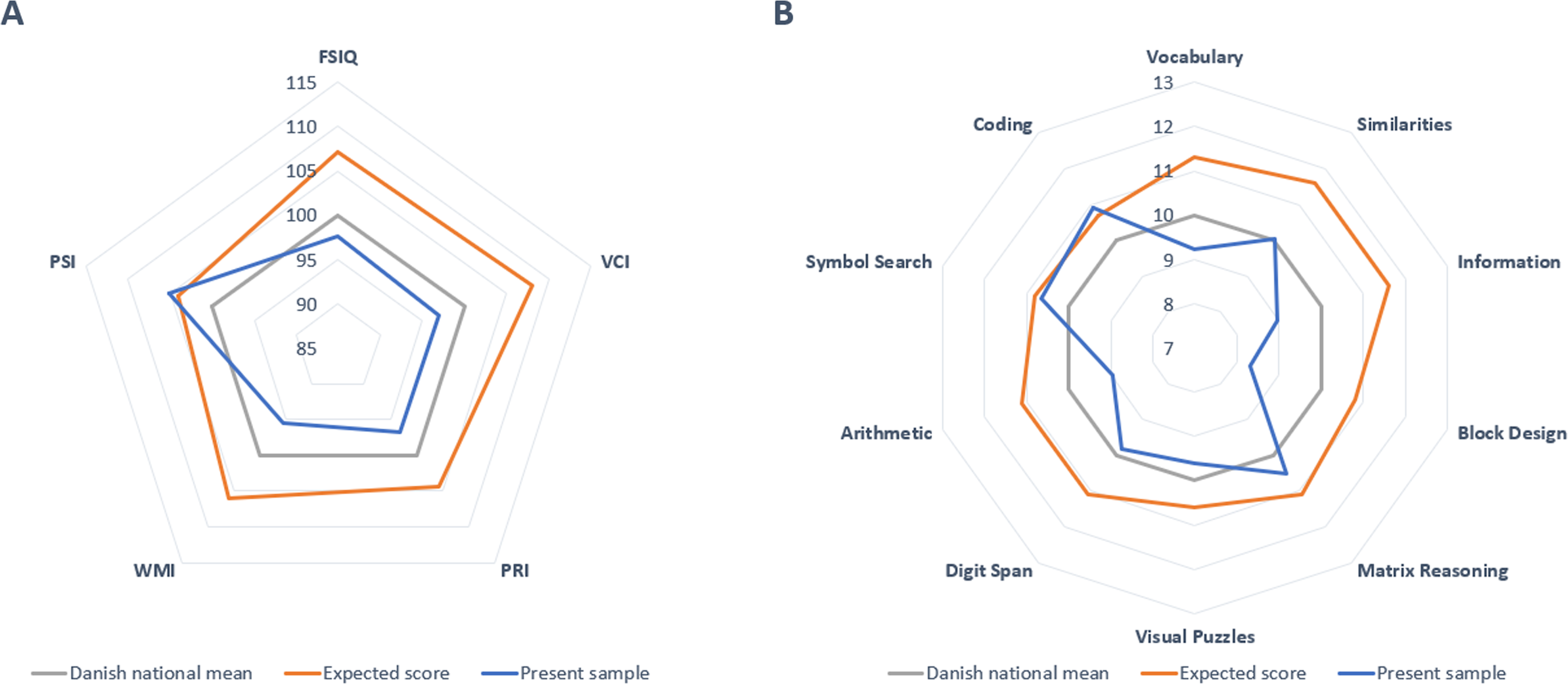
Several WAIS-IV indexes and subtests were significantly associated with degree of bilingualism and acculturation, even after controlling for educational variables. Despite being academically high-achieving university students, participants scored below the national mean on most indexes and subtests. In fact, only performances on the Processing Speed Index, and the Coding and Symbol Search subtests were at the expected level. Notably, the lowest scores were observed on Block Design, which showed a strong correlation with Arabic acculturation scores. Finally, participants had index profiles that were more uneven than predicted based on the norms.
Conclusions:
These findings underscore the influence of cultural and linguistic factors on WAIS-IV performance and suggest that WAIS-IV may not fully capture the intellectual abilities of bilingual individuals, even when they are fluent in the test language and have the same educational experience as the norm population.