20263-08-05 カリフォルニア大学ロサンゼルス校(UCLA)
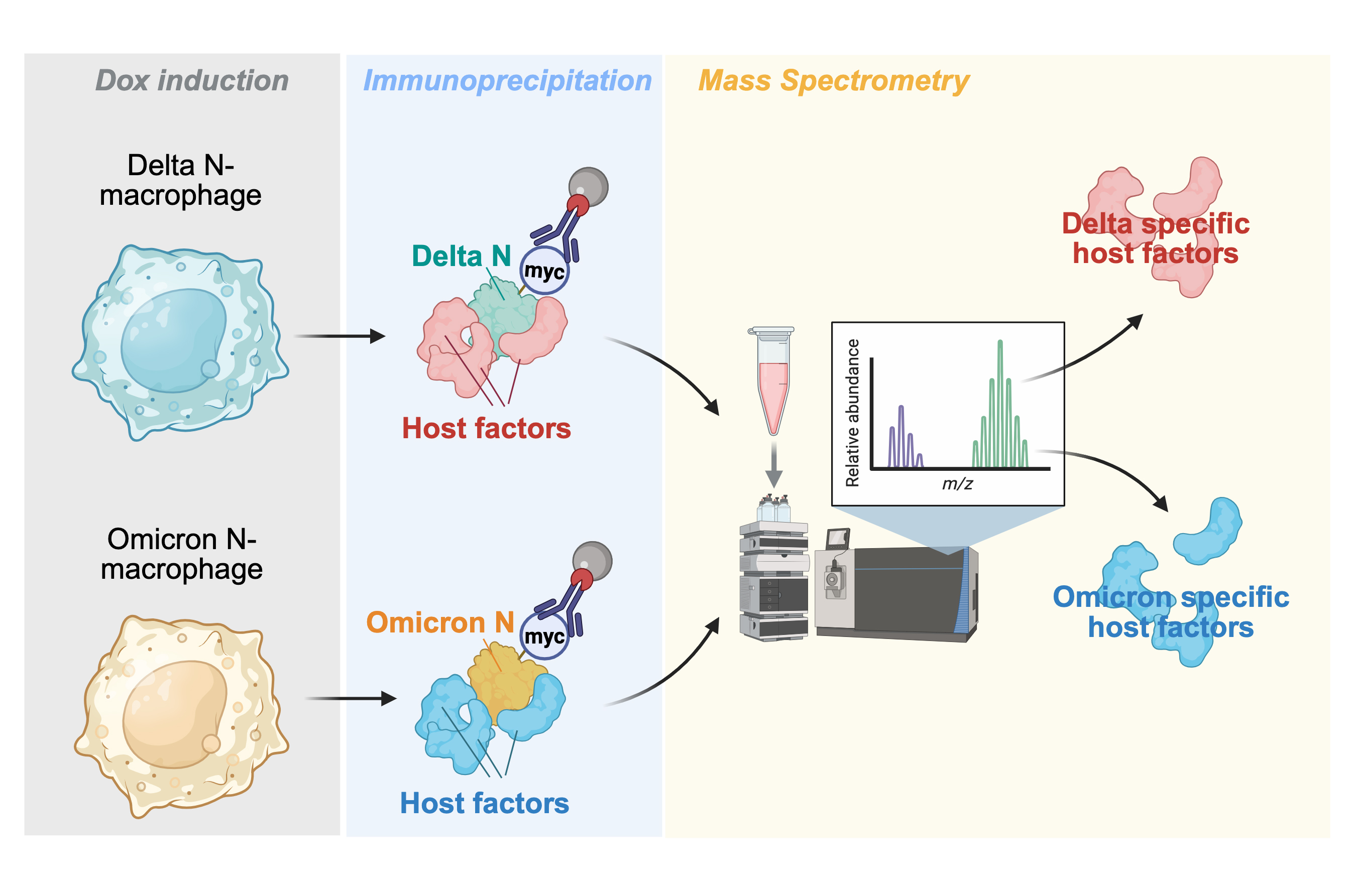
Discovering human macrophage factors that interact with nucleocapsid proteins from pathogenic SARS-CoV-2 variants. Created in BioRender. Li, M. (2026)
<関連情報>
- https://newsroom.ucla.edu/releases/lesser-known-sars-cov-2-protein-clues-long-covid-symptoms
- https://www.science.org/doi/10.1126/sciadv.aea2780
SARS-CoV-2ヌクレオカプシドは、マクロファージにおけるToll様受容体シグナル伝達経路を介して過剰炎症と血管漏出を誘発する SARS-CoV-2 nucleocapsid induces hyperinflammation and vascular leakage through the Toll-like receptor signaling axis in macrophages
Zhenlan Yao, Pablo A. Alvarez, Carolina Chavez, Yennifer Delgado, […] , and Melody M. H. Li
Science Advances Published:5 Aug 2026
DOI:https://doi.org/10.1126/sciadv.aea2780
Abstract
A substantial proportion of hospitalized COVID-19 patients require ICU admission, often associated with an imbalance between antiviral responses and inflammatory signaling leading to uncontrolled cytokine secretion. The SARS-CoV-2 nucleocapsid (N) protein is a known immune antagonist, but its role in macrophage-driven cytokine storms is unclear. We demonstrate that N functions in a stimulus-specific manner, specifically amplifying extracellular and dampening intracellular RNA sensing. Moreover, we show that this is a conserved feature of pathogenic betacoronaviruses through distinct mechanisms. Our interaction networks with SARS-CoV-2 variant N proteins suggest that the Delta variant N drives inflammation through interactions with several proteins, most notably, cGAS. Profiling of secreted cytokines revealed that N disrupts the secretome in a variant-specific manner. Most notably, we found that supernatants from the Delta variant N–expressing macrophages dramatically disrupt heart endothelial barriers, implicating N in COVID-19–associated cardiac complications. Our findings highlight N-mediated immune imbalance as a driver of severe COVID-19 and identify N as a promising therapeutic target to mitigate hyperinflammation.