
2026-07-14 カリフォルニア大学リバーサイド校 (UCR)
<関連情報>
- https://news.ucr.edu/articles/2026/07/14/emerging-tick-borne-virus-raises-concern
- https://pubs.acs.org/doi/full/10.1021/acsinfecdis.6c00320
新興ヒトナイロウイルス由来のOTUプロテアーゼ病原性因子の構造と機能に関する知見 Insights into the Structure and Function of the OTU Protease Virulence Factors from Emerging Human Nairoviruses
David S. Gonzalez,Amritpal Jalf,Vanessa Moresco,Joseph Garcia,Lukasz Jaroszewski,David Matta,Jonathan Nguyen,Bryan Torres,Éric Bergeron,Adam Godzik,and Scott D. Pegan
ACS Infectious Diseases Published: July 13, 2026
DOI:https://doi.org/10.1021/acsinfecdis.6c00320
Abstract
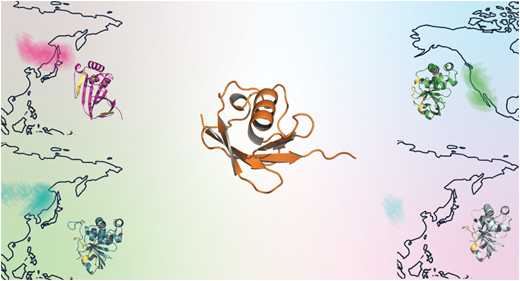
Tick-borne negative-sense single-stranded RNA nairoviruses represent a significant global public-health threat. Over the past decade, discoveries of new orthonairoviruses and norwaviruses have surged. Many of these have been observed to cause febrile illness in humans or have been found in vectors that carry other human diseases. All orthonairoviruses encode a viral homologue of the ovarian tumor protease (OTU) superfamily, which is part of the l-protein, and the OTU is conserved in the Norwavirus genus. OTUs exhibit varying levels of deubiquitinating (DUB) and deISGylating activities that facilitate viral immune evasion, establishing them as key virulence factors. Here, these activities from emerging Songling, Yezo, Tacheng tick virus 1, and Pacific Coast Tick orthonairoviruses, as well as the Beiji norwavirus, were investigated. This analysis reveals a diverse range of DUB and human deISGylase enzymatic activities in the previously uncharacterized viral groups. This includes unexpected OTU human deISGylating activity and suggests that OTUs possess functions beyond their established DUB and deISGylating roles. Additionally, the molecular basis of these activities, or the absence thereof, is explored through X-ray crystallographic structures of viral OTUs encoded by four orthonairoviruses and one norwavirus. The biochemical and structural insights provide a path forward for predicting OTU activity among current and emerging nairoviruses.

