2026-08-13 ワシントン大学セントルイス校
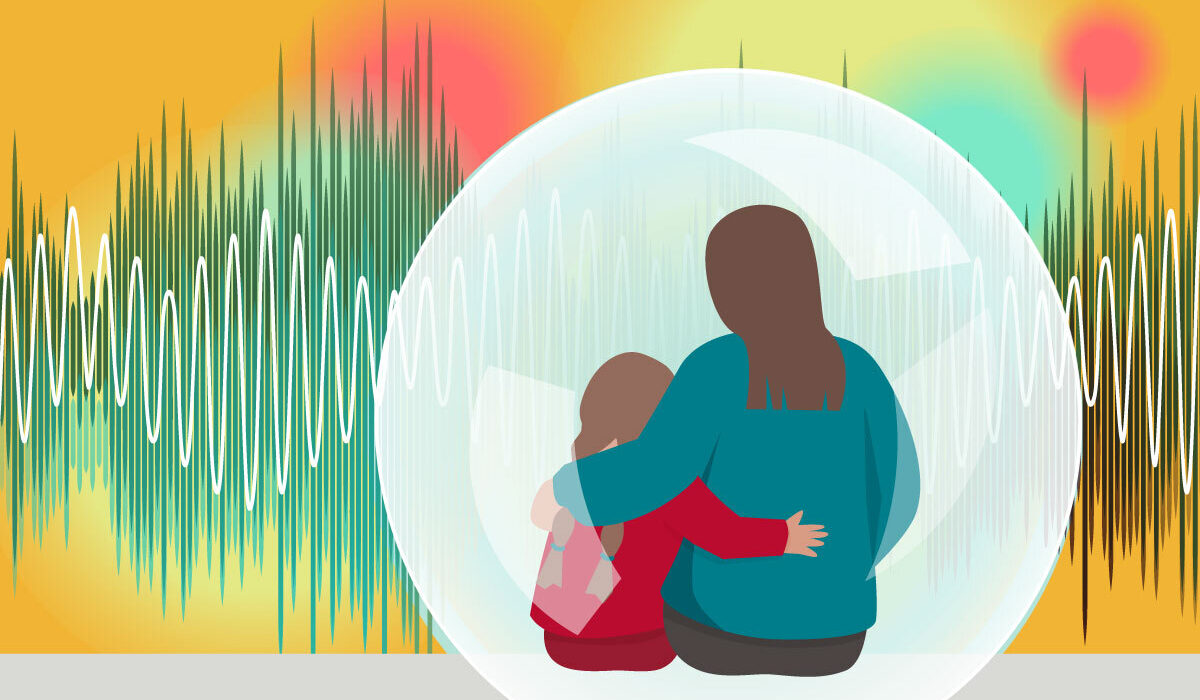
A study led by WashU Medicine researchers finds that sensory over-responsivity in children is tied to anxiety and autism, but not ADHD. The research also identified distinct patterns of brain connectivity linked to sensory sensitivity. (Image: Sara Moser/WashU Medicine)
<関連情報>
- https://source.washu.edu/2026/08/sensory-overload-in-kids-has-distinct-neurobiological-roots/
- https://www.jaacap.org/article/S0890-8567(26)01569-8/fulltext
小児期の感覚過敏反応における、特異的かつ再現可能な行動的および神経学的相関関係 Specific, Replicable Behavioral and Neural Correlates of Sensory Over-Responsivity in Childhood
Hexin Luo, MS ∙ Andrew W. Kim, BA ∙ Anna M. Abbacchi, MS ∙ … ∙ Chad M. Sylvester, MD, PhD ∙ M. Catalina Camacho, PhD ∙ Rebecca F. Schwarzlose, PhD …
Journal of the American Academy of Child and Adolescent Psychiatry Published:August 13, 2026
DOI:https://doi.org/10.1016/j.jaac.2026.08.003
ABSTRACT
Objective
Sensory over-responsivity (SOR), characterized by strong negative reactions to typically innocuous stimuli, is considered a symptom of autism spectrum disorder. However, SOR also affects 15-20% of children overall, including a majority of children with common psychiatric conditions. Despite its prevalence, the clinical specificity and neurobiological bases of SOR remain poorly understood. Our study aims to determine the specific clinical significance of SOR across diverse child samples and establish whether SOR is associated with replicable patterns of functional connectivity (FC).
Method
We analyzed data from 15,728 children (ages 6-17.9 years) across five datasets: three community samples, including the Adolescent Brain Cognitive Development [ABCD] and Healthy Brain Network [HBN] studies, and two autism-enriched samples. Bivariate and multivariate models examined associations between SOR and symptoms of anxiety, attention-deficit/hyperactivity disorder, depression, conduct disorder, and oppositional defiant disorder, as well as autistic traits. Analysis of resting-state functional MRI (fMRI) data from the ABCD study (n=4195) identified candidate brain-wide and circuit-specific FC correlates of mild SOR and tested replication of effects in an independent ABCD subsample (n=4190). Additional analyses tested extension to children with severe SOR in ABCD and replication in smaller samples [HBN (n=356), ABCD subset (n=356)].
Results
Multivariate analyses revealed that SOR is associated with a remarkably consistent profile across samples: greater levels of both autistic traits and anxiety symptoms and, in community samples, lower levels of conduct disorder symptoms. Across samples, SOR is not reliably associated with symptoms of any other analyzed psychiatric conditions. Mild SOR is associated with brain-wide FC patterns and, specifically, reduced FC between cingulo-parietal network and bilateral caudate nucleus; these patterns show robust replication across independent ABCD subsamples and extension to severe SOR in ABCD but are not significant in smaller samples, indicating that large sample size is needed to reliably detect brain effects.
Conclusion
Results suggest that SOR may constitute a latent trait associated with both specific clinical risk and protection, and with replicable cortico-subcortical neural correlates. These findings advance our understanding of the neurobiology and clinical relevance of SOR. They may also inform clinical practice and future research aimed at understanding and supporting individuals with sensory challenges.
Diversity & Inclusion Statement
We worked to ensure sex and gender balance in the recruitment of human participants. We worked to ensure race, ethnic, and/or other types of diversity in the recruitment of human participants. We worked to ensure that the study questionnaires were prepared in an inclusive way.