2025-07-16 インペリアル・カレッジ・ロンドン(ICL)
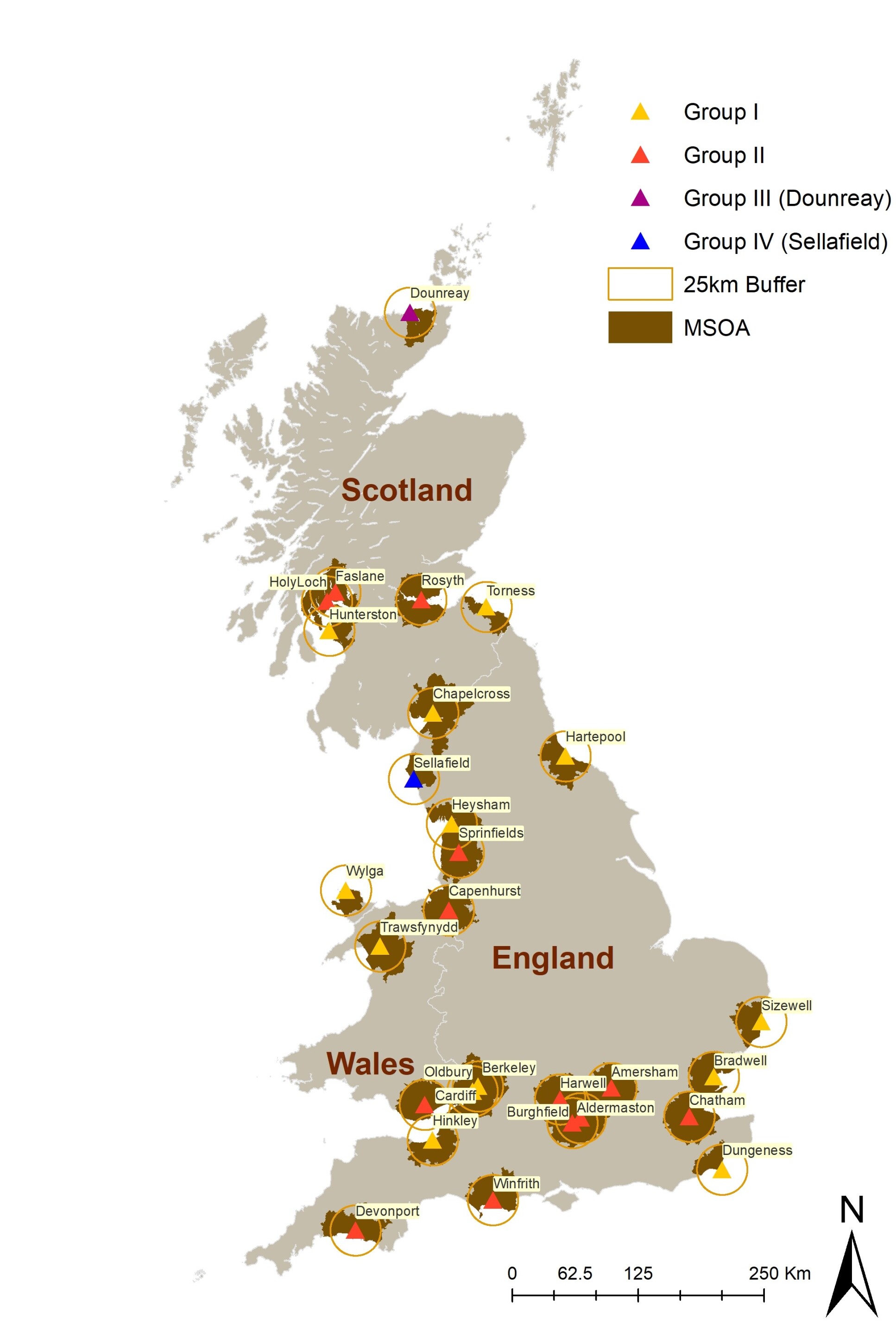 The analysis found no evidence of increased risk of childhood cancers among children living near 28 nuclear installations between 1995 and 2016. (Credit: Davies, B. et al. Int J Epidemiol, 2025)
<関連情報>
- https://www.imperial.ac.uk/news/266256/no-increased-risk-childhood-cancer-near/
- https://academic.oup.com/ije/article/54/4/dyaf107/8202583
1995~2016年の英国の原子力施設周辺における小児がんの発生率 Childhood cancer incidence around nuclear installations in Great Britain, 1995–2016
Bethan Davies , Frédéric B Piel , Aina Roca-Barceló , Anna Freni Sterrantino , Hima Iyathooray Daby , Marta Blangiardo , Daniela Fecht , Frank de Vocht , Paul Elliott , Mireille B Toledano
International Journal of Epidemiology Published:16 July 2025
DOI:https://doi.org/10.1093/ije/dyaf107
Abstract
Background
Concerns remain about the potential harmful health impact of nuclear installations. Historical clusters of leukaemia and non-Hodgkin’s lymphoma (LNHL) in children living near Sellafield and Dounreay installations in Great Britain remain aetiologically unexplained, and the sites remain under surveillance. We assess the risk of LNHL, central nervous system (CNS) and all solid tumours in children aged 0–14 years living within 25 km of nuclear installations in Great Britain, between 1995 and 2016.
Methods
We used a Poisson regression model to estimate the expected number of cases of each cancer type at the community-level in the study population, we present standardized incidence ratios compared to the national population. We used a hierarchical Poisson regression model to estimate the adjusted incidence rate ratios for each cancer type by distance between the community of residence and nearest nuclear installation.
Results
We found no evidence of elevated incidence of LNHL, CNS, or all solid tumours in children resident in communities in proximity to nuclear sites. Within the 25-km zone, there was no evidence of an increased risk of childhood cancer in communities closer to installations.
Conclusion
In post-1994 data, there was no evidence of an increased risk of childhood cancers in communities within 25 km of nuclear installations in Great Britain. Previously raised risks are no longer evident.