2025-11-03 ペンシルベニア州立大学(PennState)
<関連情報>
- https://www.psu.edu/news/research/story/novel-technique-reveals-insights-soil-microbe-alarm-clock
- https://journals.asm.org/doi/10.1128/msystems.00458-25
根圏における土壌微生物の活動は根のコロニー形成の成功を予測する The activity of soil microbial taxa in the rhizosphere predicts the success of root colonization
Jennifer E. Harris, Regina B. Bledsoe, Sohini Guha, Haneen Omari, Sharifa G. Crandall, Liana T. Burghardt, Estelle Couradeau
mSystems Published:6 August 2025
DOI:https://doi.org/10.1128/msystems.00458-25

ABSTRACT
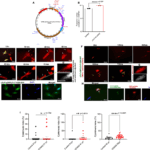
Plant-beneficial microbes have great potential to improve sustainability in agriculture. Still, managing beneficial microbes is challenging because the impact of microbial dormancy on community assembly across the soil, rhizosphere, and endosphere is poorly understood. We address this gap with the first documented use of Biorthogonal Non-Canonical Amino Acid Tagging (BONCAT) to probe active microbes in the soil-to-root gradient. Using nodule-forming legume Trifolium incarnatum, we confirmed that BONCAT is suitable for labeling endospheric microbes with microscopy. Next, we coupled BONCAT to Flow Cytometer Activated Cell Sorting (FACS) and 16S rRNA amplicon sequencing to probe patterns of microbial activity and the structure of the active microbial community across the soil, rhizosphere, root, and nodule with a native soil microbial community. As expected, we found 10 times higher microbial activity in the endosphere than in the rhizosphere or bulk soil, likely due to increased plant resources. Finally, we revealed that microbial activity in the rhizosphere was significantly associated with successful endosphere colonization, more so than microbial abundance alone. This last finding has implications for the development of microbial inoculants, suggesting colonizing plant roots is linked to a microbe’s ability to overcome dormancy once deployed in the soil.