2026-03-04 中国科学院(CAS)
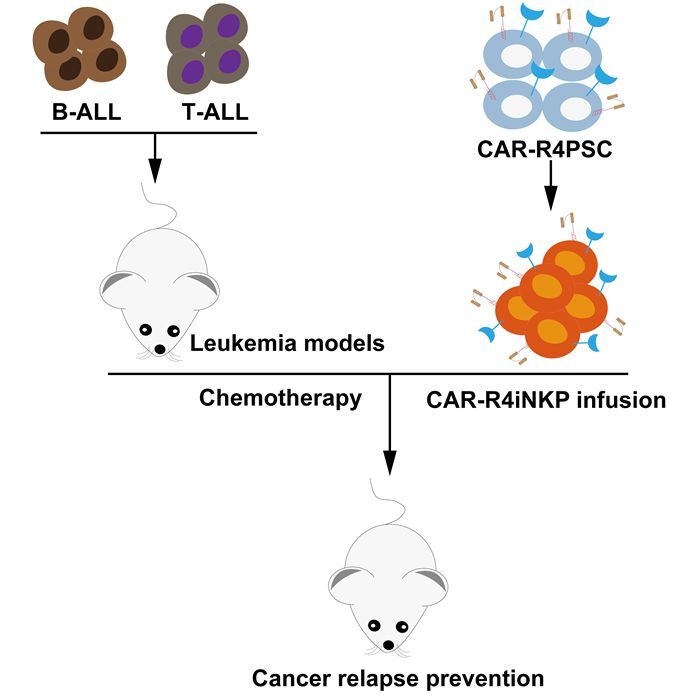
Schematic of CAR-iNKP Cell Therapy. (Image by WANG Jinyong’s team)
<関連情報>
- https://english.cas.cn/newsroom/research-news/202603/t20260305_1151468.shtml
- https://www.cell.com/cell-stem-cell/abstract/S1934-5909(26)00035-4
多能性幹細胞由来CAR-NK前駆細胞療法は、微小残存病変を標的とし、白血病モデルの再発を予防する Pluripotent stem cell-derived CAR-NK progenitor therapy targets minimal residual disease and prevents relapse in leukemia models
Zhiqian Wang∙ Leqiang Zhang ∙ Dehao Huang ∙ … ∙ Mengyun Zhang ∙ Fangxiao Hu ∙ Jinyong Wang
Cell Stem Cell Published:February 24, 2026
DOI:https://doi.org/10.1016/j.stem.2026.01.013
Highlights
- iNKP cells are abundantly generated from PSCs via an organoid culture system
- CXCR4-expressing iNKP (R4-iNKP) cells produce iNK cells that persist over 80 days
- CAR-R4iNKP cell infusion precisely protects animals from tumor challenges
- Conventional chemotherapy combined with CAR-R4iNKP cell infusion eradicates MRD
Summary
Reducing relapse rates post-chemotherapy remains a major challenge for improving cancer therapy. Here, we developed a pluripotent stem cell-derived induced natural killer (NK) lineage-committed progenitor (iNKP) cell therapy in leukemia models. We generated abundant iNKP cells via an organoid culture system. The iNKP cells, engineered to express C-X-C motif chemokine receptor 4 (CXCR4) and chimeric antigen receptors (CARs), efficiently migrated to the bone marrow and generated CAR-iNK cells, which persisted in multiple organs and peripheral blood for over 80 days. Notably, CAR-iNKP cell infusion precisely protected animals from tumor challenges. Furthermore, a single low-dose infusion of CAR-iNKP cells following conventional chemotherapy reduced minimal residual disease and significantly prevented cancer relapse in human CD19+ B-ALL and CD7+ T-ALL tumor-bearing animals. CAR-iNKP cell treatment addresses the limitations of traditional CAR-NK cell infusion and offers a new strategy for future application in human cancer therapy.