2026-03-09 ユニバーシティ・カレッジ・ロンドン(UCL)
<関連情報>
- https://www.ucl.ac.uk/news/2026/mar/new-molecular-switch-controlling-antiviral-immunity-identified
- https://www.nature.com/articles/s41556-026-01886-z
リジン11のユビキチン化はcGAS-STINGおよびToll様受容体3および4によるI/III型インターフェロン誘導を促進する Lysine-11 ubiquitination drives type-I/III interferon induction by cGAS–STING and Toll-like receptors 3 and 4
Alexis Betrancourt,M. Talha Cinko,Ana Beatriz Varanda,Maykel Arias,Iratxe Uranga-Murillo,Natacha Peña,Lucia-Maria Kaps,Long Fung Chau,Bianca Buratti,Johannes Brägelmann,Diego de Miguel,Kerstin Becker,Ramona Casper,Rocio Martin,Antonio Alcami,Brian J. Ferguson,Julian Pardo,Eva Rieser & Henning Walczak
Nature Cell Biology Published:06 March 2026
DOI:https://doi.org/10.1038/s41556-026-01886-z
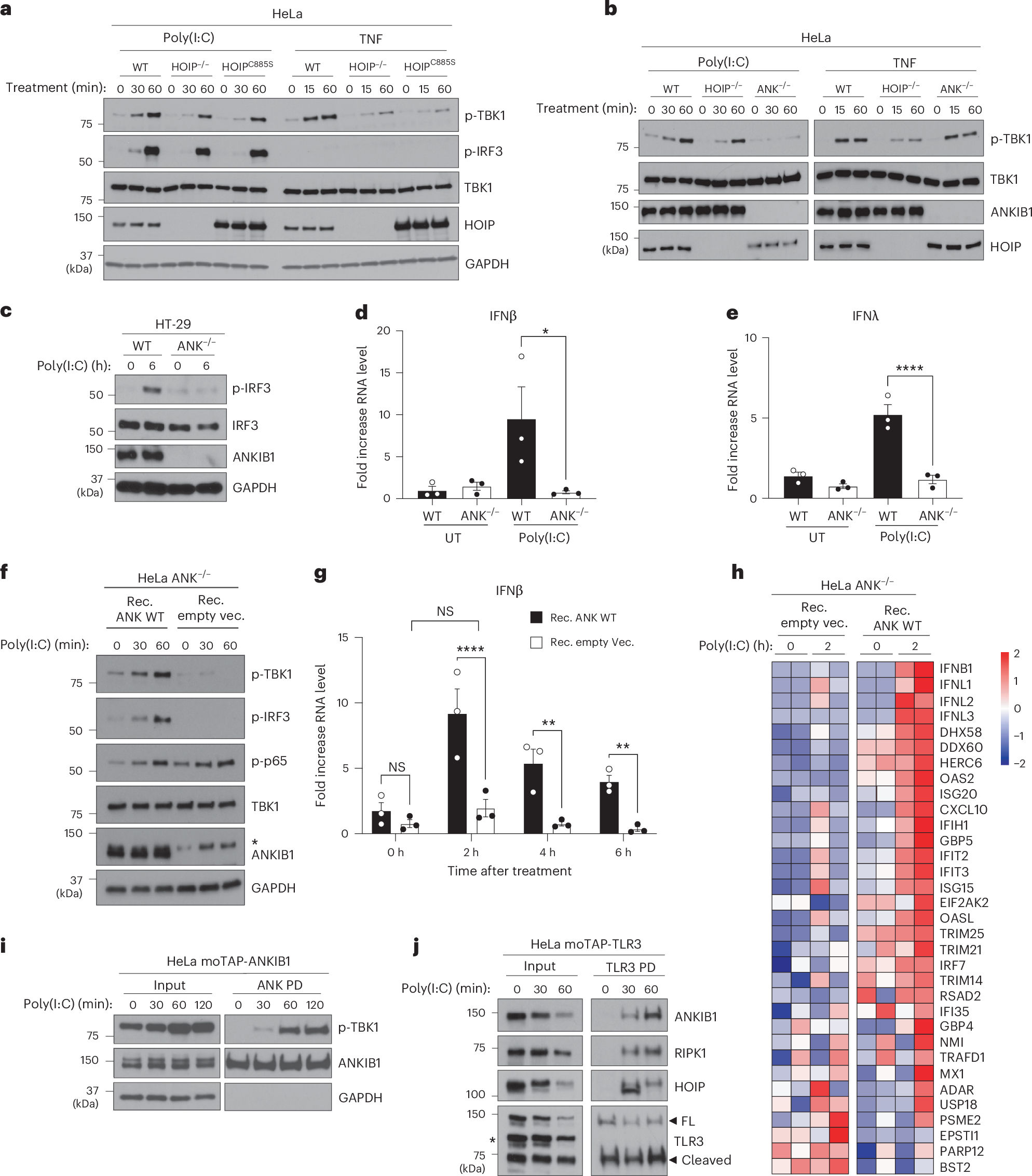
Abstract
Pattern recognition receptor (PRR)-induced interferon (IFN) is critical for effective immunity. The PRRs Toll-like receptor (TLR) 3, TLR4 and cyclic GMP–AMP synthase (cGAS), together with the stimulator of IFN genes (STING), signal through TANK-binding kinase 1 (TBK1), which activates the type-I/III IFN-inducing transcription factor interferon-response factor 3 (IRF3). The mechanism by which these PRRs activate TBK1 remains unresolved. Here we show that lysine-11 (K11)-linked ubiquitination drives TBK1 activation by these PRRs. The E3 ligase ANKIB1 attaches K11-linked ubiquitin chains to components of the TLR3- and cGAS–STING-induced signalosomes. This facilitates Optineurin recruitment to these complexes, in turn enabling recruitment and activation of TBK1 and IRF3, defining an uncharacterized signalling axis. In mice, ANKIB1 deficiency dampens IFN induction via TLR3 and cGAS–STING, reducing interferonopathy and compromising protection against HSV-1, respectively. Together, our results demonstrate an unanticipated and critical role for ANKIB1-generated K11-linked ubiquitination in the immune response activated by cGAS–STING, TLR3 and TLR4.