2026-03-27 京都大学iPS細胞研究所
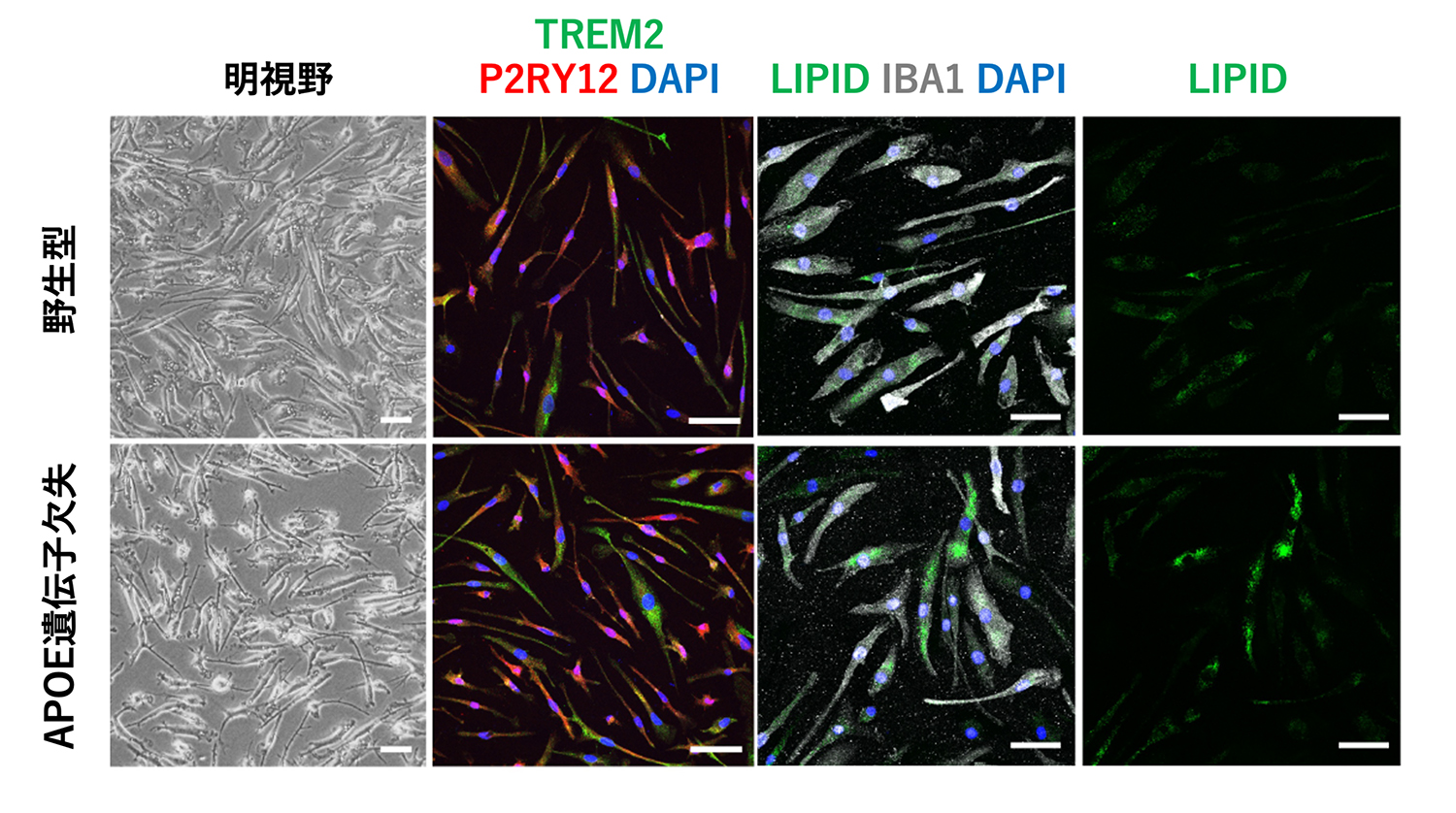
図1:APOE欠損ミクログリアにおける脂質滴の蓄積
<関連情報>
- https://www.cira.kyoto-u.ac.jp/j/pressrelease/news/260327-140000.html
- https://onlinelibrary.wiley.com/doi/10.1111/jcmm.71074
アポリポタンパク質E欠乏は、細胞酸化ストレスの上昇を伴い、ヒトミクログリアの増殖を阻害する Apolipoprotein E Deficiency Impairs Human Microglial Proliferation Accompanied by Elevated Cellular Oxidative Stress
Dayoung Kim, Takayuki Kondo, Keiko Imamura, Kayoko Tsukita, Ayako Nagahashi, Tomoki Sakasai, Haruhisa Inoue
Journal of Cellular and Molecular Medicine published: 20 March 2026
DOI:https://doi.org/10.1111/jcmm.71074
ABSTRACT
The APOE gene, which encodes Apolipoprotein E (ApoE), is the strongest genetic risk locus for Alzheimer’s disease (AD). A substantial fraction of AD risk genes converges on pathways controlling lipid metabolism and immune regulation, in which microglia serve as a central integrative hub in the brain. Although microglial phenotypes linked to different APOE genotypes have been extensively characterised, the fundamental question of how ApoE shapes the core functions of human microglia remains unresolved. Here, we generated APOE knockout (KO) microglia from AD patient–derived induced pluripotent stem cells (iPSCs) and characterised their cellular and molecular phenotypes. Ablation of APOE resulted in marked lipid droplet accumulation and increased NLRP3 inflammasome activation. Transcriptomic analysis further revealed downregulation of cell cycle–related pathways, accompanied by enrichment of an oxidative stress–associated pathway. Consistent with these transcriptomic signatures, APOE KO microglia exhibited elevated intracellular reactive oxygen species (ROS) levels and a marked reduction in proliferative capacity. Given the importance of microglial proliferation for maintaining immune homeostasis in the brain, our findings highlight ApoE as being an important regulator of this process, with potential consequences for the pathogenesis of neurodegenerative disorders.