2026-04-20 東京大学
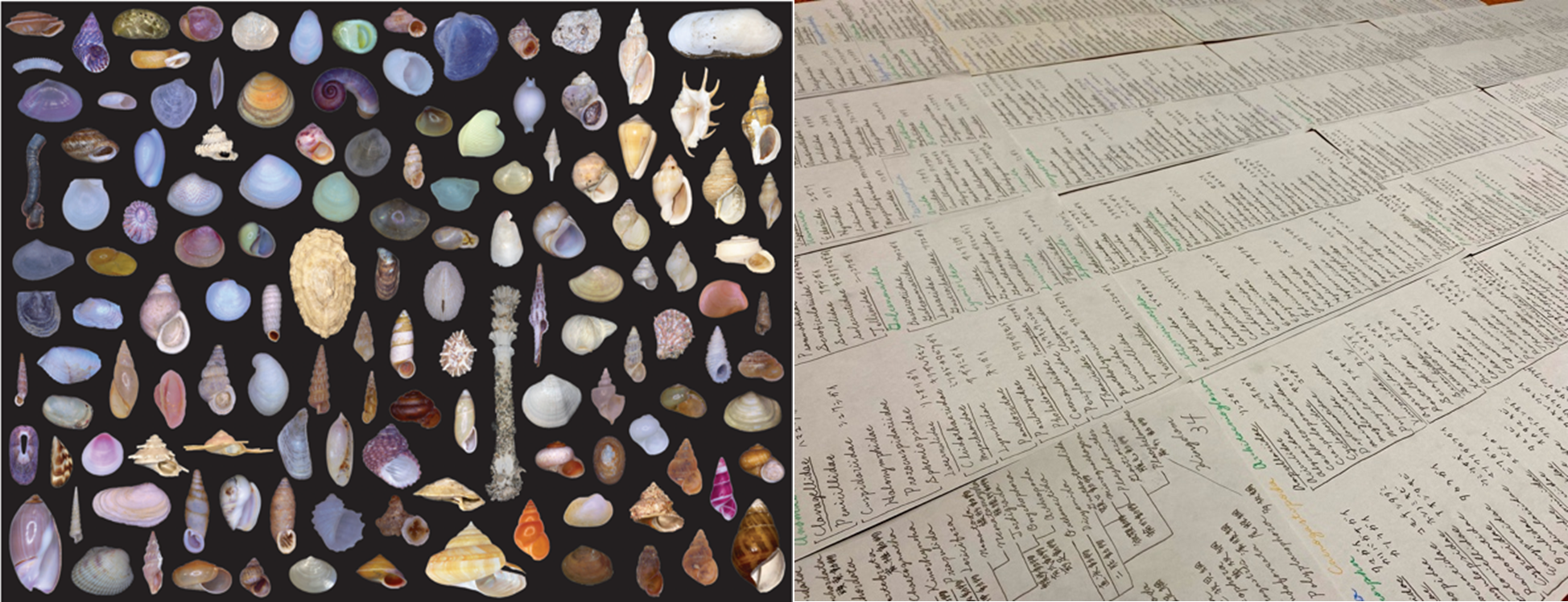
軟体動物の科名における命名法調査:観察した標本の一部(左)と系統関係整理の様子(右)
<関連情報>
- https://www.s.u-tokyo.ac.jp/ja/press/11123/
- https://academic.oup.com/zoolinnean/article/206/4/zlag053/8658901
分類学におけるギリシャ主義:古代ギリシャの歴史的覇権と軟体動物の科名命名における文化的偏見 Taxonomic Graecism: the historical hegemony of Ancient Greek and cultural bias in molluscan family nomenclature
Taro Yoshimura
Zoological Journal of the Linnean Society Published:20 April 2026
DOI:https://doi.org/10.1093/zoolinnean/zlag053
Abstract
Scientific nomenclature is ostensibly a neutral system for identifying biodiversity, yet it remains deeply embedded in the cultural and intellectual history of its practitioners. In this study, I introduce the concept of ‘taxonomic Graecism’ (the preferential use of Ancient Greek roots over Latin to project scholarly authority) and quantify its prevalence within the phylum Mollusca. Through a comprehensive etymological analysis of 773 extant molluscan family names, coupled with authorial demographic data, I reveal a profound linguistic and cultural skew. Results demonstrate an overwhelming dominance of Ancient Greek (71.8%) over Latin (26.1%), a trend that surged in the late 19th century and has stabilized as a form of ‘linguistic climax’. This preference is linked statistically to authorial identity; European authors, particularly from the UK and France, were significantly more likely to use Greek roots than their American counterparts. Furthermore, naming practices exhibit distinct sociological biases, including a remarkably low incidence of eponyms (6.3%) in comparison to other taxa, and a high degree of national homophily, whereby authors predominantly honour compatriots. These findings challenge the perception of taxonomy as a purely objective enterprise, highlighting how historical Eurocentrism, classical education, and gendered social networks have actively shaped the linguistic landscape of biodiversity.