2026-06-09 ローレンス・バークレー国立研究所(LBNL)
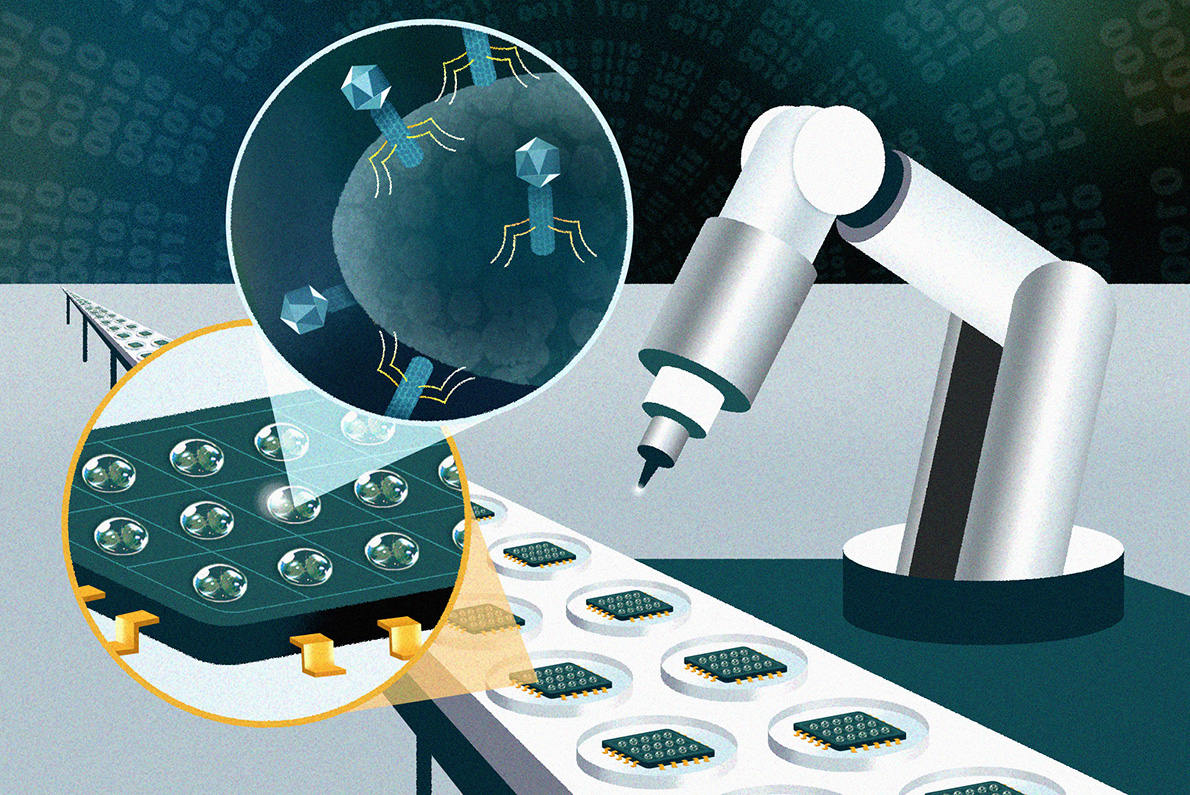
An illustration representing nanotechnology-based high-throughput screening for phages that can kill pathogenic bacteria. (Credit: Jenny Weger/Berkeley Lab)
<関連情報>
- https://newscenter.lbl.gov/2026/06/09/combatting-antibiotic-resistance-with-nanotechnology-robotics-and-ai/
- https://www.nature.com/articles/s41467-026-68684-x
ロボット工学とコンピュータビジョンを活用したハイスループット手法による治療用ファージカクテルの開発 High-throughput methods leveraging robotics and computer vision for the development of therapeutic phage cocktails
Taylor J. R. Penke,Aeron Tynes Hammack,Lana J. McMillan,Ethan Baker,Pearl Wilcock,Nick Healy,Morgan K. Y. Wall,Naomi Chavez,Iain Wright,Hannah H. Tuson,Sara Woessner,Ashley Trama,Cameron J. Prybol,Eyra Dordi,Ava Ghobadian,David G. Ousterout,Nicholas R. Conley & Paul Garofolo
Nature Communications Published:30 January 2026
DOI:https://doi.org/10.1038/s41467-026-68684-x
Abstract
We present the high-throughput automated screening techniques that are being used to develop bacteriophage-based therapeutic products currently under investigation in human clinical trials to combat urinary tract infections1. By integrating modern liquid handling robotics, standardized phenotypic assays, and computer vision-based enumeration, we established a platform capable of reproducibly screening large collections of phages against clinically derived bacterial strain panels. This approach enabled systematic assessment of phage-bacteria interactions at scale, facilitating the identification and optimization of phage cocktails with broad in vitro activity. Although bacteriophage therapy has long been investigated as a strategy for treating bacterial infections, few frameworks exist for developing phage combinations in a reproducible and scalable manner. The methods outlined here address this gap and aim to support the broader development of therapeutic assets available to combat antibiotic resistance.