2026-07-13 京都大学iPS細胞研究所
本研究の概要
<関連情報>
- https://www.cira.kyoto-u.ac.jp/j/pressrelease/news/260713-100000.html
- https://www.cell.com/stem-cell-reports/fulltext/S2213-6711(26)00216-X
PRDM16は、ヒトiPSC由来心筋細胞における細胞周期の動態と成熟の側面を調節する PRDM16 modulates aspects of cell cycle dynamics and maturation in human iPSC-derived cardiomyocytes Stem Cell Reports Published:July 9, 2026 DOI:https://doi.org/10.1016/j.stemcr.2026.103005
Highlights
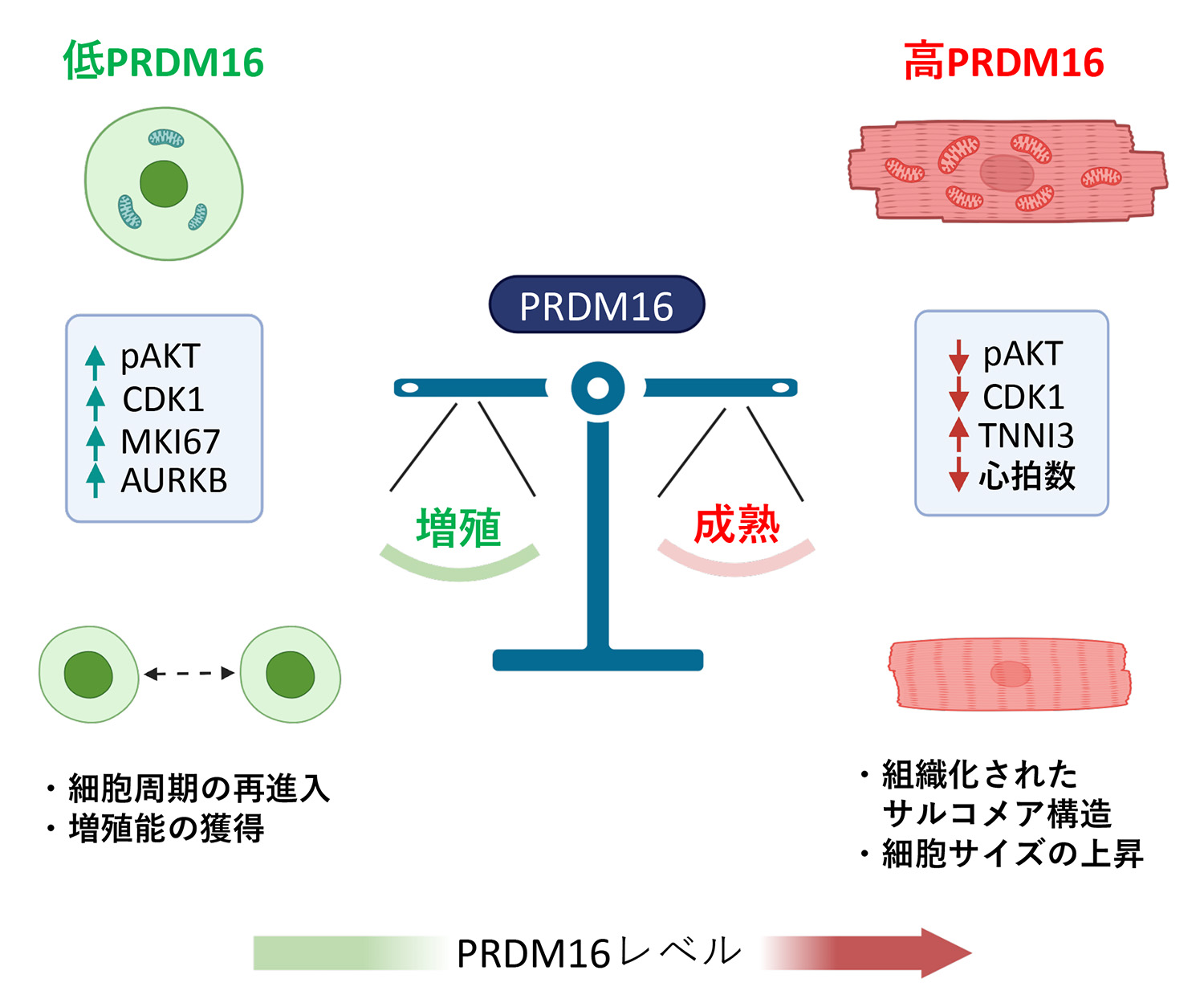
- PRDM16 regulates the proliferation-maturation balance in hiPSC-derived cardiomyocytes
- PRDM16 suppression sustains proliferative competence via CDK1 and phospho-AKT
- PRDM16 overexpression promotes hypertrophy and postnatal-like sarcomeric maturation
- Loss of PRDM16 impairs metabolic, structural, and functional maturation
Summary
Deciphering how cardiomyocytes exit proliferation and acquire postnatal maturity is essential for understanding heart development and regenerative potential. We identify PRDM16 as a regulator that influences the balance between proliferation and maturation in human iPSC-derived cardiomyocytes (hiPSC-CMs). Mechanistically, PRDM16 controls proliferative activity by modulating CDK1 and phospho-AKT, two central drivers of cardiomyocyte cell cycle progression. Loss of PRDM16 profoundly disrupts metabolic and structural maturation, yielding abnormal sarcomeric protein ratios and impaired engineered heart tissue function. In contrast, moderate PRDM16 overexpression promotes metabolic rewiring and structural remodeling characteristic of mature cardiomyocytes. These findings support a model in which PRDM16 functions as a context-dependent modulator governing the transition from proliferation to maturation. By demonstrating that transient downregulation favors proliferation while sustained expression drives maturation, our work highlights PRDM16 as both a potential developmental regulator and a therapeutic target for enhancing cardiomyocyte regeneration, cardiac repair, and the functional engineering of human heart tissues.