2026-07-27 ノースカロライナ州立大学(NC State)
<関連情報>
- https://news.ncsu.edu/2026/07/plasmids-horizontal-gene-transfer-and-antimicrobial-resistance/
- https://academic.oup.com/jacamr/article/8/4/dlag130/8724943?login=false
ワンヘルスにおけるプラスミド媒介性抗菌薬耐性の伝播:食品、動物、ヒト、環境の接点におけるゲノム解析 One Health transmission of plasmid-mediated antimicrobial resistance: genomic insights at the interface of food, animals, humans and the environment
Daniel F M Monte ,Siddhartha Thakur
JAC-Antimicrobial Resistance Published:04 July 2026
DOI:https://doi.org/10.1093/jacamr/dlag130
Abstract
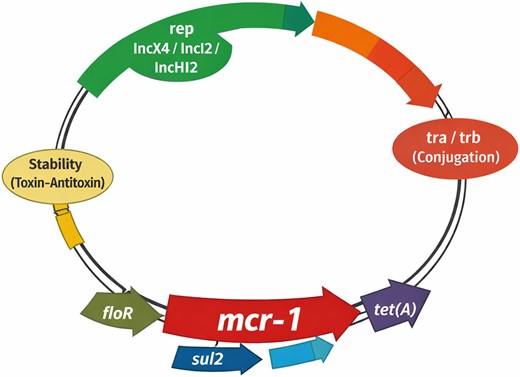
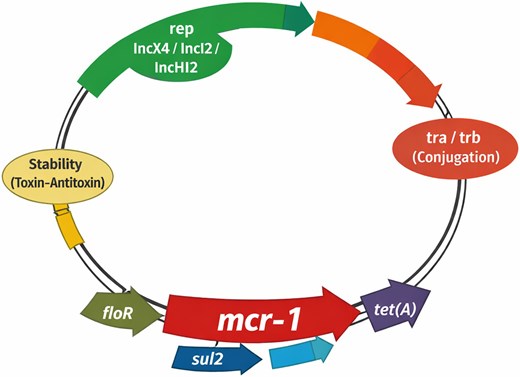
Antimicrobial resistance (AMR) is increasingly recognized as a complex issue that requires an interdisciplinary One Health approach to find solutions. While early surveillance efforts have emphasized clonal expansion of resistant pathogens, recent genomic studies demonstrate that plasmid-mediated horizontal gene transfer is a dominant force shaping the global AMR landscape. Mobile resistance determinants conferring reduced susceptibility to critically important antimicrobials, including extended-spectrum β-lactams, quinolones, colistin, tigecycline and carbapenems, are now widely detected across food-producing animals, retail foods, environmental waters and human clinical isolates. In this review, we synthesize genomic evidence supporting cross-sector transmission of plasmid-mediated AMR, with a focus on key resistance genes (blaCTX-M, qnr, mcr, tet(X), blaNDM), and their associated plasmid backbones. We discuss why certain plasmids are particularly successful across diverse ecological niches and highlight implications for surveillance and mitigation strategies within a One Health framework. Rather than proposing a new One Health framework, this review synthesizes current genomic evidence highlighting the role of plasmids as major vehicles of AMR dissemination across interconnected reservoirs.