2026-07-16 東北大学
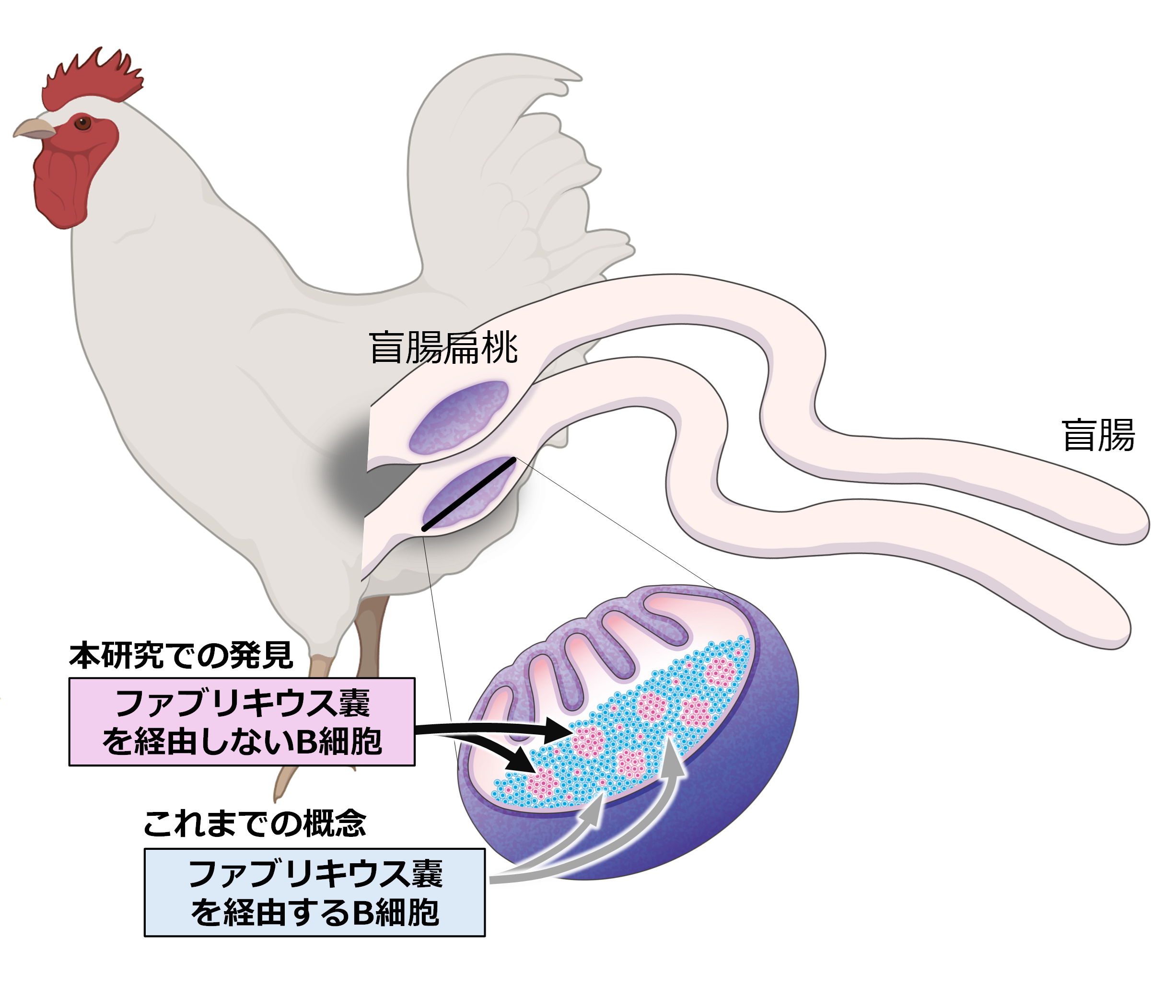
図1. ニワトリの盲腸扁桃に存在するファブリキウス嚢を経由しないB細胞と、従来から知られていたファブリキウス嚢を経由するB細胞
<関連情報>
- https://www.tohoku.ac.jp/japanese/2026/07/press20260716-02-bursa.html
- https://www.pnas.org/doi/10.1073/pnas.2605569123
ファブリキウス嚢非依存性B細胞は、腸と肝臓の恒常性を維持するIgAを介した腸管バリアを形成する Bursa of Fabricius–independent B cells establish an IgA-mediated intestinal barrier that safeguards gut–liver homeostasis
Ryota Hirakawa, Motoshi Hisamatsu, Sayoko Maekawa, +9 , and Tomonori Nochi
Proceedings of the National Science Published:July 15, 2026
DOI:https://doi.org/10.1073/pnas.2605569123
Abstract
The bursa of Fabricius (BF), a specialized lymphoid structure in birds, regulates avian B-cell development. However, the BF starts to regress posthatching, suggesting that as-yet-unidentified structures assume this function during maturation. This study reveals that BF-independent B-cell genesis involving the gut cecal tonsils (CTs) predominates over the BF-dependent pathway posthatching. Although B-cell progenitors originating from the bone marrow (BM) typically migrate to the BF, we identified a population that instead migrates to the CTs through CXCL12/CXCR4-mediated chemotaxis. These BF-independent CXCR4+ pre-B cells acquired surface IgM expression within the CT follicular region (FR) and differentiated into immunoglobulin A (IgA)-producing plasma cells. Inhibition of CXCR4+ cell influx from the BM impaired formation of the FR, altered the responsiveness of intestinal IgA to commensal bacteria, promoted gut dysbiosis, allowed translocation of pathogenic bacteria (e.g., Streptococcus alactolyticus) to the liver, and ultimately caused hepatic inflammation and metabolic dysfunction. These abnormalities were reversed by administering an IgA-enriched fecal preparation derived from healthy chickens. Collectively, these results reveal the existence of a population of BF-independent B cells that function in CTs. These cells represent a promising target for maintaining and improving the immunological and microbiological environment of the avian intestinal tract, which is closely linked to hepatic homeostasis.