2026-09-22 カリフォルニア大学リバーサイド校(UCR)
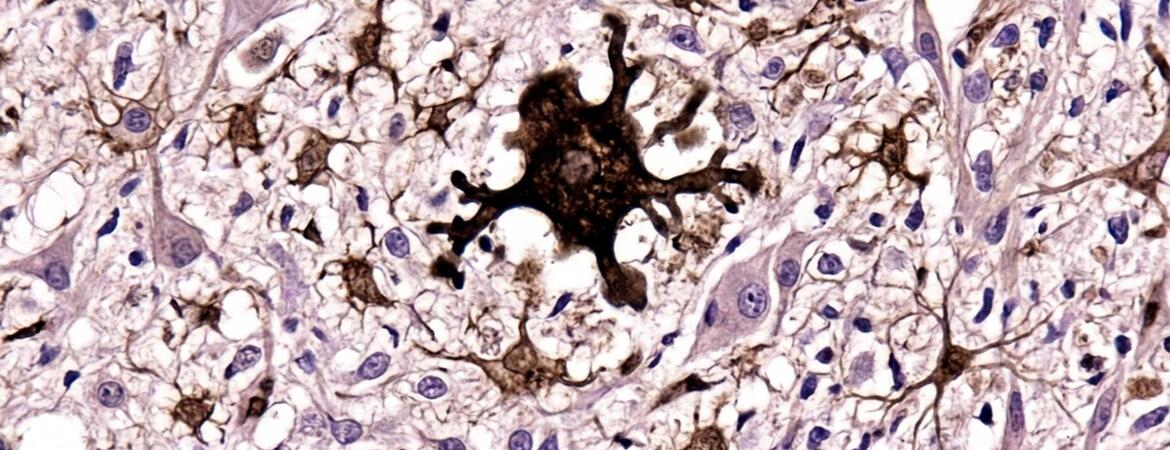
AI-generated header image shows an activated microglial cell next to other cells in a mouse brain. (UCR/Kaul lab)
<関連情報>
- https://news.ucr.edu/articles/2026/09/22/target-identified-treatment-neurohiv
- https://www.sciencedirect.com/science/article/abs/pii/S088915912600752X
HIV-1関連炎症性脳損傷におけるミクログリアp38α MAPKの重要な生体内役割 A critical in vivo role for microglial p38α MAPK in HIV-1 associated inflammatory brain injury
Deepika Bhullar, Ricky Maung, Amanda J. Roberts, Rabi Murad, Monica J. Carson, Marcus Kaul
Brain, Behavior, and Immunity Available online: 8 September 2026
DOI:https://doi.org/10.1016/j.bbi.2026.107004
Highlights
- Microglia specific p38α knockout protects spatial learning and memory in HIVgp120-transgenic mice.
- Microglia specific p38α knockout abrogates HIV-1 gp120 neurotoxicity but not the increase of microglial cell numbers.
- Deficiency of p38α in microglia modulates expression of genes related to neurotransmission in hippocampus and cerebral cortex.
- RNA-sequencing of microglia shows that p38α affects the immune response to transgenic HIV gp120 expression in the brain.
- CRISPR-mediated deletion of p38α in human microglia promotes an anti-viral response to single- and double-stranded viral RNA.
Abstract
People with HIV (PWH) develop neurocognitive impairment despite control of viral infection. Key pathological features of NeuroHIV patients, including activated microglia, neuronal damage and behavioral impairment, are present in transgenic mice expressing HIV-1 envelope glycoprotein gp120 in their brain (HIVgp120tg). Here we show that microglial mitogen-activated protein kinase p38α plays a crucial in vivo role in neuronal injury triggered by viral gp120. Cre-expression driven by the Cx3cr1 promotor in HIVgp120tg mice with floxed p38α alleles results in deletion of microglial p38α and protection from neuronal injury and behavioral impairment. Moreover, the expression patterns of neurotransmission-related genes differ between gp120-transgenic brains protected from neuronal injury and non-transgenic controls, suggesting that microglial p38α deficiency permits a non-toxic modulation of neurons in the presence of the viral protein. Bulk RNA-seq analysis of murine microglia and follow-up in human microglial cells in which p38α has been knocked out using CRISPR/Cas9 technology using qRT-PCR reveals that deficiency of the kinase leads to a distinct gene expression pattern of reduced inflammatory but preserved anti-viral responses.