2026-11-09 国立健康危機管理研究機構,国立医薬品食品衛生研究所,東京科学大学,横浜市立大学,東北大学,大阪大学,群馬大学
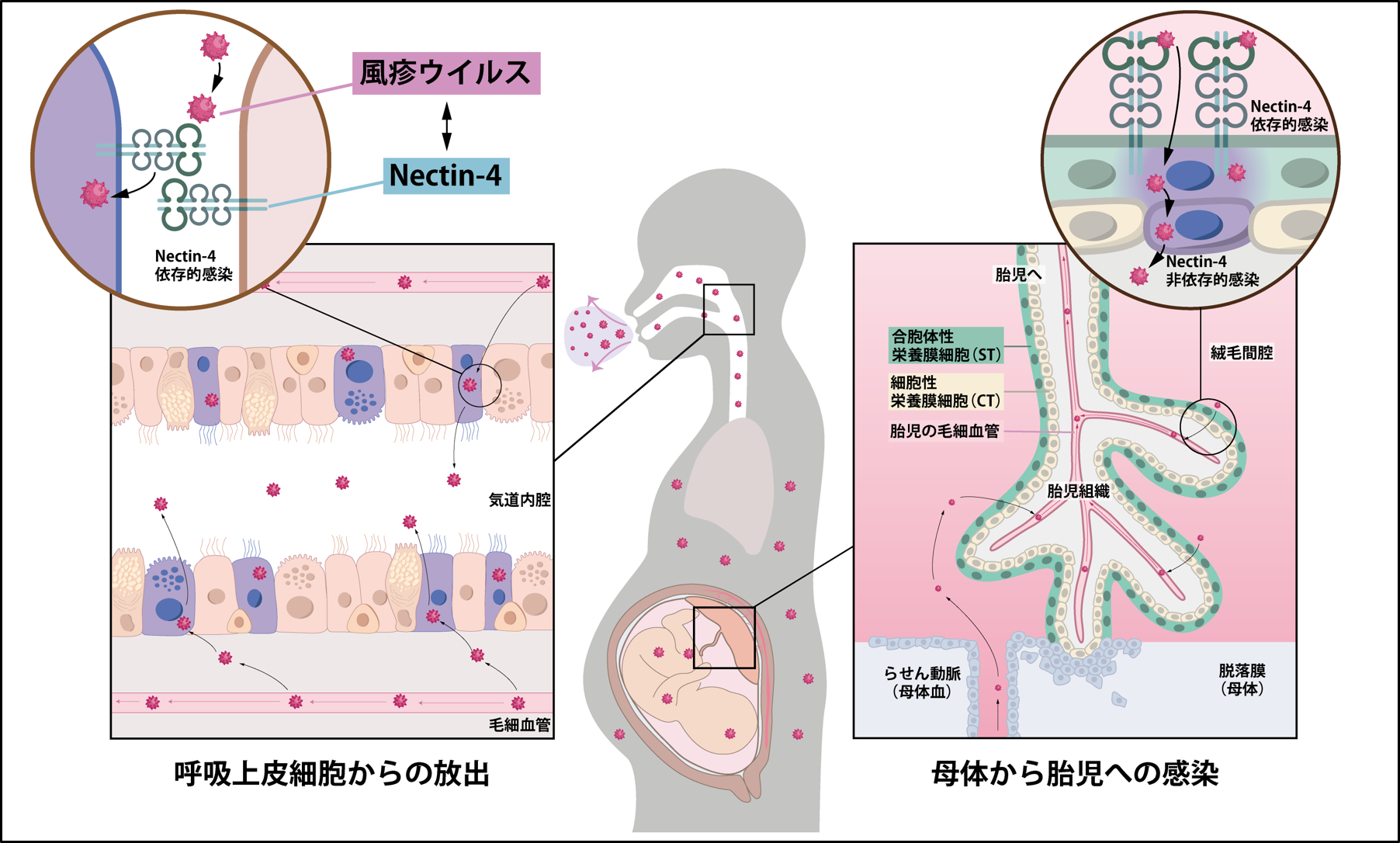
Nectin-4は、風疹ウイルスの呼吸上皮細胞への感染と母体から胎児への感染に関与する
<関連情報>
- https://www.jihs.go.jp/content4/pressrelease/2026/20261106091108.html
- https://www.jihs.go.jp/content4/pressrelease/2026/2026020/20261109_1400.pdf
- https://www.nature.com/articles/s41586-026-11248-2
ネクチン-4は気道細胞および胎盤細胞における風疹ウイルスの侵入を媒介する Nectin-4 mediates rubella virus entry in airway and placental cells
Yoshio Mori, Masafumi Sakata, Yuichiro Nakatsu, Takeshi Hori, Yoko Ino, Satoshi Suzuki, Mayuko Nishi, Miyuki Kawase, Masatoshi Kakizaki, Misato Nagai, Kento Fukano, Hideki Aizaki, Hironori Hayashi, Kazutaka Murayama, Eiichi N. Kodama, Shuhei Taguwa, Takashi Okura, Tatsuki Takahashi, Wataru Kamitani, Kazuya Shirato, Masanori Isogawa, Yayoi Kimura, Hirokazu Kaji, Yoshiharu Matsuura & Akihide Ryo
Nature Published:04 November 2026
DOI:https://doi.org/10.1038/s41586-026-11248-2
Abstract
Rubella virus (RuV) causes rubella and, when acquired during pregnancy, congenital rubella syndrome1. Despite its clinical significance, the cellular entry mechanism of RuV remains poorly characterized, owing to limited identification of host receptors2, which hinders pathogenesis research and therapeutic development. Here, using proximity biotin labelling-based proteomics coupled with CRISPR–Cas9 validation, we identify nectin-4 as a functional RuV entry receptor. Ectopic expression of nectin-4 conferred susceptibility to RuV in non-permissive cells, whereas blocking or genetic ablation of nectin-4 reduced infection, results that demonstrate that nectin-4 is a major entry factor. Mechanistically, nectin-4 directly interacts with the RuV envelope glycoprotein heterodimer and facilitates receptor-mediated endocytosis following initial calcium-dependent viral attachment to cellular lipids. In polarized airway epithelial models, nectin-4 mediates basolateral entry of RuV and supports apical progeny release, a finding that provides a molecular mechanism for respiratory transmission. In placental models, nectin-4 is highly expressed on syncytiotrophoblasts and facilitates infection at the maternal–fetal interface, although additional nectin-4-independent pathways contribute to infection of other trophoblast populations. Together, these data establish nectin-4 as a key factor for respiratory transmission and early placental infection of RuV and highlight it as a promising therapeutic target for the prevention of rubella and related diseases.