2026-11-18 ロックフェラー大学
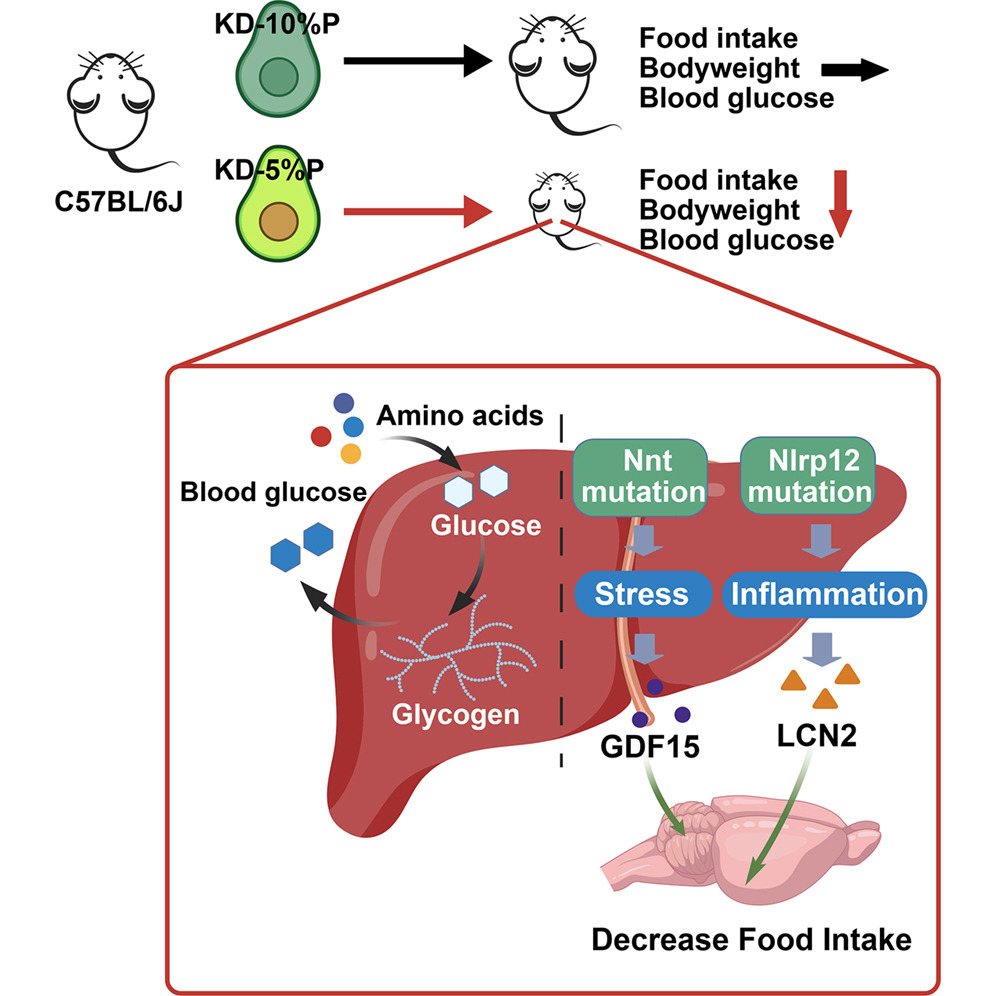
米国ロックフェラー大学の研究チームは、高脂肪・低炭水化物のケトン食に対する反応が、食事中のタンパク質量と遺伝的背景の組み合わせによって大きく異なることをマウス実験で明らかにしました。C57BL/6J系統のマウスでは、タンパク質を5%含むケトン食によって摂食量が約40%減少し、体重も低下しました。一方、タンパク質10%の食事では体脂肪が増加しました。この違いには、酸化ストレス防御に関わるNNTと炎症調節に関わるNLRP12という2つの遺伝子の変異が関係していました。低タンパク質食を摂取したマウスでは、肝臓のストレス・炎症反応が活性化し、食欲を抑制するGDF15やLCN2が増加していました。遺伝子機能の回復や抗酸化剤N-アセチルシステインの投与によって体重減少が抑えられたことから、肝臓から脳へのシグナル伝達が重要と考えられます。ただし、体重減少には筋肉などの除脂肪組織の減少や脂肪肝も伴っており、健康改善と単純には評価できません。ヒトへの適用にはさらなる検証が必要です。
<関連情報>
- https://www.rockefeller.edu/news/40940-fat-ketogenic-diet-weight-loss/
- https://www.cell.com/cell-metabolism/fulltext/S1550-4131(26)00454-7
ケトン食に対する反応は、主要栄養素の構成と遺伝的背景によって決まる
Macronutrient composition and genetic background determine the response to a ketogenic diet in mice
Zhaoyue Zhang, Alexandre Moura-Assis, Shanshan Liu ほか、Paul Cohen、Kivanc Birsoy、Jeffrey Friedman ほか
Cell Metabolism(2026年11月18日オンライン公開)
DOI:https://doi.org/10.1016/j.cmet.2026.10.017

Graphical abstract © 2026 The Authors. Published by Elsevier Inc.Creative Commons CC BY 4.0
Tii-summary
ケトン食に対する体重や代謝の反応は、食事中のタンパク質量だけでなく、個体の遺伝的背景にも大きく左右されることがマウス実験で明らかになった。研究チームは、遺伝的特徴の異なるC57BL/6J(B6J)系統とC57BL/6NJ(B6NJ)系統を用い、タンパク質含有量5%または10%のケトン食を比較した。B6Jマウスではタンパク質5%の食事により摂食量が減少し、体重減少と低血糖が生じた一方、10%の食事では脂肪蓄積と耐糖能の悪化が認められた。B6NJマウスでは同様の反応は見られなかった。解析の結果、B6J系統が持つNntおよびNlrp12の変異が、肝臓の酸化ストレスや炎症に関与し、GDF15とLCN2の増加を介して摂食抑制を引き起こすことが示された。さらに、NNTの肝臓での再発現やN-アセチルシステインの投与によって、これらのストレス応答と体重減少が軽減された。GDF15受容体GFRALを発現する神経細胞を除去した実験でも体重減少が抑制され、肝臓から脳へ伝わる摂食調節経路の関与が裏付けられた。本研究は、ケトン食の代謝効果が栄養組成と遺伝的背景の相互作用によって変化することを示しており、食事療法の効果や副作用を評価する際には個体差を考慮する必要があることを示唆している。ただし、今回の知見はマウスを対象としたものであり、ヒトのケトン食療法にそのまま適用できるかは今後の検証が必要である。
This study demonstrates that responses to ketogenic diets depend on both dietary protein content and genetic background. The researchers compared C57BL/6J (B6J) and C57BL/6NJ (B6NJ) mice fed ketogenic diets containing either 5% or 10% protein. In B6J mice, the 5%-protein ketogenic diet caused reduced food intake, weight loss, and hypoglycemia, whereas the 10%-protein diet increased adiposity and impaired glucose tolerance. These responses were not observed in B6NJ mice. Further analyses revealed that mutations in Nnt and Nlrp12 in B6J mice contribute to hepatic oxidative stress and inflammation, leading to increased expression of GDF15 and LCN2 and subsequent suppression of food intake. Re-expression of NNT in the liver and treatment with N-acetylcysteine reduced these stress responses and attenuated weight loss. Ablation of GFRAL-expressing neurons also blunted weight loss, supporting the involvement of a liver-to-brain signaling pathway in appetite regulation. These findings reveal that the metabolic effects of ketogenic diets are shaped by interactions between macronutrient composition and genetic background. They highlight the importance of individual genetic variation when evaluating dietary interventions and their potential adverse effects. However, because the findings were obtained in mice, further research is needed to determine whether the same mechanisms apply to ketogenic diets in humans.