2026-11-16 フロリダ大学(UF)
<関連情報>
- https://news.ufl.edu/2026/11/deepfake-faces/
- https://academic.oup.com/scan/article/21/1/nsag086/9003910
偽物が本物に感じられるとき:若年者と高齢者におけるディープフェイクの超リアル知覚の行動・神経メカニズム
When Fakes Feel Real: Behavioral and Neural Mechanisms of Deepfake Hyperrealism in Younger and Older Adults
Stephanie R. Washburn, Tian Lin, Mengdi Zhu, Ryan Faulkner, Brian S. Cahill, Nichole R. Lighthall, Natalie C. Ebner
Social Cognitive and Affective Neuroscience, Volume 21, Issue 1, 2026, Article nsag086
Published:2026年10月28日
Corrected and typeset:2026年11月16日
所属:University of Florida、University of Central Florida(米国)
DOI:https://doi.org/10.1093/scan/nsag086
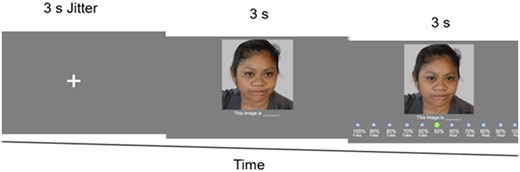
AIが生成した人物画像は、本物の人物写真よりもリアルに感じられることがあり、「ディープフェイクの超リアル知覚(Deepfake Hyperrealism)」と呼ばれる。本研究では、この現象が若年者と高齢者でどのように異なるか、また、その背景にある脳活動を明らかにするため、若年者62人(18~37歳)と高齢者94人(60~89歳)の計156人を対象に、実在人物とAI生成の顔画像を見分ける課題を実施し、機能的MRIによって脳活動を測定した。行動データの分析対象は147人、脳画像解析の対象は126人であった。その結果、若年者・高齢者のいずれも、実在人物の画像よりAI生成画像を本物らしいと評価する傾向を示し、この傾向は高齢者でより顕著だった。脳活動の解析では、信頼できない情報や不確実性の検出に関与する前部島皮質(anterior insula:aINS)の活動が低いほど、画像を本物らしいと判断する傾向が強かった。また、前部島皮質の活動は実在画像よりディープフェイク画像を見たときに低下していた。これらの結果は、AI生成画像に対する前部島皮質の反応低下が、偽物を本物と感じる知覚バイアスに関係することを示唆している。本研究は、ディープフェイクによる詐欺や情報操作に対する脆弱性を理解するうえで、加齢に伴う認知・神経機能の変化が重要であることを示している。一方、実験で使用したのは顔画像の真偽判断課題であり、音声・動画を含む実際の詐欺状況での検出能力を直接評価したものではない。今後は、画像の特徴や情報提示方法、教育・訓練による判断能力の改善効果を検証する必要がある。
AI-generated facial images can sometimes appear more realistic than photographs of actual people, a phenomenon known as deepfake hyperrealism. This study investigated age-related differences in this phenomenon and its underlying neural mechanisms. A total of 156 participants, including 62 younger adults aged 18–37 and 94 older adults aged 60–89, evaluated real and AI-generated facial images while undergoing functional magnetic resonance imaging (fMRI). Behavioral analyses included 147 participants, while neuroimaging analyses included 126. Both age groups rated deepfake images as more real than genuine photographs, with the effect being significantly stronger among older adults. Brain imaging revealed that lower activation in the anterior insula (aINS), a region involved in processing salient and potentially untrustworthy information, was associated with higher perceived realness. The aINS also showed lower activation when participants viewed deepfake images than when they viewed genuine photographs. These findings suggest that reduced anterior insula responses to AI-generated faces contribute to the perceptual bias through which artificial images are experienced as authentic. The study highlights potential age-related vulnerability to deepfake-based fraud and manipulation and identifies a neural mechanism associated with impaired authenticity judgments. However, the experiment focused on facial-image judgments and did not directly assess the ability to detect deepfakes in real-world fraud situations involving audio or video. Further research is needed to investigate the effects of image characteristics, information presentation, and training interventions on deepfake detection across age groups.
原著論文:Oxford Academic