2026-11-09 国立がん研究センター
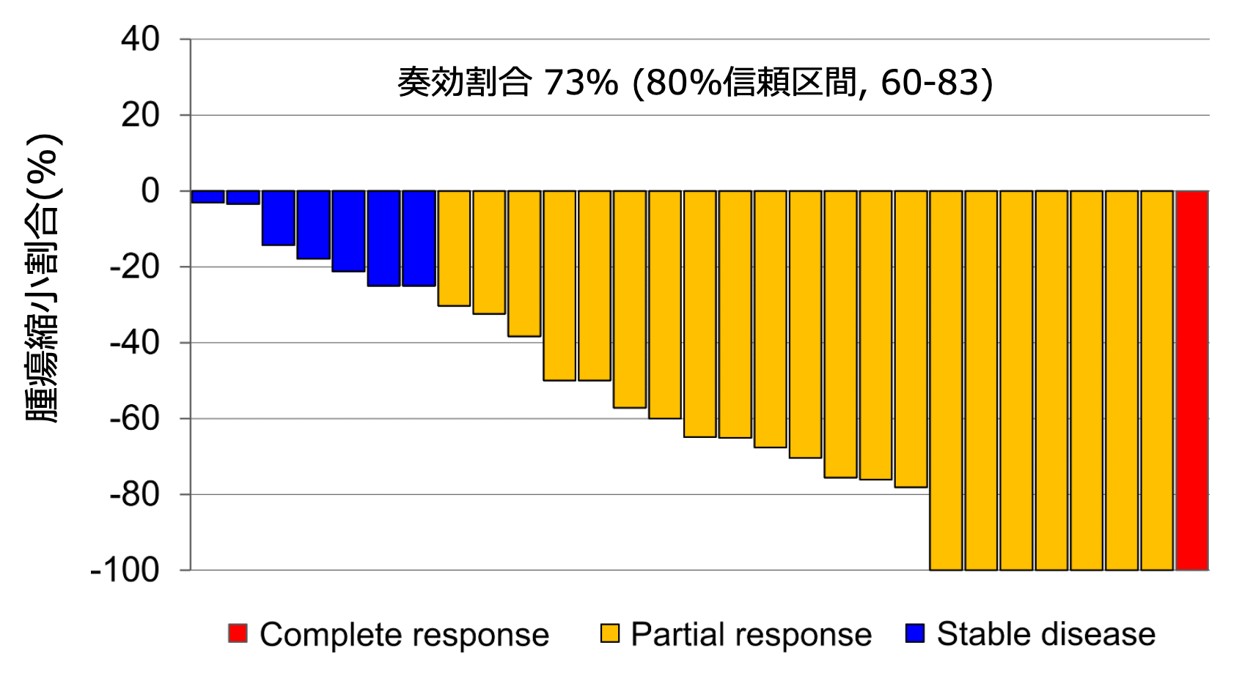
図1 レゴラフェニブ、ニボルマブ、化学療法の併用療法による抗腫瘍効果
<関連情報>
- https://www.ncc.go.jp/jp/information/pr_release/2026/1109/index.html
- https://www.science.org/doi/10.1126/scitranslmed.aec7235
進行胃癌におけるレゴラフェニブ、ニボルマブ、および化学療法中の腫瘍免疫微小環境の経時的変化 Longitudinal remodeling of the tumor-immune microenvironment during regorafenib, nivolumab, and chemotherapy in advanced gastric cancer
Kota Itahashi, Akihito Kawazoe Tadayoshi Hashimoto, Yue Yan, Takuma Irie, Hiromi Ono, Hitomi Tamura, Kyoko Hongo, Takashi Ikeno, […] , and Kohei Shitara
Science Translational Medicine Published:4 Nov 2026
DOI:https://doi.org/10.1126/scitranslmed.aec7235
Abstract
Previous studies combining the multikinase inhibitor regorafenib with a PD-1 inhibitor showed promising activity in gastric cancer. We conducted a phase 1b/2 trial (NCT05394740) of first-line regorafenib, nivolumab, and chemotherapy in 30 patients with mismatch repair–proficient gastric cancer and investigated its impact on the tumor microenvironment. The primary end point was met; 22 of 30 patients showed objective tumor response (73%; 80% confidence interval, 60.3 to 83.8). Single-cell RNA and T cell receptor sequencing were performed on biopsy samples at baseline, during treatment, and at disease progression. The combination treatment increased tumor antigen–reactive CD8+ T cells and M1-like proinflammatory macrophages and decreased immunosuppressive and tumor-promoting populations, including activated CCR8+ regulatory T cells, LRRC15+ cancer-associated fibroblasts (CAFs), RGS5+ pericytes, and APLN+ tip cells. At progression, LRRC15+ CAFs and APLN+ tip cells remained reduced, activated CCR8+ regulatory T cells reexpanded, and additional treatment-resistant subsets emerged, including APOC1+ lipid-associated macrophages. In murine models of acquired resistance, therapeutic targeting of these suppressive immune cell populations with antibodies against CCR8 or TREM2 in combination with PD-1 blockade restored antitumor immunity. These findings demonstrate dynamic remodeling of the tumor microenvironment and suggest potential therapeutic targets.