2025-07-18 国立循環器病研究センター
ChatGPT:
- https://www.ncvc.go.jp/pr/release/pr_48223/
- https://publications.ersnet.org/content/erj/66/1/2402268
慢性血栓塞栓性肺高血圧症患者の生存傾向:観察研究 Survival trends in patients with chronic thromboembolic pulmonary hypertension: an observational study
Takatoyo Kiko,Ryotaro Asano,Yusuke Yoshikawa
European Respiratory Journal
DOI:https://doi.org/10.1183/13993003.02268-2024
Graphical abstract
Overview of the study. CTEPH: chronic thromboembolic pulmonary hypertension; BPA: balloon pulmonary angioplasty; PEA: pulmonary endarterectomy.

Abstract
Background
Treatment options for patients with chronic thromboembolic hypertension (CTEPH) have increased over the past decade. However, it is unknown whether the outcomes of patients with CTEPH have changed as well.
Methods
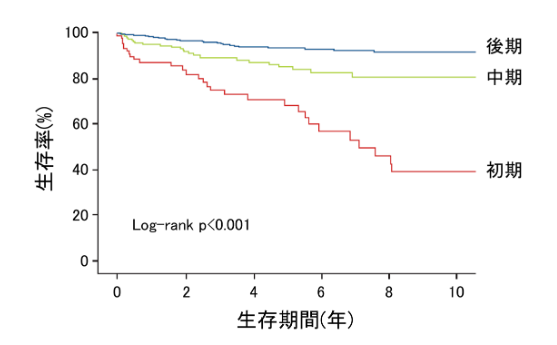
This retrospective study analysed the data of 834 patients with CTEPH, categorised into early (April 1980–December 1999), middle (January 2000–September 2010) and current (October 2010–December 2023) eras. The primary end-point was all-cause mortality. Multivariable Cox proportional hazards models were used to assess changes in all-cause mortality after adjusting for confounding variables.
Results
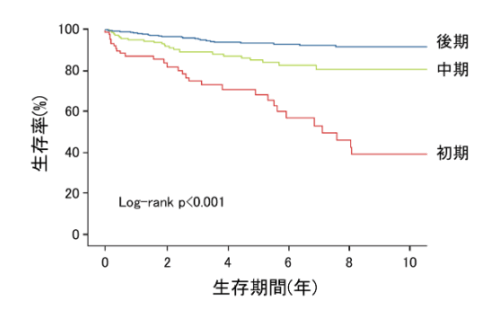
95, 210 and 529 patients were from the early, middle and current eras, respectively. The proportion of patients who did not receive CTEPH therapy decreased from 65% in the early era to 36% and 3% in the middle and current eras, respectively. Meanwhile, the adoption of multimodal treatment increased from 0% to 58% over time. The Kaplan–Meier analysis revealed significant improvements in overall survival (log-rank p<0.001). The 5-year survival rates improved from 68% in the early era to 85% and 93% in the middle and current eras, respectively. The adjusted hazard ratios for mortality were 0.291 (95% CI 0.154–0.550; p<0.001) for the early versus middle era, 0.447 (95% CI 0.249–0.804; p=0.007) for the middle versus current era and 0.130 (95% CI 0.067–0.254; p<0.001) for the early versus current era.
Conclusion
The long-term prognosis of patients with CTEPH has significantly improved in recent decades.