2025-08-20 アイルランド・リムリック大学(UL)
<関連情報>
- https://www.ul.ie/scieng/news/ul-researcher-part-of-international-team-to-discover-how-epstein-barr-virus-infection
- https://www.nature.com/articles/s41586-025-09378-0
EBVが炎症性T細胞を引き付けるB細胞の中枢神経系への定着を誘導する EBV induces CNS homing of B cells attracting inflammatory T cells
Fabienne Läderach,Ioannis Piteros,Éanna Fennell,Elena Bremer,Mette Last,Sandra Schmid,Lisa Rieble,Caroline Campbell,Isis Ludwig-Portugall,Lea Bornemann,Alexander Gruhl,Klaus Eulitz,Paul Gueguen,Juliane Mietz,Anne Müller,Gaetana Pezzino,Jürgen Schmitz,Guido Ferlazzo,Josef Mautner & Christian Münz
Nature Published:06 August 2025
DOI:https://doi.org/10.1038/s41586-025-09378-0
Abstract
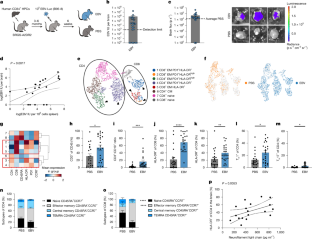
Epidemiological data have identified Epstein–Barr virus (EBV) infection as the main environmental risk factor for multiple sclerosis, the predominant autoimmune disease of the central nervous system (CNS)1. However, how EBV infection initiates multiple sclerosis pathogenesis remains unclear. Here we demonstrate that EBV expands oligoclonal T-bet+CXCR3+ B cells that home to the CNS in humanized mice. Effector memory CD8+ T cells and CD4+ TH1 cells as well as CD4+ TH17 cells co-migrate to the brain of EBV-infected humanized mice. T-bet+CXCR3+ B cells can colonize submeningeal brain regions in the absence of other lymphocytes and attract T cells. Depletion of B cells with rituximab or blocking of CXCR3 significantly decreases lymphocyte infiltration into the CNS. Thus, we suggest that symptomatic primary EBV infection generates B cell subsets that gain access to the CNS, attract T cells and thereby initiate multiple sclerosis.