2026-01-19 東京科学大学
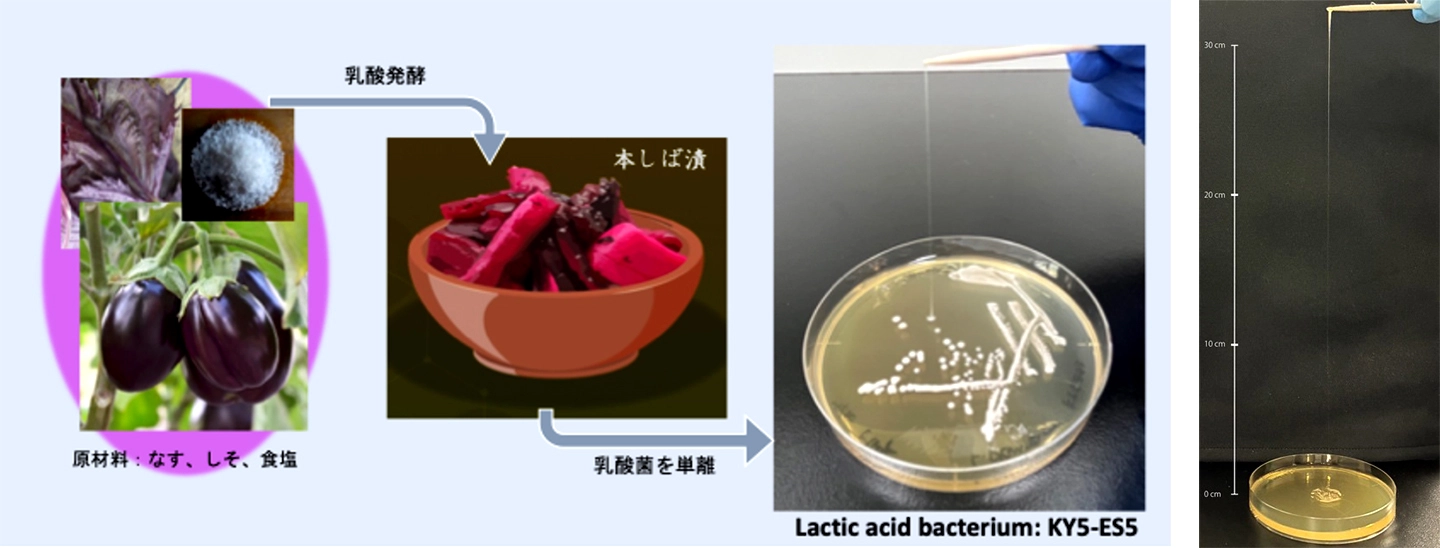
図1. 京都のしば漬けから特定の乳酸菌を単離(左)。 非常に高い粘度を示すKY5-ES5(右)
<関連情報>
粘性株Lactiplantibacillus plantarum KY5-ES5由来の新規グリセロール含有菌体外多糖類と培地粘度への影響 A novel glycerol-containing exopolysaccharide from the ropy strain Lactiplantibacillus plantarum KY5-ES5 and its impact on medium viscosity
Kazunori Sawada & Takuji Yamada
Scientific Reports Published:12 December 2025
DOI:https://doi.org/10.1038/s41598-025-29706-8
Abstract
Exopolysaccharides (EPS) produced by lactic acid bacteria (LAB) contribute to the texture of fermented foods and offer potential health benefits. In this study, a ropy Lactiplantibacillus plantarum strain, KY5-ES5, was isolated from shibazuke, Japanese traditional fermented pickles. The strain exhibited significantly higher viscosity in synthetic medium compared to the non-ropy type strain L. plantarum JCM1149T. EPS extracted from KY5-ES5 contained glucose, galactose, and glycerol, a composition not previously reported. Structural analysis using NMR spectroscopy revealed a complex and heterogeneous polysaccharide structure with multiple glycosidic linkages, including α-1,4, α-1,6, β-1,3, and β-1,4 bonds. Glycerol residues possibly randomly modify the sugar residues as a 2-glycerol phosphate rather than being part of the main sugar chain. These findings highlight the unique composition and structural complexity of KY5-ES5 EPS, expanding the understanding of LAB-derived polysaccharides. The potential functional properties of this novel EPS, particularly its role in food texture modification and human health, warrant further investigation.