2026-01-23 東京大学
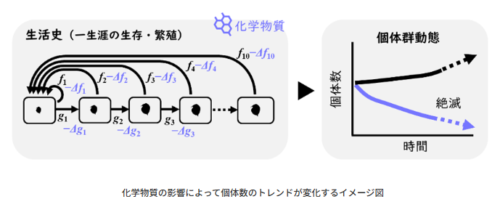
本研究は、化学物質による野生生物の個体数減少リスクを、現行の生態毒性試験がどの程度捉えられているのかを定量的に評価した。生態毒性試験は生存率や繁殖率など特定の生活史段階のみを対象とすることが多く、個体群動態を直接評価するには限界がある。そこで研究チームは、OECDの化学品テストガイドラインを対象に、文献から得た生活史全体の情報を用いて、各生活史パラメータが個体群成長率に与える影響度(弾性度)を算出し、試験で測定される項目がどの程度個体群レベルのリスクを反映できるかを「有効性」として評価した。その結果、多くの試験で有効性は0.4未満と低く、特に陸生無脊椎動物を対象とした試験では個体群レベルの影響を十分捉えられない可能性が示された。一方、魚類や鳥類では複数試験を組み合わせることで有効性が向上する傾向が確認され、本研究は今後のリスク評価手法の高度化に重要な知見を提供する。
<関連情報>
人口統計モデル分析を用いた現在の生態毒性試験の全体的な集団レベルの関連性の評価 Evaluating the overall population-level relevance of the current ecotoxicological tests using demographic model analysis
Environmental Toxicology and Chemistry Published:10 January 2026
DOI:https://doi.org/10.1093/etojnl/vgag005
DOI:https://doi.org/10.1093/etojnl/vgag005
Abstract
Ecotoxicological tests are usually designed to measure individual-level toxicity, such as impacts on survival rate and fecundity during specific life stages. To assess population-level chemical risk, ecotoxicological test results are often incorporated into theoretical population models. However, because test duration is generally shorter than the lifespan of the test species, not all survival and reproduction parameters required for constructing population models are measured. Current test protocols may therefore overlook individual-level chemical impacts crucial for population dynamics, potentially leading to inaccurate risk assessments. In this study, we evaluated the population-level relevance of the test protocols provided by the Organisation for Economic Co-operation and Development. We first compiled matrix population models that represented the full life cycles of the test species from published papers. We then aggregated the elasticities of the population growth rate to the parameters measured in the tests. The aggregated elasticity, ranging from 0 to 1, indicates how a slight change in vital rates measured in the test affects the population growth rate, representing the population-level relevance of the test protocols. The relevance score of each test was generally below 0.4, but varied depending on the endpoint type and the taxonomic group of the target species. Notably, tests designed for terrestrial invertebrates showed low relevance, indicating a substantial limitation in capturing individual-level defects that may lead to severe population decline in terrestrial invertebrates. Multiple tests targeting the same species covered the life history complementarily, and their combined use increased the population-level relevance. This study provides the overall landscape of the relevance of current ecotoxicological tests to population-level risk assessment, highlighting key directions to better align with population conservation.