2026-03-18 カリフォルニア大学リバーサイド校(UCR)
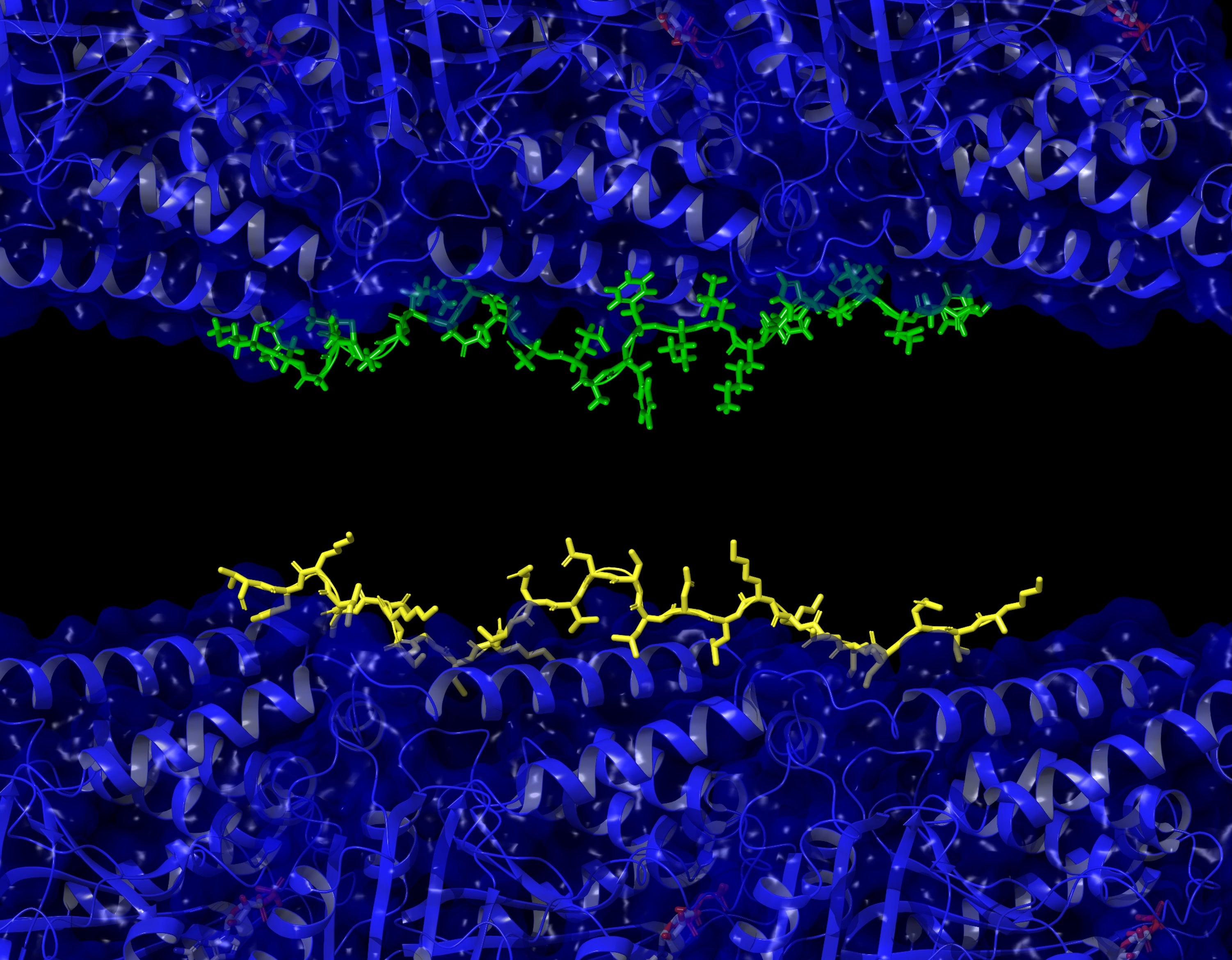
Microtubules in blue, tau represented in green, and a-beta in yellow. (Ryan Julian/UCR)
<関連情報>
- https://news.ucr.edu/articles/2026/03/18/key-alzheimers-proteins-are-competing-inside-brain-cells
- https://academic.oup.com/pnasnexus/article/5/3/pgag034/8524397
アミロイドβとタウを結びつける微小管の結合:アルツハイマー病の根本原因に関するシンプルで統一的な理論 The microtubule nexus linking amyloid beta and tau: A simple and unifying theory for the underlying cause of Alzheimer’s disease
Thomas A Shoff ,Maxence Derbez-Morin ,Peishan Cai ,Ryan R Julian
PNAS Nexus Published:17 March 2026
DOI:https://doi.org/10.1093/pnasnexus/pgag034
Abstract
Alzheimer’s disease (AD) is defined by cognitive decline in conjunction with accumulation of aggregated amyloid β (Aβ) and tau, yet existing models of AD fail to provide a simple connection between Aβ and tau. However, microtubules provide an intriguing nexus for pathological interactions between the two. Tau binds to microtubules and is critical to maintaining their proper function. We demonstrate that Aβ also binds to microtubules with affinity comparable to that of tau itself. We hypothesize that displacement of tau by Aβ leads to microtubule dysfunction and facilitates tau phosphorylation and aggregation. Importantly, in this model, aggregation of Aβ is not the primary cause of toxicity, which allows many of the apparent contradictions between Aβ pathology and cognition to be rationalized. This model highlights the importance of both tau and Aβ and enables additional therapeutic and intervention strategies to be considered.