
2026-05-08 ノースウェスタン大学
<関連情報>
- https://news.northwestern.edu/stories/2026/05/metformins-real-power-may-be-in-the-gut
- https://www.nature.com/articles/s42255-026-01530-y
メトホルミンは腸管上皮のミトコンドリア複合体Iを阻害し、血糖コントロールを促進する Metformin inhibits mitochondrial complex I in intestinal epithelium to promote glycaemic control
Zachary L. Sebo,Ram P. Chakrabarty,Rogan A. Grant,Karis B. D’Alessandro,Alec R. Koss,Jenna L. E. Blum,Shawn M. Davidson,Colleen R. Reczek & Navdeep S. Chandel
Nature Metabolism Published:08 May 2026
DOI:https://doi.org/10.1038/s42255-026-01530-y
Abstract
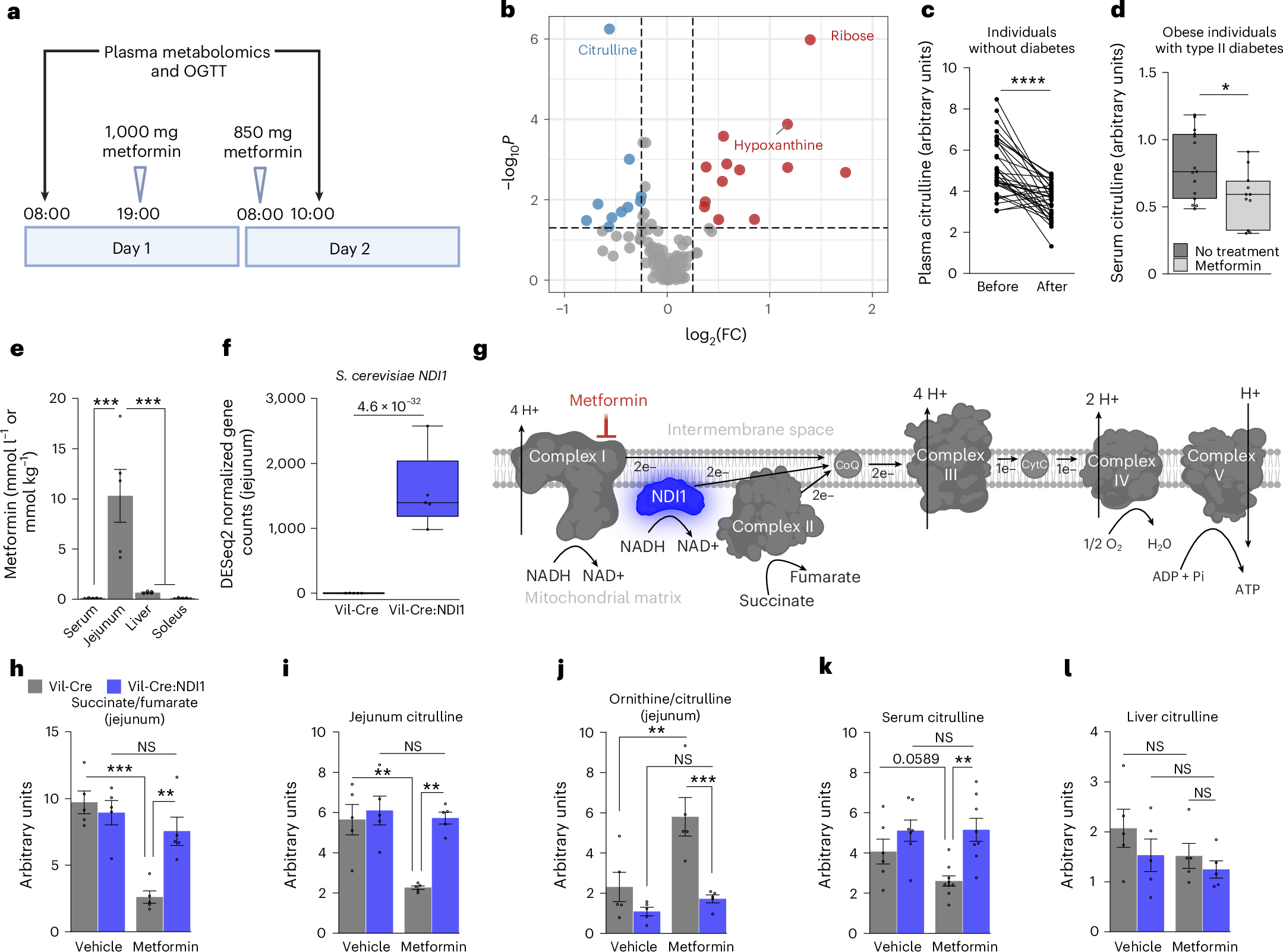
Metformin is a versatile biguanide drug primarily prescribed for type II diabetes. Despite its extensive use, the mechanisms underlying its clinical effects, including attenuated postprandial glucose excursions and elevated intestinal glucose uptake, remain unclear. Here we map these and other effects of metformin to intestine-specific mitochondrial complex I inhibition. Using human metabolomic data and an orthogonal genetics approach in male mice, we demonstrate that metformin suppresses citrulline synthesis, a metabolite generated exclusively by small intestine mitochondria, and increases GDF15 by inhibiting the mitochondrial respiratory chain at complex I. This inhibition co-opts the intestines to function as a glucose sink, driving the uptake of excess glucose and its conversion to lactate and lactoyl-phenylalanine. We also find that glucose lowering by metformin is due to repeated bolus exposure rather than a cumulative chronic response. Notably, the efficacy of phenformin, another biguanide, and berberine, a structurally unrelated nutraceutical, similarly depends on intestine-specific mitochondrial complex I inhibition, underscoring a shared therapeutic mechanism.

