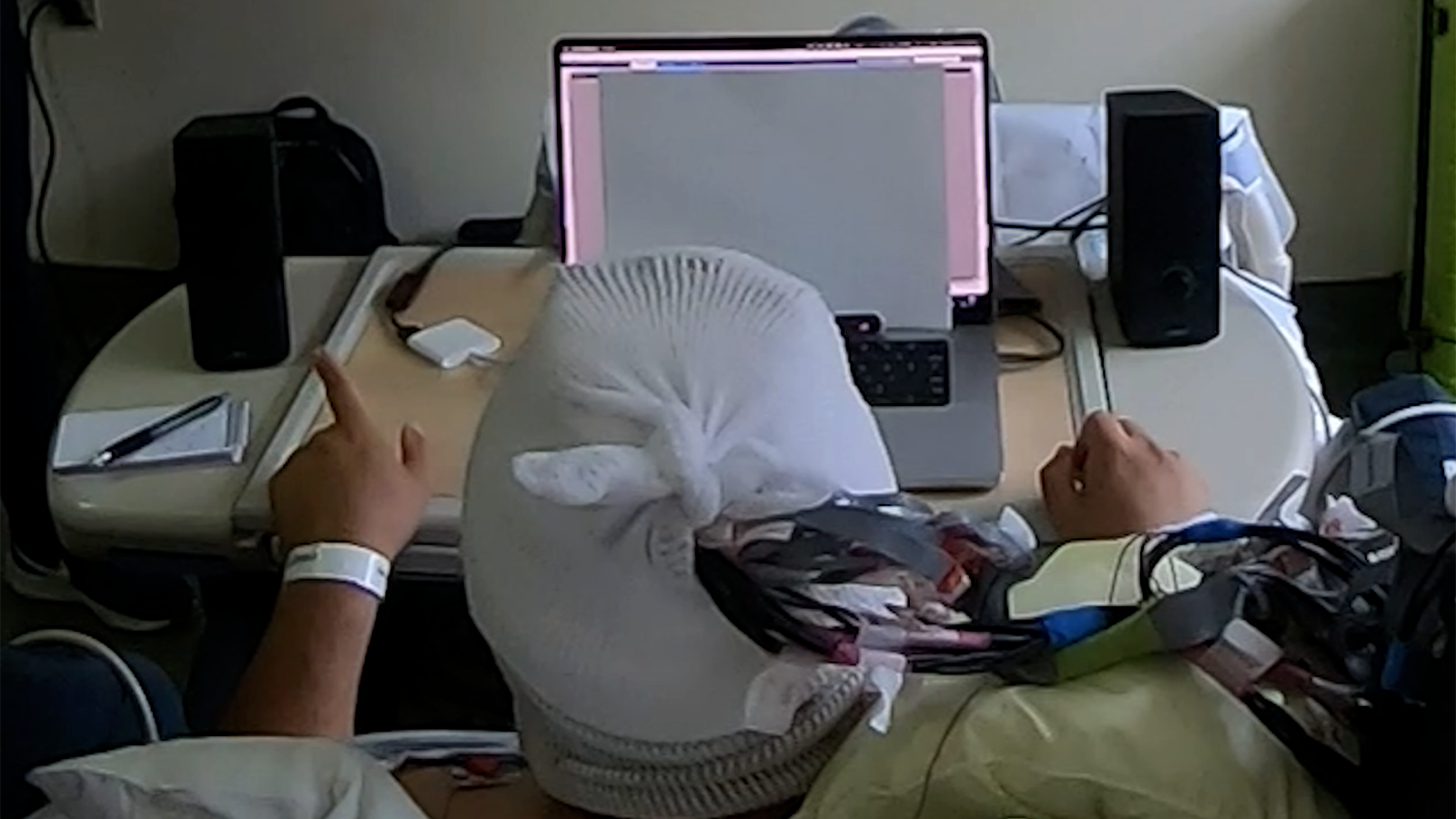
2026-05-12 マサチューセッツ大学アマースト校
 <関連情報>
- https://www.umass.edu/news/article/new-ai-model-measures-motor-impairment-without-subjectivity
- https://ieeexplore.ieee.org/document/11155129
ウェアラブルデバイスを用いた運動失調症評価のための対照学習モデル Contrastive Learning Model for Wearable-Based Ataxia Assessment
Juhyeon Lee; Brandon Oubre; Jean-Francois Daneault; Christopher D. Stephen; Jeremy D. Schmahmann; Anoopum S. Gupta
IEEE Transactions on Biomedical Engineering Published:10 September 2025
DOI:https://doi.org/10.1109/TBME.2025.3608674
Abstract
Objective: Frequent and objective assessment of ataxia severity is essential for tracking disease progression and evaluating the effectiveness of potential treatments. Wearable-based assessments have emerged as a promising solution. However, existing methods rely on inertial data features directly correlated with subjective and coarse clinician-evaluated rating scales, which serve as imperfect gold standards. This approach may introduce biases and restrict flexibility in feature design. To address these limitations, this study introduces a novel contrastive learning-based model that leverages motor severity differences in wearable inertial data to learn relevant features. Methods: The model was trained on inertial data collected from 87 individuals with diagnostically heterogeneous ataxias and 44 healthy participants performing the finger-to-nose task. A pairwise contrastive loss function was proposed to learn representations capturing relative differences in ataxia severity, which were evaluated through downstream regression and classification tasks. Results: The learned features demonstrated strong cross-sectional (r = 0.84) and longitudinal (r = 0.68) associations with clinical scores and robust measurement reliability (intraclass correlation coefficient = 0.96). Additionally, the model exhibited strong known-group validity, distinguishing between ataxia and healthy phenotypes with an area under the receiver operating characteristic curve of 0.95. Conclusion: The proposed contrastive model captures robust representations of disease severity with reduced reliance on clinical scales, outperforming state-of-the-art methods that derive features directly from clinical scores. Significance: Combining wearable sensors with contrastive learning enables a more objective, scalable, and frequent method for assessing ataxia severity, with the potential to enhance patient monitoring and improve clinical trial efficiency.