2026-05-18 北京大学(PKU)
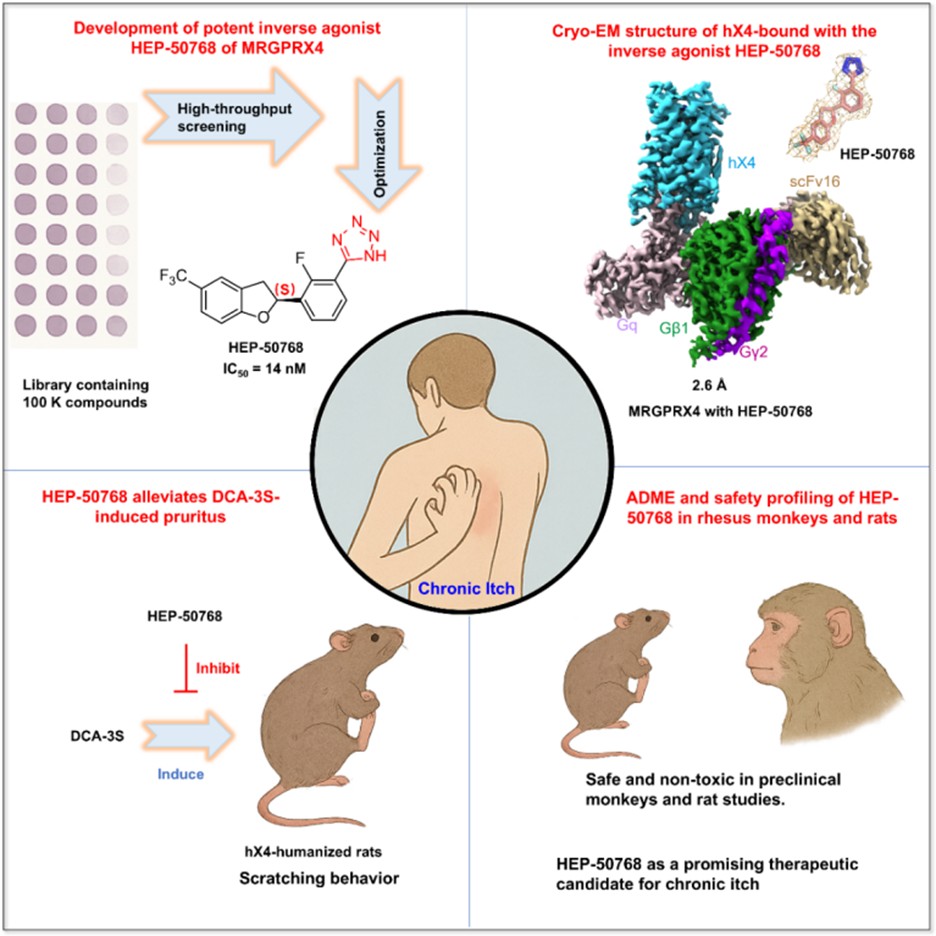
Figure 1. Developing clinical candidate drugs for treating cholestatic itch by targeting the “itch receptor” MRGPRX4.
<関連情報>
- https://newsen.pku.edu.cn/news_events/news/research/15525.html
- https://www.nature.com/articles/s41589-026-02195-0
胆汁うっ滞性掻痒症治療のための臨床的に有効なMRGPRX4逆作動薬の開発 Development of a clinically viable MRGPRX4 inverse agonist for cholestatic itch treatment
Jun Yang,Ruichao Shen,Chunyu Wang,Wenneng Zhu,Han Ke,Junping Fan,Mengna Zhang,Yingjun Liu,Shuai Li,Guochuan Li,Xiaoming Wang,Yulong Li,Can Cao & Xiaoguang Lei
Nature Chemical Biology Published:09 April 2026
DOI:https://doi.org/10.1038/s41589-026-02195-0
Abstract
Chronic itch, particularly in cholestatic and uremic conditions, poses a notable clinical burden, yet treatment options remain inadequate. MRGPRX4 (hX4), a bile-acid-sensing G-protein-coupled receptor predominantly expressed in human sensory neurons, has emerged as a critical mediator of cholestatic pruritus. Here we identified and characterized HEP-50768, a potent and selective small-molecule inverse agonist of hX4 through high-throughput screening and structure–activity optimization. Structural elucidation through cryo-electron microscopy of the hX4–inverse agonist complex structure revealed the unique binding mode and inhibitory mechanism of HEP-50768. In hX4-humanized rats, HEP-50768 robustly suppressed bile-acid-induced pruritic behaviors. Comprehensive preclinical absorption, distribution, metabolism, excretion and safety profiling was performed in both rats and monkeys, and these findings establish HEP-50768 as a promising therapeutic candidate for chronic itch, supporting its advancement to clinical evaluation.