2026-05-27 広島大学
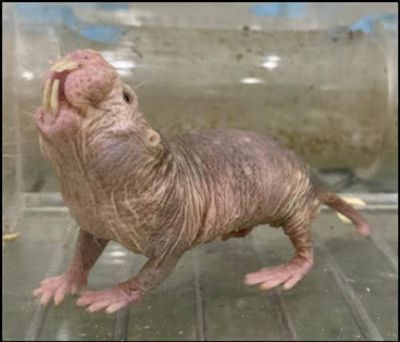
本研究で使用したハダカデバネズミ。真社会性を持つ齧歯類で、女王・王・ワーカーから構成される家族内で分業をともなう集団生活をしている。写真は九州大学大学院医学研究院の山川真徳学術研究員より提供いただいた。
<関連情報>
日本で飼育されたハダカデバネズミ(Heterocephalus glaber)のゲノムアセンブリとアノテーション Genome assembly and annotation of the naked mole rat Heterocephalus glaber reared in Japan
Kouhei Toga,Kaori Oka,Hiroyuki Tanaka,Takehiko Itoh,Atsushi Toyoda,Hidemasa Bono & Kyoko Miura
Scientific Data Published:18 March 2026
DOI:https://doi.org/10.1038/s41597-026-06996-9
Abstract
The naked mole rat (NMR, Heterocephalus glaber) is a eusocial rodent that is native to northeastern Africa. NMRs exhibit extraordinary traits such as longevity, resistance to age-related decline, and remarkable hypoxia tolerance. Although the reference genome of this species has been determined because of its unique characteristics, the significance or role of intraspecific genomic variations remains unknown. In this study, we used PacBio long-read sequencing to generate a genome assembly of NMR reared in Japan. The assembled genome is 2.56 Gb. Benchmarking Universal Single–Copy Orthologs (BUSCO) revealed high completeness (95.2%). BRAKER3 estimated 26,714 protein-coding genes, and we successfully added functional annotations for 26,232 protein-coding genes using the functional annotation workflow. We identified 417 gene models that were previously undetectable in the reference genome of this species. We also identified structural and amino acid sequence variations between our assembly and the reference genome, suggesting the presence of intraspecific genomic variations. This new genomic resource could help uncover the molecular mechanisms underlying the behavioral and physiological traits of NMR.