2026-07-23 ロックフェラー大学
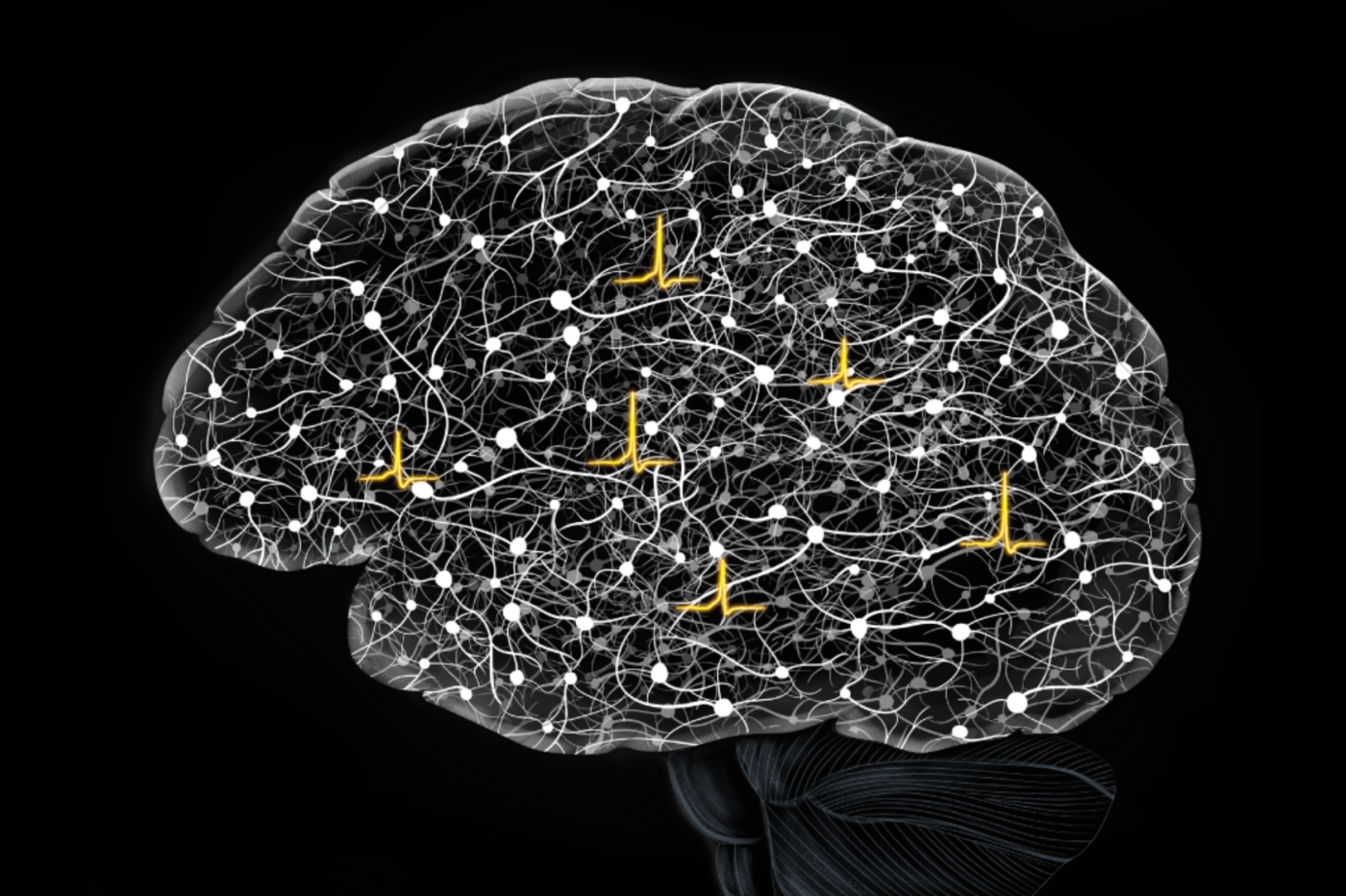
FlatMux captures electrical activity optically from nearly 200 genetically defined neurons across new depths in brain circuits, revealing how signals flow, cells connect, and computations emerge in a living mouse brain. (Image courtesy of the Vaziri lab)
<関連情報>
- https://www.rockefeller.edu/news/40143-flatmux-two-photon-imaging-brain/
- https://www.nature.com/articles/s41592-026-03158-y
皮質深部全体にわたる二光子ニューロン集団電圧イメージングのための多用途プラットフォーム A versatile platform for two-photon neuronal population voltage imaging across cortical depths
Jingkun Guo,Kevin Barber,M. Agustina Frechou,Sihao Lu,Jeff Demas,David Chen,Shuyuan Yang,Alex James McDonald,Michelle Ann Land,François St-Pierre & Alipasha Vaziri
Nature Methods Published:23 July 2026
DOI:https://doi.org/10.1038/s41592-026-03158-y
Abstract
Genetically encoded voltage indicators have emerged as a tool for resolving neuronal spiking activity with high spatiotemporal resolution within genetically specific populations; however, their fast temporal dynamics, low signal-to-noise ratio (SNR) and fast photobleaching have posed substantial challenges limiting their broader utility and, together with suboptimal optical acquisition schemes, preventing their efficient scale-up to larger neuronal populations. Here we introduce a versatile, scalable, spatiotemporally and energetically efficient two-photon optical imaging system scheme based on a flexible lateral-temporal multiplexing (FlatMux) platform. We demonstrate FlatMux’s capability and its flexible reconfigurability for meeting different recording requirements. This includes a large field-of-view mode, a 2-kHz high-speed mode, a deep-tissue imaging mode allowing recordings of cortical spiking activity at up to 500-µm depth, a dual-plane imaging mode allowing for simultaneous recording of population spiking activity of neurons in cortical L2/3 and L4, and a high-SNR imaging mode for recording of subthreshold neuronal activity and high-SNR spiking activity, all while minimizing pixel crosstalk and bleaching. Thus, FlatMux meets the challenging demands of multiphoton voltage imaging across the mammalian cortex and can be expected to enable a range of studies of complex brain functions at single-spike and single-trial level for large neuronal populations.