2026-06-04 カリフォルニア大学アーバイン校(UCI)
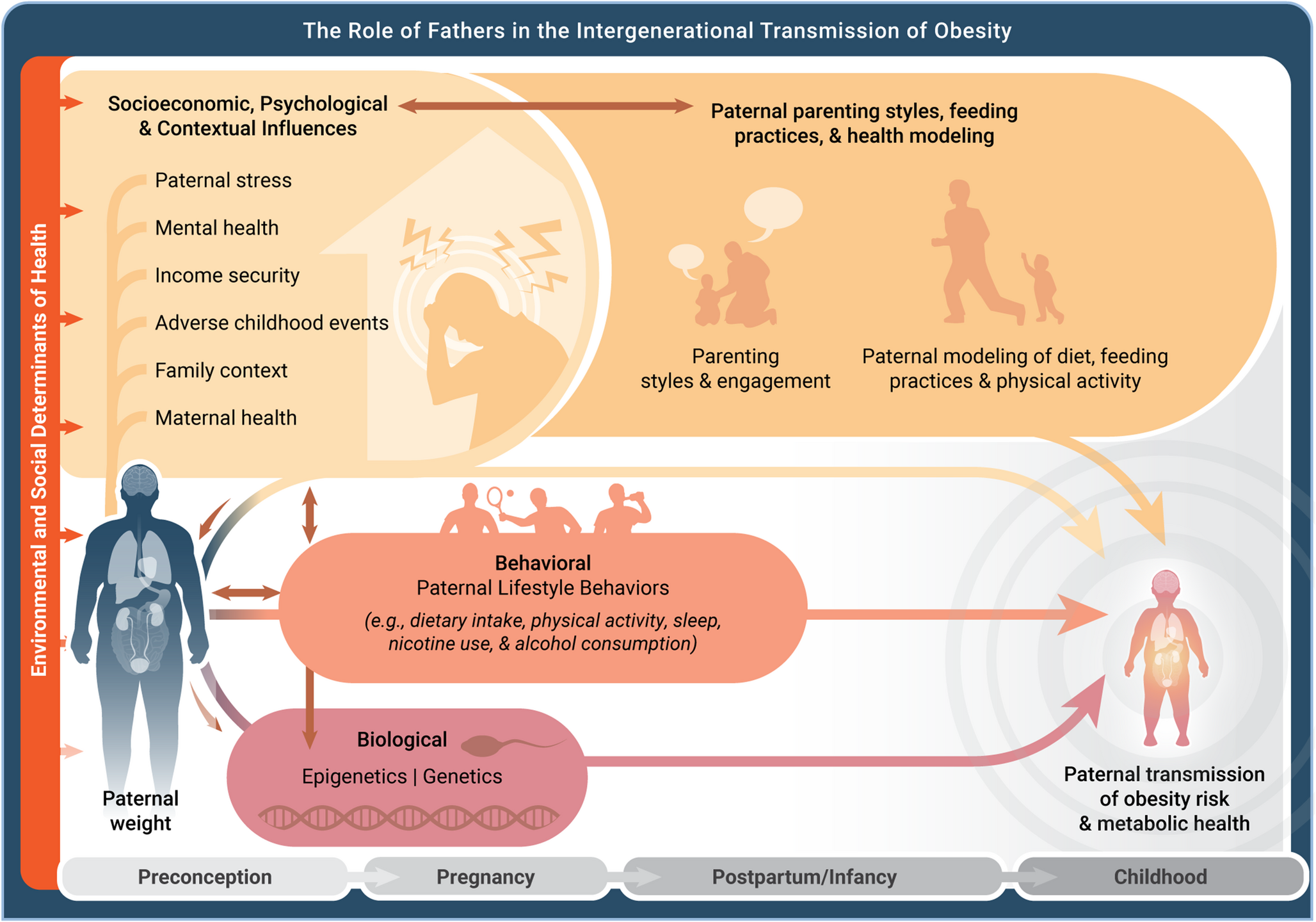
◆『Current Obesity Reports』に掲載されたレビュー論文では、父親の肥満、食生活、ストレス、メンタルヘルス、生活習慣が、受胎前から子どもの肥満や慢性疾患リスクに関与することが報告された。特に父親の肥満は精子の質やエピジェネティックな制御機構(遺伝子の働きを調節する生物学的シグナル)に影響し、子どもの代謝、食欲調節、疾患感受性に関係する可能性がある。また、肥満リスクの40~70%は遺伝的要因を含む世代間伝達の影響を受けるとされる。一方で、生活習慣改善や減量手術などによって精子の健康状態やエピジェネティック変化が改善する可能性も示された。さらに、父親の食習慣や運動習慣、家庭内での行動は子どもの生活習慣形成にも大きく影響する。研究は、小児肥満対策を母親中心から父親も含めた家族全体の健康支援へ拡大する必要性を提言している。
<関連情報>
- https://news.uci.edu/2026/06/04/the-dad-bod-dilemma/
- https://link.springer.com/article/10.1007/s13679-026-00720-9
肥満の世代間伝達における父親の役割 The Role of Fathers in the Intergenerational Transmission of Obesity
Matthew J. Landry & John James Parker
Current Obesity Reports Published:26 May 2026
DOI:https://doi.org/10.1007/s13679-026-00720-9
Abstract
Purpose of Review
This narrative review aims to synthesize recent evidence demonstrating that paternal influences can significantly affect child obesity risk through biological, psychosocial, and behavioral pathways and to highlight implications for clinical practice, public health, and research.
Recent Findings
Paternal obesity influences offspring metabolic health through three primary mechanisms. Biologically, paternal obesity alters sperm epigenetic signatures, which are transmissible to offspring and modifiable through preconception lifestyle interventions. Behaviorally, fathers’ dietary quality, physical activity, feeding practices, and parenting styles directly shape children’s eating patterns and activity levels, with the transition to fatherhood representing a critical period when paternal weight gain and lifestyle changes commonly occur. Socioecologically, social determinants of health including food insecurity, neighborhood characteristics, and paternal mental health create shared family-level exposures that simultaneously influence paternal physiology, parenting behaviors, and childhood adversity, compounding obesity risk across generations.
Summary
Fathers play a pivotal role in shaping child obesity risk from preconception through childhood. Advancing obesity prevention requires expanding preconception counseling to include fathers, implementing father-inclusive perinatal education and obesity prevention programs, adopting workplace policies that support paternal engagement, and prioritizing research that elucidates paternal contributions to intergenerational obesity transmission.