2026-09-21 ジョージア大学(UGA)
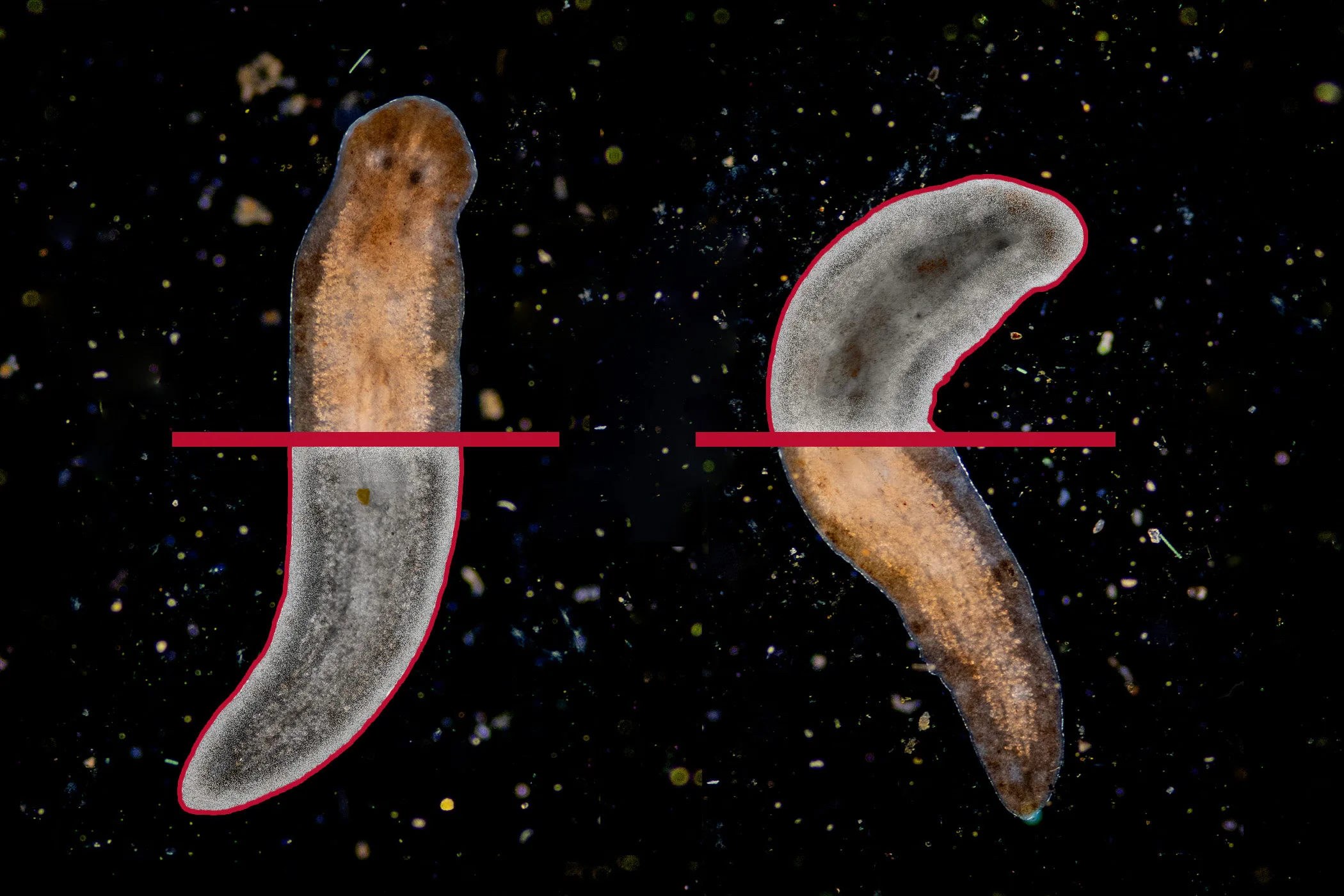
Planarians can regrow their entire body from just a sliver of a body fragment. They can rebuild tissues, muscles and even their brain. (Illustration by Lindsay Robinson)
<関連情報>
組み合わせ機構がプラナリアの神経発生における細胞の位置と神経伝達物質の種類を決定する Combinatorial mechanisms specify cellular location and neurotransmitter identity during planarian neurogenesis
Kendall B. Clay, Taylor Medlock-Lanier, Rachel N. Grimes, Olabamibo O. Oke, Brice T. Hudson, Macey M. Wilson, Nikolay M. Filipov & Rachel H. Roberts-Galbraith
Nature Communications Published:21 September 2026
DOI:https://doi.org/10.1038/s41467-026-76397-4
Abstract
Regenerative neurogenesis can drive replacement of neurons in the right types and locations to faithfully restore form and function after injury. The genetic mechanisms underlying successful regenerative neurogenesis, including mechanisms that produce neuronal diversity and spatial organization, remain poorly understood. Planarians are flatworms with extraordinary capacity for brain regeneration made possible by pluripotent stem cells throughout the body that undergo neurogenesis to form a complex nervous system anew after injury. Here, we focus on the dopaminergic neuron identity and report the discovery of factors important for regenerative neurogenesis of this neuron type in the planarian central, peripheral, and pharyngeal nervous systems. Distinct genes, including irx4/6, fli1-2, soxB1-2, foxA, app-L1, and lmo1/3-1, promote dopaminergic neuronal regeneration and maintenance in distinct parts of the nervous system. Our results demonstrate that planarian neurogenesis requires coordination of factors that initiate neurotransmitter choice and regional location. Our work suggests that combinatorial instruction of cell type and spatial identity could improve exogenous stem cell therapies aimed at precisely replacing neurons after localized injuries.