
2026-08-04 ミュンヘン大学(LMU)
<関連情報>
- https://www.lmu.de/en/newsroom/news-overview/news/alzheimers-novel-3d-brain-tissue-model-aba7c69d.html
- https://www.nature.com/articles/s41593-026-02367-0
生理学的および疾患関連のミクログリア表現型を調査するための、再現可能なヒト脳組織の三次元モデル A reproducible three-dimensional model of human brain tissue to investigate physiological and disease-associated microglia phenotypes
Julien Klimmt,Carolina Cardoso Gonçalves,Jessica Valentina Montgomery,Stephan A. Müller,Merle Bublitz,Severin Filser,Lars Paeger,Brigitte Nuscher,Angelika Dannert,Sigrun Roeber,Veronica Pravata,Martina Schifferer,Joshua J. Shrouder,Nathalie Schulz,Judit González-Gallego,Silvia Cappello,Thomas Misgeld,Nikolaus Plesnila,Eduardo Beltrán,Jochen Herms,Elena De Domenico,Marc D. Beyer,Joachim L. Schultze,Christian Haass,… Dominik Paquet
Nature Neuroscience Published:04 August 2026
DOI:https://doi.org/10.1038/s41593-026-02367-0
Abstract
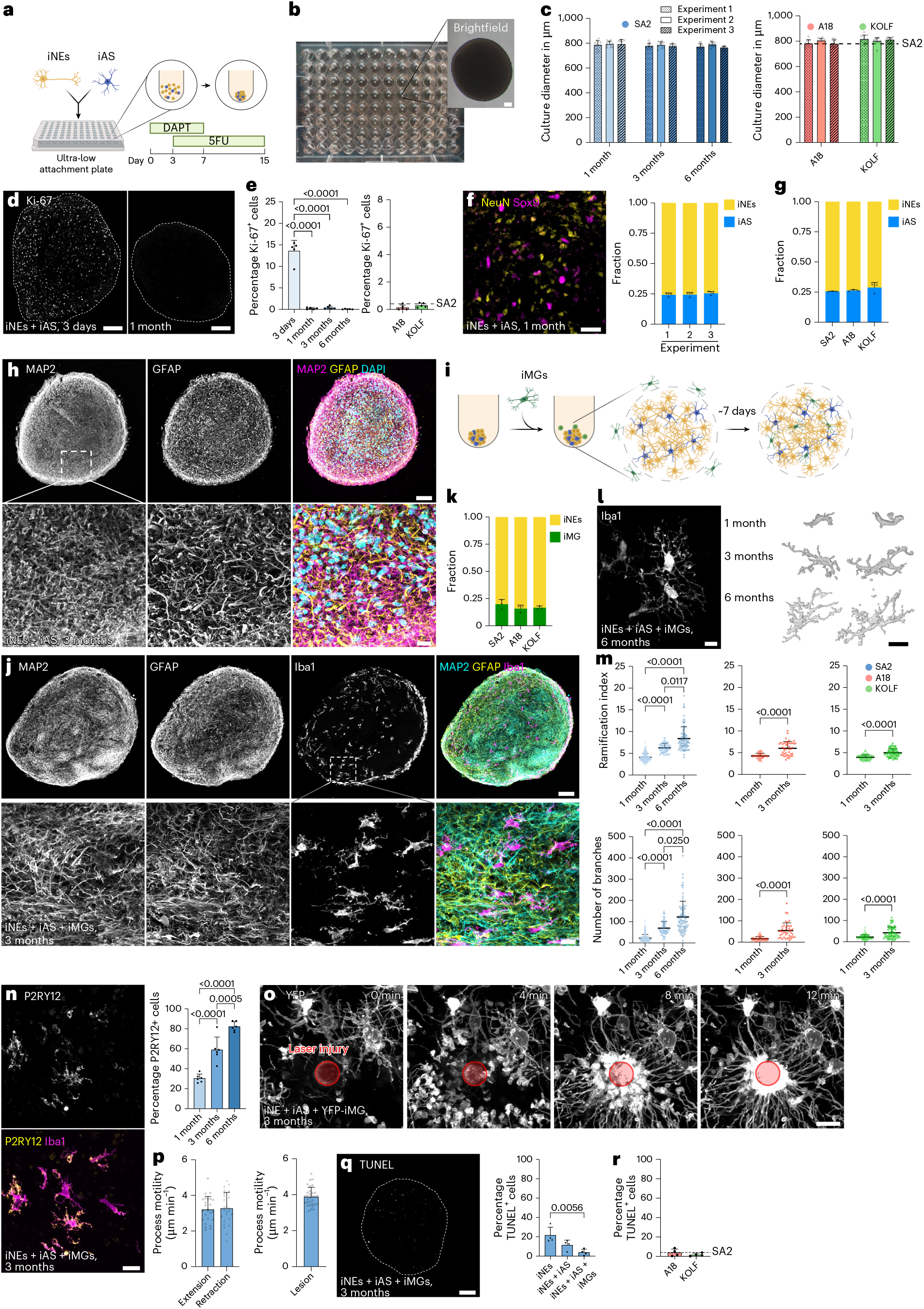
Stem-cell-based in vitro models offer promising potential to elucidate human brain cell functions and interactions, but limitations in reproducibility, maturation and cell-type diversity persist. Especially, prolonged incorporation of mature microglia and studies of neuroinflammation have proven challenging. Here, we developed a human induced pluripotent stem cell-based three-dimensional cortical brain tissue model (3BTM) containing neurons, astrocytes and microglia with high reproducibility, maturity and viability. 3BTMs show morphological, functional and proteomic maturation of all cell types, leading to high similarity to their in vivo counterparts. Incorporated microglia survive for over 6 months and display mature morphology, functions and gene expression. Importantly, when engineered to model Alzheimer’s disease pathology, 3BTMs recapitulate key disease hallmarks, including amyloid deposition, increased phospho-tau levels and neuroinflammation, with microglia shifting their transcriptional landscape to disease-relevant signatures. Treatment of Alzheimer’s disease 3BTMs with anti-Aβ immunotherapy cleared deposits and largely reversed disease signatures in glia. Together, our microglia-containing model provides a platform for studying physiological and pathological states of human brain tissue.

