2026-08-13 カロリンスカ研究所(KI)
<関連情報>
- https://news.ki.se/regional-differences-in-chemotherapy-treatment-for-breast-cancer-may-affect-survival
- https://link.springer.com/article/10.1186/s13058-026-02366-w
スウェーデンの医療地域間における化学療法使用のばらつきと、HR+/HER2-早期乳がん女性の予後への影響 Variation in chemotherapy use across healthcare regions in Sweden and its impact on prognosis in women with HR+/HER2- early breast cancer
Balazs Acs,Xingrong Liu,Leo Gkekos,Emelie Karlsson,Anna L. V. Johansson,Per Karlsson,Anne Andersson,Antonios Valachis,Irma Fredriksson,Theodoros Foukakis & Johan Hartman
Brest Cancer Research Published:13 August 2026
DOI:https://doi.org/10.1186/s13058-026-02366-w
Abstract
Background
Hormone receptor–positive/Human epidermal growth factor receptor 2–negative (HR+/HER2–) early breast cancer accounts for the majority of breast cancer cases. Although chemotherapy can reduce recurrence risk, its use in HR+/HER2– high-risk disease remains complex in clinical practice. We aimed to examine regional variation in chemotherapy use in Sweden and its association with prognosis.
Methods
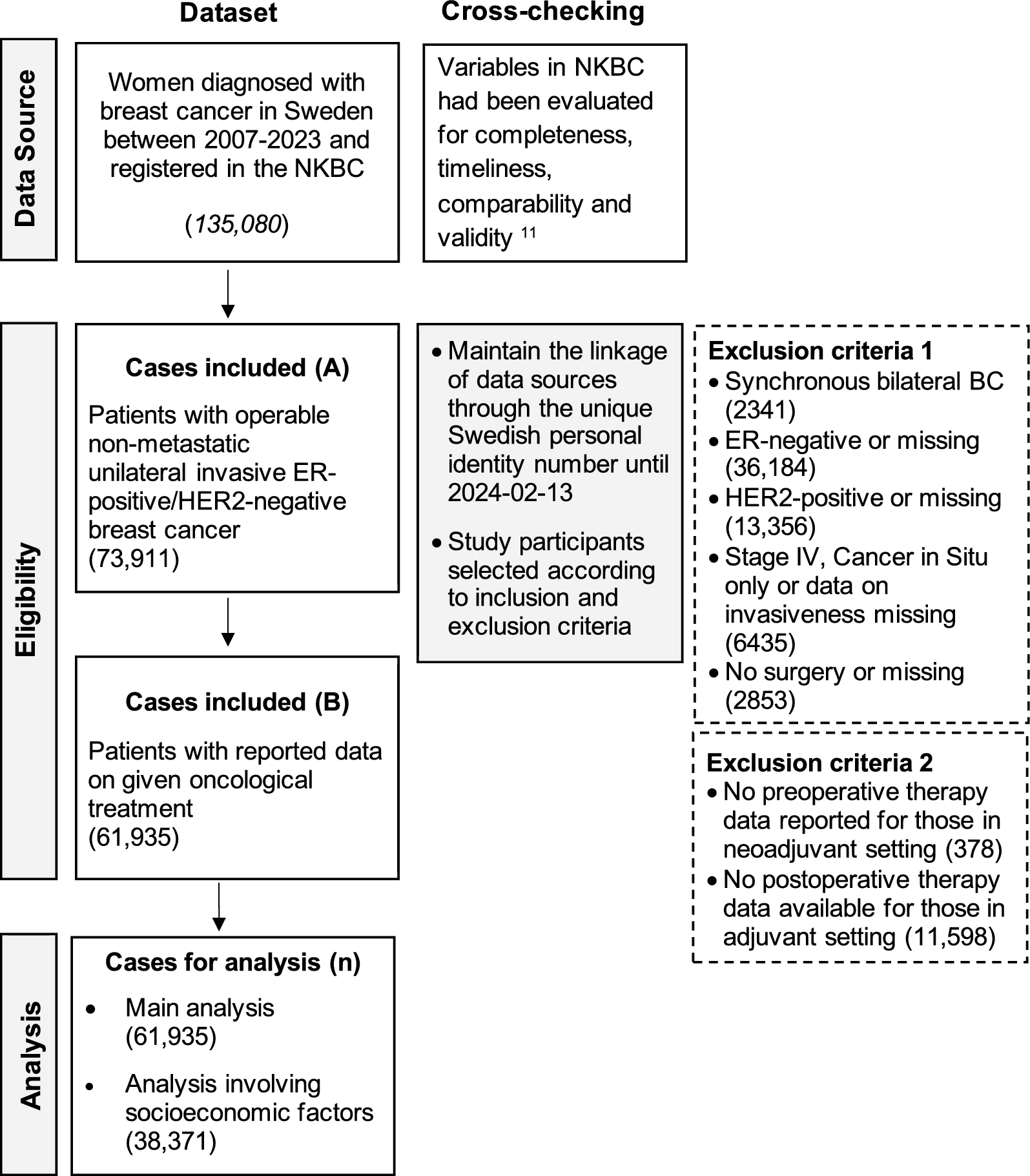
In this population-based cohort study, we included 61,935 women diagnosed with HR+/HER2– early breast cancer between 2007 and 2023, identified through the Swedish National Quality Register for Breast Cancer. Multivariable logistic regression was applied to identify factors that were associated with chemotherapy use across the Swedish healthcare regions. Overall survival was analysed using Kaplan–Meier estimates and regression standardisation based on Cox models, adjusting for clinicopathological and socioeconomic factors.
Findings
Chemotherapy was administered to 28·0% of patients, with substantial regional variation (range 23·0–34·7%). Younger age, larger tumour size, node-positive disease, and higher tumour grade were associated with chemotherapy use. Regional differences in 10-year all-cause mortality persisted after adjustment among patients aged ≥ 65 years but were minimal among those aged < 65 years. The healthcare region with the highest chemotherapy use had the lowest mortality. Socioeconomic factors did not alter these associations.
Interpretation
Chemotherapy use in patients with HR+/HER2– early breast cancer varies across the Swedish healthcare regions despite common guidelines. Among young and middle-aged patients, these differences were not associated with survival disparities. In contrast, among patients aged ≥ 65 years, regional differences in treatment remained associated with differences in prognosis also after socioeconomic adjustments, suggesting undertreatment in some regions. These findings support continued efforts to harmonize implementation of treatment recommendations to ensure equitable care for patients with HR+/HER2 − early breast cancer.