2026-09-08 スタンフォード大学
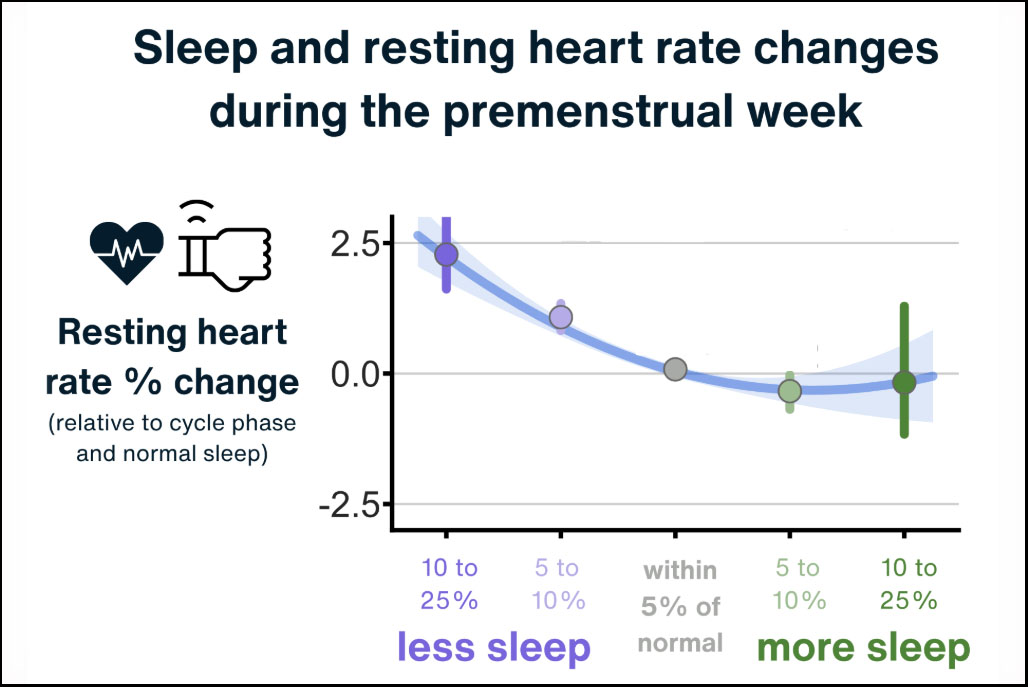
Changes in resting heart rate were similar across the menstrual and postmenstrual weeks. | Adapted from Figure 4c in Gonzalez, O’Day et al., 2026
<関連情報>
- https://news.stanford.edu/stories/2026/09/menstrual-cycle-biometric-signals-wearable-device-sleep
- https://www.nature.com/articles/s41746-026-02799-9
ウェアラブルデバイスを通して見る月経周期:生理機能、睡眠、周期変動に関する考察 The menstrual cycle through the lens of a wearable device: insights into physiology, sleep, and cycle variability
Alexander Gonzalez,Johanna J. O’Day,Sarah C. Johnson,Jeongeun Kim,Summer R. Jasinski,Kristen E. Holmes,Scott L. Delp & Jennifer L. Hicks
npj Digital Medicine Published:25 May 2026
DOI:https://doi.org/10.1038/s41746-026-02799-9
Abstract
Women on average have 450 menstrual cycles in a lifetime, but we lack a characterization of physiological biometrics across the cycle and lifespan. We analyzed 1.2 million days of data from 2596 women who logged 42,759 menstrual cycles and wore a device that collected sleep and biometric data including resting heart rate (RHR), heart rate variability, respiratory rate, skin temperature, and blood oxygen saturation level. We generated novel quantifications of daily biometrics across ages and cycle lengths, finding that cycle length is strongly associated with how much cardiorespiratory metrics vary across the cycle. We observed greater cycle variability for participants who slept 6 versus 8 hours. A within-participant natural experiment showed that decreased sleep resulted in biometric changes regardless of cycle phase (e.g., RHR increased 1.2% with a 10% decrease in weekly sleep duration). These results lay a foundation to better understand and optimize female health and performance.