
2025-10-14 カリフォルニア大学バークレー校 (UCB)
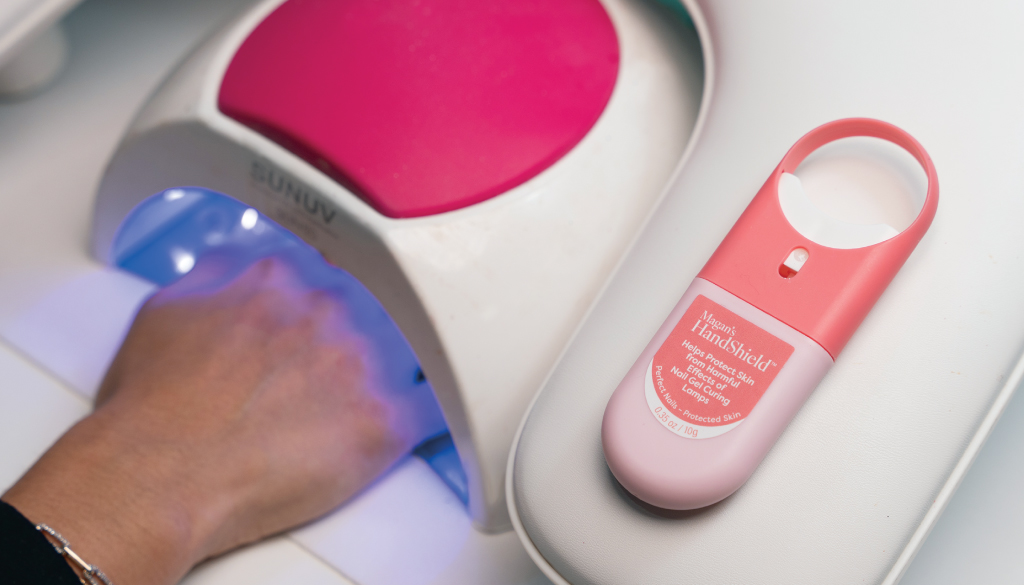
The LED lamps used to cure and harden gel nails emit high-energy ultraviolet radiation in a range referred to as UVA. UVA penetrates deep into the skin and can generate potentially harmful reactive oxygen species (ROS) that mutate DNA in cells, creating a risk of skin cancer. Magan’s HandShield blocks UVA and destroys ROS, helping protect the skin during gel nail hardening.
Image courtesy of Magan’s HandShield
<関連情報>
- https://news.berkeley.edu/2025/10/14/gel-nail-manicures-come-with-exposure-to-skin-damaging-uv-a-uc-berkeley-chemist-has-a-solution/
- https://www.nature.com/articles/s41467-023-35876-8#ref-CR35
マニキュア乾燥機による照射後の哺乳類細胞のDNA損傷と体細胞変異 DNA damage and somatic mutations in mammalian cells after irradiation with a nail polish dryer
Maria Zhivagui,Areebah Hoda,Noelia Valenzuela,Yi-Yu Yeh,Jason Dai,Yudou He,Shuvro P. Nandi,Burcak Otlu,Bennett Van Houten & Ludmil B. Alexandrov
Nature Communications Published:17 January 2023
DOI:https://doi.org/10.1038/s41467-023-35876-8
An Author Correction to this article was published on 14 March 2023
This article has been updated
Abstract
Ultraviolet A light is commonly emitted by UV-nail polish dryers with recent reports suggesting that long-term use may increase the risk for developing skin cancer. However, the effect of radiation emitted by UV-nail polish dryers on the physiology and mutagenesis of mammalian cells remains unclear. Here, we show that irradiation by a UV-nail polish dryer causes high levels of reactive oxygen species, consistent with 8-oxo-7,8-dihydroguanine damage and mitochondrial dysfunction. Analysis of somatic mutations reveals a dose-dependent increase of C:G>A:T substitutions in irradiated samples with mutagenic patterns similar to mutational signatures previously attributed to reactive oxygen species. In summary, this study demonstrates that radiation emitted by UV-nail polish dryers can both damage DNA and permanently engrave mutations on the genomes of primary mouse embryonic fibroblasts, human foreskin fibroblasts, and human epidermal keratinocytes.

