2025-10-13 デラウェア大学
<関連情報>
- https://www.udel.edu/udaily/2025/october/spring-wheat-bacteria-protein-research/
- https://www.frontiersin.org/journals/microbiology/articles/10.3389/fmicb.2025.1637050/full
Streptomyces coelicolorと植物の関連性がTriticum aestivumにおけるエルゴチオネインの取り込みを促進する
Streptomyces coelicolor-plant association facilitates ergothioneine uptake in Triticum aestivum
Alexandra Pipinos,Jinjun Kan,Andrew SmithG,ladis Zinati,Harsh Bais
Frontiers in Microbiology Published:18 July 2025
DOI:https://doi.org/10.3389/fmicb.2025.1637050
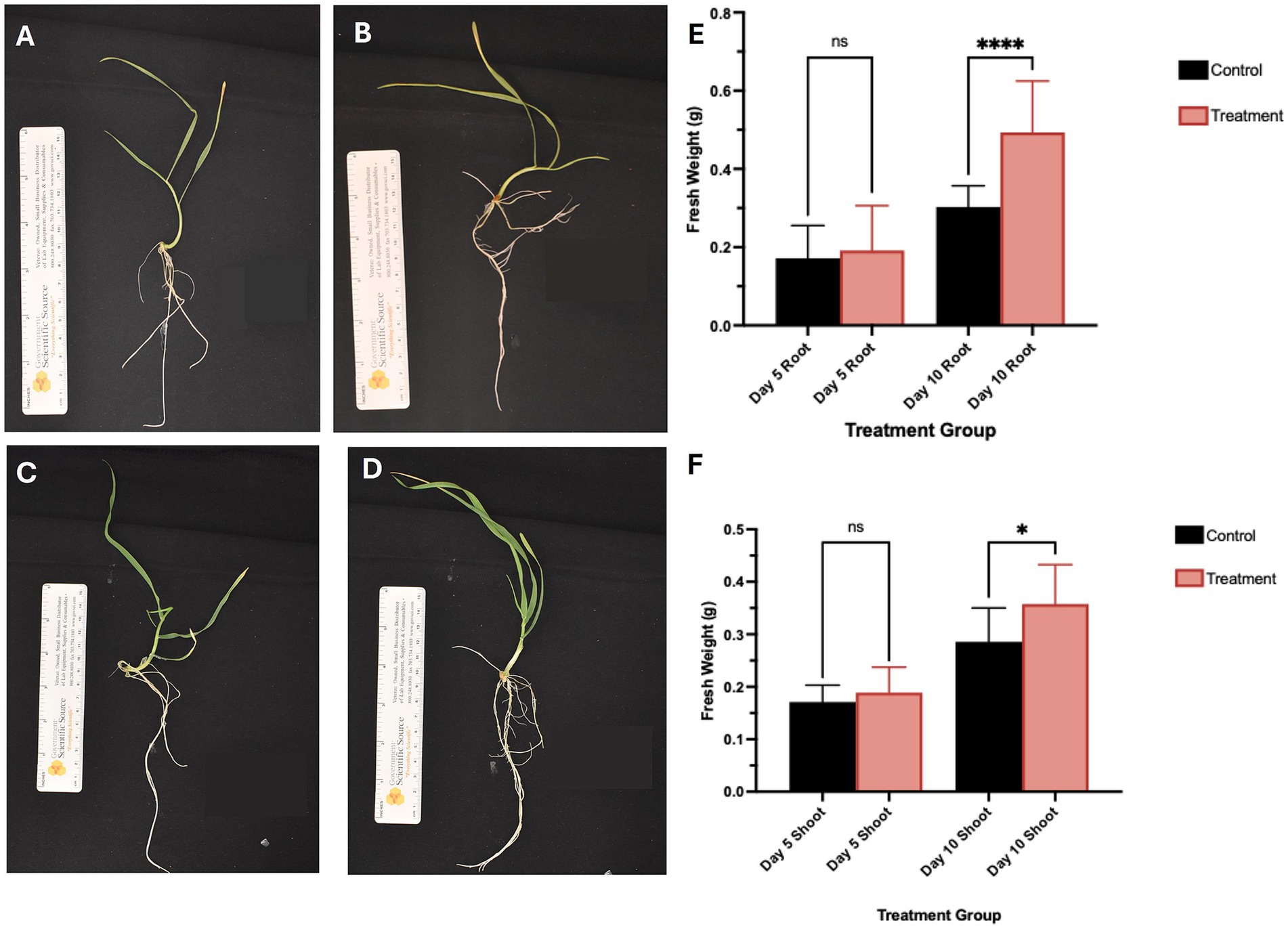
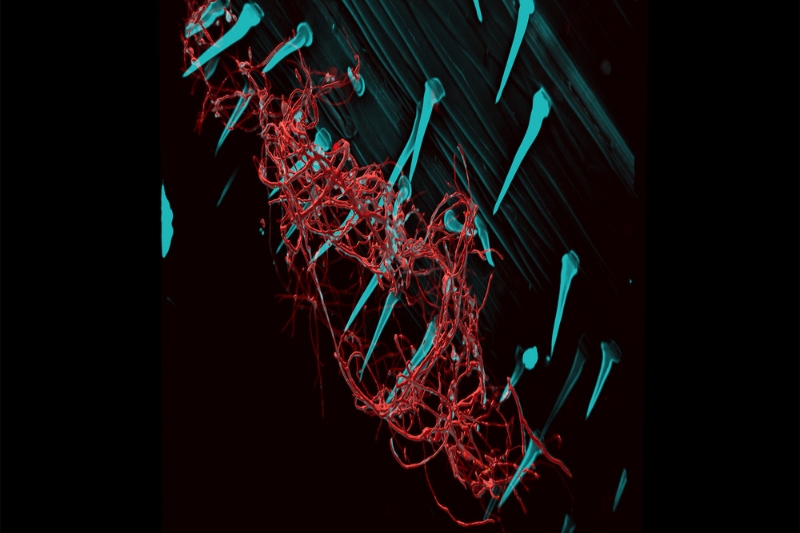
The growing market of agricultural biologicals as alternatives to synthetic crop chemicals is driven by their ability to improve soil health, reduce carbon footprints, enhance crop yield and quality, and help counter declining protein levels in cereal crops linked to climate change and soil degradation. Ergothioneine (EGT), an amino acid with recognized nutraceutical and micronutrient properties, has gained popularity for its anti-inflammatory and antimicrobial properties on human health. While plants and humans cannot biosynthesize EGT, its production by Streptomyces coelicolor presents as a promising bio-stimulant to support overall plant and human health. Our study investigates the potential for S. coelicolor M145 to enhance EGT levels in spring wheat (Triticum aestivum). Results confirmed successful EGT extraction from bacterial cell extracts and plant tissues. The bacterial cells grown in nutrient rich media showed significant levels of EGT post day 7 of incubation, with an average of 0.32 μM of EGT, while bacteria growing in the limiting nutrient condition produced an average of 0.27 μM EGT. In parallel, wheat plants inoculated with S. coelicolor and extracted for EGT on day 10 post incubation, showed higher shoot EGT content (0.1168 ± 0.071 μM) in bacteria treated plants. Additionally, a fluorescent confocal microscopy staining and imaging protocol showed bacterial colonization on T. aestivum and its potential as a root endophyte. Following root inoculation, S. coelicolor was observed to inhabit roots, shoots, and internodes of T. aestivum, suggesting its potential endophytic lifestyle on host plants. Our data showed that S. coelicolor-associated wheat plants produce EGT in planta. Overall, our findings establish a direct link between soil and human health through rhizosphere colonization by S. coelicolor and in planta production of EGT, suggesting an alternate route to enhance protein concentration in crop plants.