2026-04-22 東京科学大学
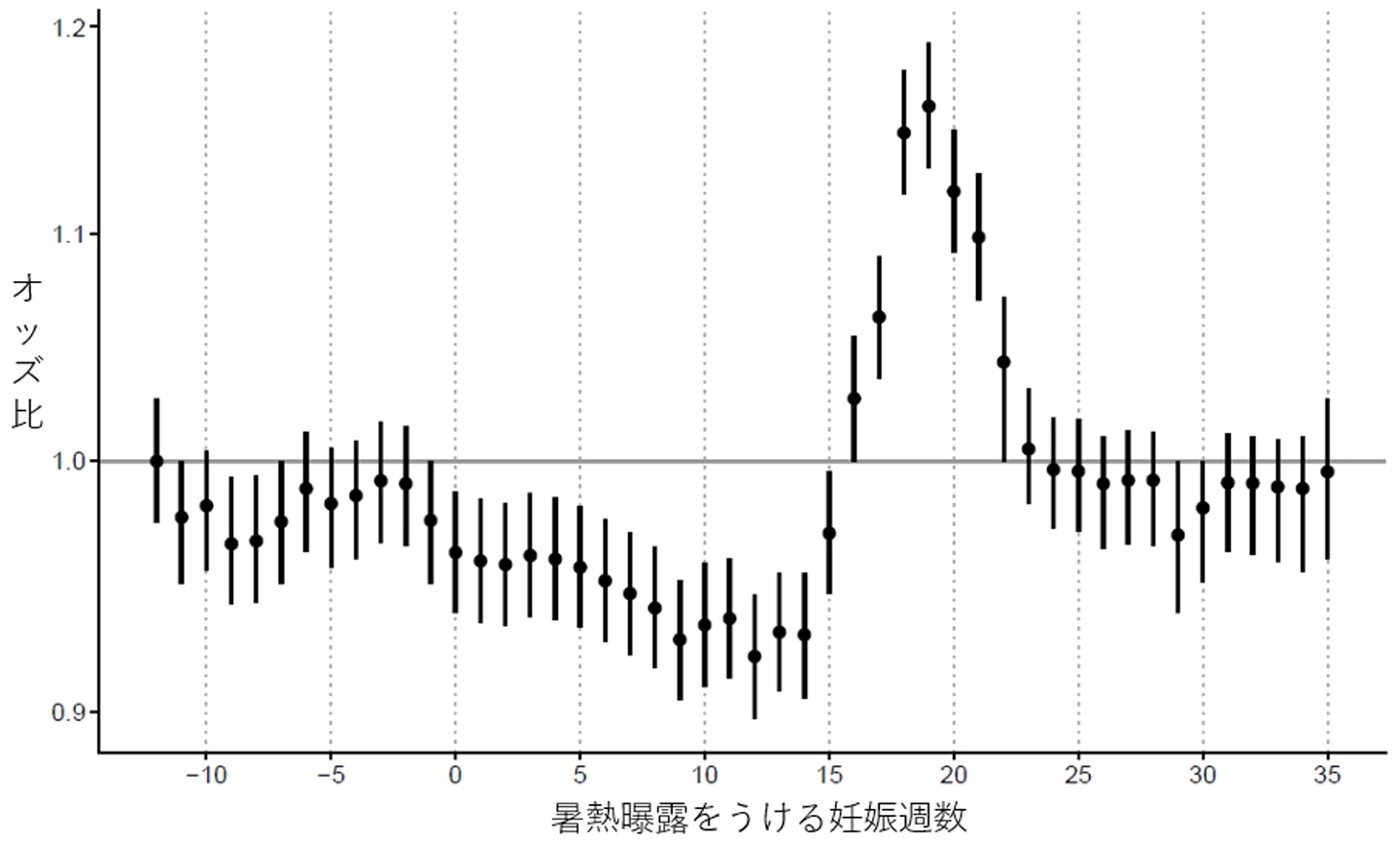
図1. 各妊娠週数別の暑熱曝露と早産リスクの関連
<関連情報>
- https://www.isct.ac.jp/ja/news/cmxdqfl2zz5h#top
- https://academic.oup.com/aje/advance-article-abstract/doi/10.1093/aje/kwag070/8559255
早産に関連する妊娠中の重要な熱曝露期間:全国規模の観察研究 Critical gestational windows of heat exposure associated with preterm birth: a nationwide observational study
Shuhei Terada,Hisaaki Nishimura,Naoyuki Miyasaka,Nobutoshi Nawa,Takeo Fujiwara
American Journal of Epidemiology Published:30 March 2026
DOI:https://doi.org/10.1093/aje/kwag070
Abstract
Emerging evidence links high ambient temperature to an increased risk of preterm birth (PTB), yet the critical gestational windows of heat exposure remain unclear. We analyzed data from the Japan Perinatal Registry Network (2016–2020), including 986 207 singleton live births. Weekly heat exposure was defined using the prefecture-specific annual 90th percentile of weekly mean temperature, with analyses restricted to May–September. Logistic regression models were fitted for each gestational week from -12 to 35, adjusting for maternal age, parity, pre-pregnancy body mass index, smoking status, history of PTB, the weekly moving average of relative humidity, and month and year of conception. Critical windows were identified using Bayesian hierarchical modeling with smoothing and variable selection. Heat exposure was associated with increased PTB risk during gestational weeks 16–22, peaking at week 19 (odds ratio: 1.16; 95% credible interval: 1.13–1.19). Subtype analyses indicated peak susceptibility at week 16 for extremely preterm (<28 weeks), week 18 for very preterm (28–31 weeks), and week 19 for moderate-to-late preterm (32–36 weeks) births. Modest inverse associations were observed in early gestation. These results indicate that the second trimester, particularly gestational weeks 16–22, may represent a critical window for heat-related PTB, underscoring the importance of targeted preventive strategies.