2026-05-13 インペリアル・カレッジ・ロンドン(ICL)
<関連情報>
- https://www.imperial.ac.uk/news/articles/2026/obesity-rates-levelling-off-and-even-declining-in-many-nations-says-global-progress-report/
- https://www.nature.com/articles/s41586-026-10383-0
先進国では肥満の増加が横ばいとなり、発展途上国では加速している Obesity rise plateaus in developed nations and accelerates in developing nations
NCD Risk Factor Collaboration (NCD-RisC)
Nature Published:13 May 2026
DOI:https://doi.org/10.1038/s41586-026-10383-0
Abstract
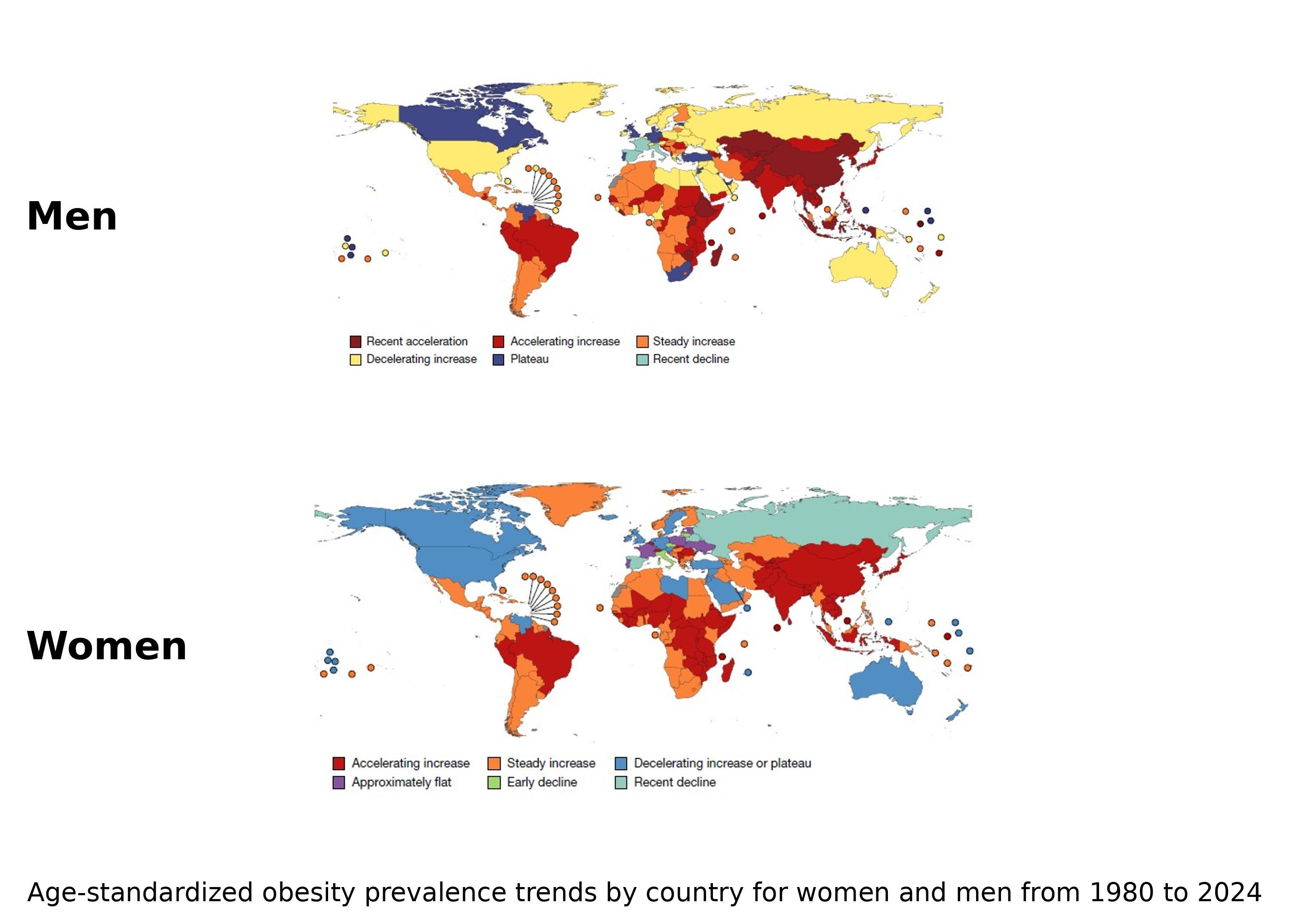
Global reporting of obesity is commonly based on comparisons over multiple decades1 and lacks a granular and systematic analysis of its dynamics. We used 4,050 population-based studies with measured height and weight data on 232 million participants to assess the worldwide dynamics of obesity from 1980 to 2024. The rise in obesity decelerated in school-aged children and adolescents throughout the 1990s in many high-income countries, and subsequently plateaued in most at age-standardized prevalences spanning 20 percentage points, from 3–4% for girls in Japan, Denmark and France to 23% for boys in the USA. There were indications of a small decline in obesity in children and adolescents in some high-income western countries (for example, Italy, Portugal and France) since the 2000s. Similar trends were seen in some countries in Central and Eastern Europe. In adults, the rise in obesity slowed down in high-income western countries about a decade after children, followed by a plateau or possibly a small reversal of the rise in some countries (for example, Spain). In most low-income and middle-income countries, the annual absolute change in prevalence has remained stable or increased over time, even though prevalence has surpassed that of high-income countries. These highly varied dynamics suggest that the social, economic and technological trends that influence the availability, affordability and use of different foods may have helped control the rise in obesity in high-income countries, but require policy interventions in low-income and middle-income countries.