
2026-05-15 ペンシルベニア州立大学(Penn State)
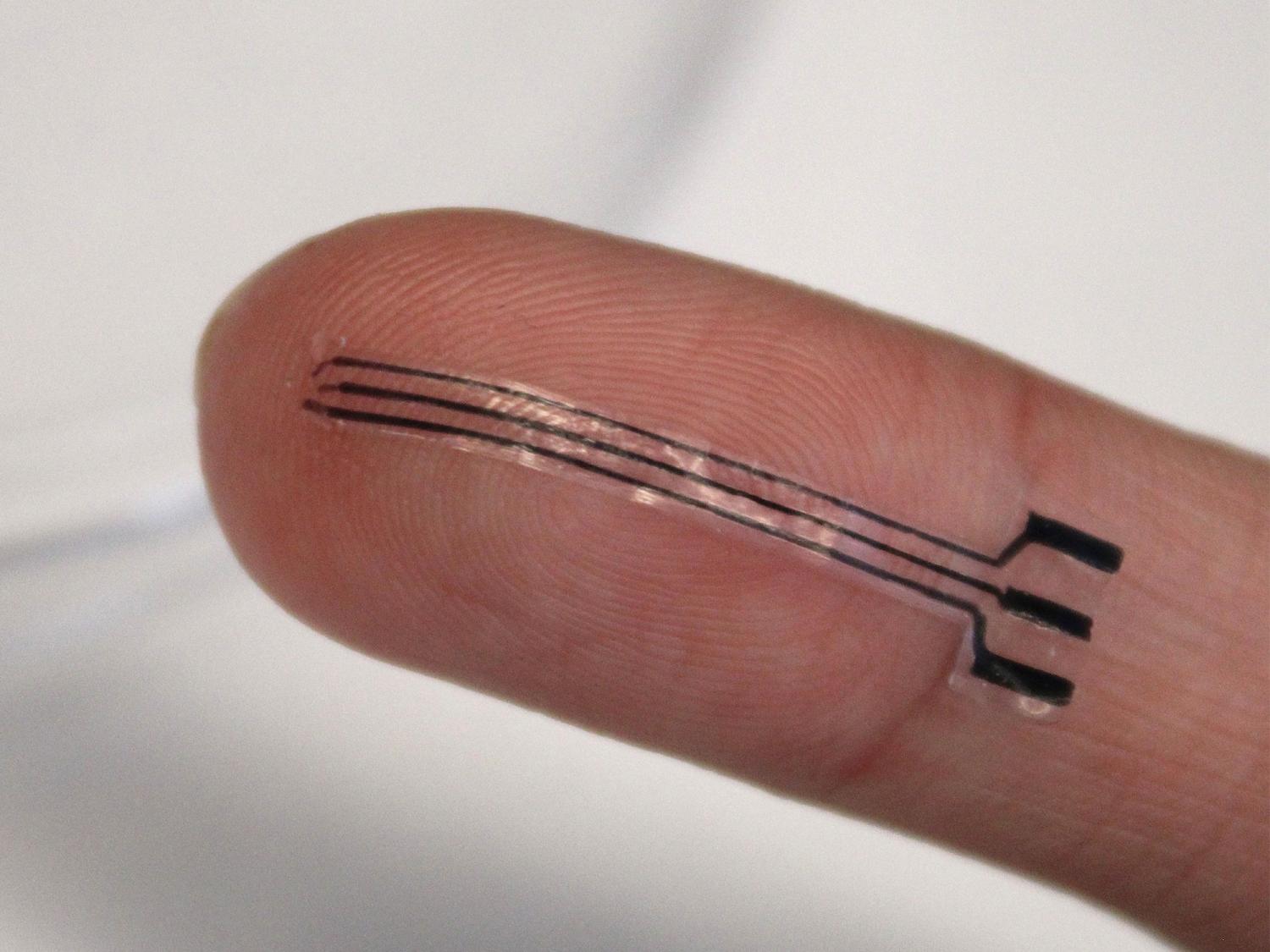
Even though the team’s new bioelectronic is only about the size of a fingertip, it could offer an effective and biocompatible approach to addressing high blood pressure. Credit: Provided by Tao Zhou. All Rights Reserved.
<関連情報>
- https://www.psu.edu/news/research/story/stretchy-implants-could-stick-arteries-treat-high-blood-pressure
- https://www.cell.com/device/abstract/S2666-9986(26)00102-X
高血圧治療のための3Dプリント可能な縫合不要の生体接着性電子インターフェース 3D printable suture-free bioadhesive electronic interface for hypertension therapy
Marzia Momin ∙ Salahuddin Ahmed ∙ Arafat Hossain ∙ … ∙ Umar Farooq ∙ John Bisognano ∙ Tao Zhou
Device Published:May 5, 2026
DOI:https://doi.org/10.1016/j.device.2026.101150
The bigger picture
Hypertension is one of the leading causes of morbidity and mortality worldwide. Many patients still suffer from high blood pressure regardless of various types of antihypertensive medications. This persistent unmet need has motivated the development of alternative therapies, such as bioelectronic approaches that modulate the body’s natural reflexes. However, current devices are limited by invasive surgical procedures and poor mechanical compatibility with soft vascular tissues. Here, we introduce a new approach that combines soft, stretchable hydrogel-based materials with a suture-free adhesive interface to enable safer and more stable interaction with the carotid sinus for the treatment of hypertension. This approach will eliminate suture fixation and will have the potential to improve patient comfort and expand the use of bioelectronic therapies for cardiovascular diseases. More broadly, these findings suggest a pathway toward next-generation implantable devices that seamlessly integrate with dynamic organs, advancing the future of bioelectronic medicine.
Highlights
- Suture-free bioadhesive interface for hypertension therapy
- Soft, stretchable bioelectronic device for seamless interaction with tissue
- Suture-free bioadhesive approach for intact integration with minimal invasiveness
Summary
Hypertension is a major global contributor to morbidity and mortality due to uncontrolled blood pressure, leading to cardiovascular, renal, and cerebrovascular complications. Electrical stimulation of the carotid sinus baroreflex (CSB) offers a promising alternative therapy; however, current devices require suture-based fixation, leading to invasive implantation, tissue damage, and poor long-term stability. Here, we report CaroFlex, a next-generation CSB activation device that integrates soft, stretchable hydrogel-based electrodes with a bioadhesive interface to achieve suture-free fixation on the carotid sinus. In vivo studies in rats demonstrated its stable adhesion on the carotid sinus and effective baroreflex stimulation without sutures. Through soft and bioadhesive material engineering and a suture-free fixation strategy for stimulating the CSB, CaroFlex establishes a framework for minimally invasive, chronic bioelectronic therapies for hypertension or other cardiovascular disorders.

