2026-06-04 カロリンスカ研究所(KI)
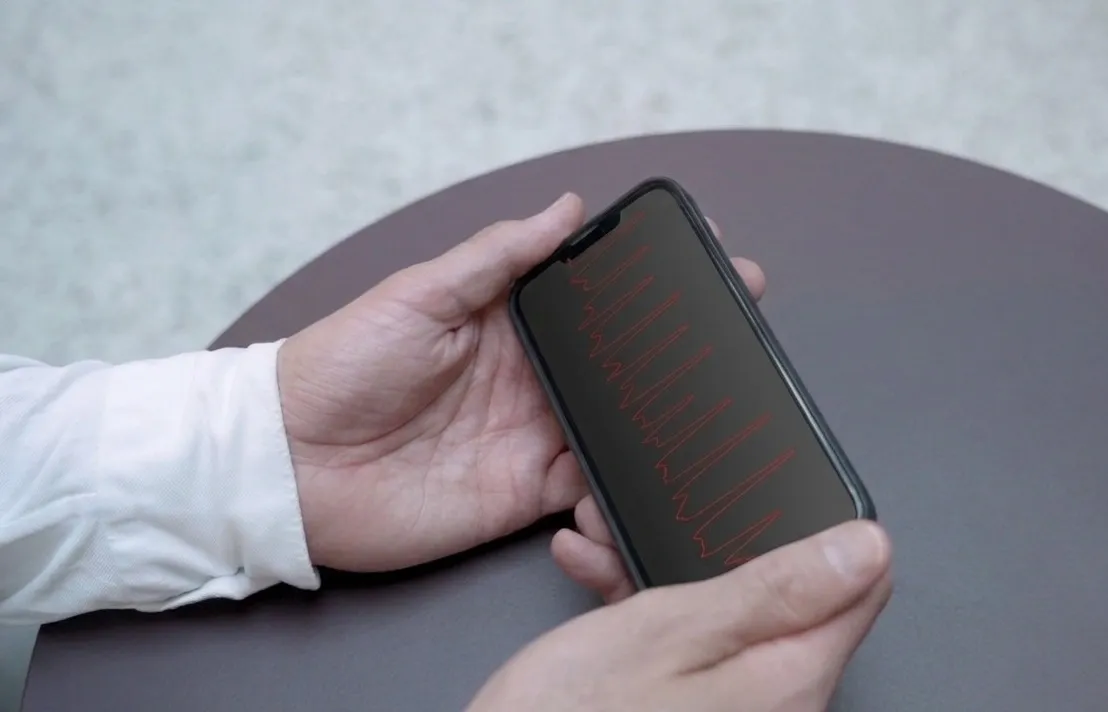
The phone’s camera is used to measure small changes in blood flow in the fingertip. Photo: Jonatan Fernstad
<関連情報>
- https://news.ki.se/heart-rhythm-monitoring-with-a-smartphone-could-save-healthcare-resources
- https://jamanetwork.com/journals/jamacardiology/article-abstract/2849970
スマートフォン光電脈波計を用いた心臓電気的除細動前の心拍リズムモニタリング SMARTBEATS無作為化臨床試験 Precardioversion Heart Rhythm Monitoring Using Smartphone Photoplethysmography The SMARTBEATS Randomized Clinical Trial
Jonatan Fernstad, MD, PhD, MSc; Emma Svennberg, MD, PhD; Peter Åberg, PhD;et al
JAMA Cardiology Published:June 3, 2026
DOI:10.1001/jamacardio.2026.1269
Key Points
Question Is daily ambulatory heart rhythm monitoring precardioversion using smartphone photoplethysmography more effective than standard of care in reducing the number of same-day cancellations in scheduled cardioversions?
Findings In this randomized clinical trial including 203 participants, daily heart rhythm monitoring initiated 1 to 2 weeks prior to scheduled cardioversion for atrial fibrillation using smartphone photoplethysmography and reminders of anticoagulation compliance was superior to standard of care in reducing same-day cancellations.
Meaning The findings suggest that precardioversion rhythm monitoring using smartphone photoplethysmography could support the optimization of health care resources.
Abstract
Importance Scheduled cardioversion is a common and resource-intensive procedure in rhythm treatment of atrial fibrillation and atrial flutter. Cancellations of cardioversion procedures are common due to spontaneous conversion to sinus rhythm.
Objective To study the efficacy and feasibility of precardioversion rhythm monitoring using smartphone photoplethysmography compared to standard of care in scheduled cardioversion of atrial fibrillation.
Design, Setting, and Participants This randomized, single-blinded study took place at a tertiary hospital in Sweden. Adult patients (≥18 years) with persistent atrial fibrillation or flutter scheduled for cardioversion were included. Exclusion criteria were having a cardiac implantable electronic device or inability to consent or comply with study procedures. The study took place from September 2022 to February 2025.
Interventions Precardioversion ambulatory heart rhythm monitoring using smartphone photoplethysmography and reminders to support adherence to anticoagulation in the intervention group compared to standard of care (no intervention). Heart rhythm recordings were automatically transferred following recording and overread daily. A single-lead electrocardiogram recording was made simultaneous to each photoplethysmography recording for validation purposes. In case of spontaneous conversion to sinus rhythm in the intervention group, participants were contacted and cardioversion was canceled. In the control group, no further action was taken in case of rhythm conversion.
Main Outcome and Measures The primary efficacy outcome was proportion of same-day cancellations of scheduled atrial fibrillation or flutter cardioversions.
Results In total, 206 patients were randomized, with 105 participants assigned to intervention and 101 assigned to control (standard care). Three participants were excluded after randomization due to having a cardiac implantable device, leaving 104 and 99 participants for final analysis in the intervention and control group, respectively. The median (IQR) age was 69.7 (61.6-75.6) years and 149 (72.3%) were male. The participants performed 5226 heart rhythm recordings precardioversion, and the median (IQR) number of daily recordings per participant precardioversion was 2.1 (2.0-2.3). There were 4.8% (5/104) same-day cancellations of scheduled cardioversions in the intervention group compared to 23.2% (23/99) in the control group (P < .001). For same-day cancellations due to spontaneous sinus rhythm conversion, the corresponding results were 1.0% (1/104) vs 18.2% (18/99) (P < .001).
Conclusions and Relevance The results of this study suggest that precardioversion monitoring using smartphone photoplethysmography represents a highly scalable digital intervention that significantly reduced same-day cancellations.
Trial Registration ClinicalTrials.gov Identifier: NCT04300270