2026-06-08 ジョンズ・ホプキンス大学(JHU)
<関連情報>
- https://hub.jhu.edu/2026/06/08/study-explains-hiv-persistence-in-blood-following-treatment/
- https://www.nature.com/articles/s41467-026-73475-5
5′リーダー配列の欠陥が長期ART治療中のHIV-1ウイルス血症の持続を引き起こす 5′ leader defects drive persistent HIV-1 viremia on long-term ART
Julia R. Box,Angelica Camilo-Contreras,Filippo Dragoni,Feng Yun Yue,Vitaliy Matveev,Jackson Foley,Jianwei Zhang,Yan Wei Mok,Marlene DeSousa,Jun Lai,Zachary Mulcare,Zachary Bakewell,Sebastien Poulin,Frederic Chano,Claude Fortin,Cecile Tremblay,Joel N. Blankson,Sonya Krishnan,Ethel D. Weld,Christie Basseth,Matthew M. Hamill,Christopher J. Hoffmann,Eileen P. Scully,Joyce L. Jones,… Francesco R. Simonetti
Nature Communications Published:08 June 2026
DOI:https://doi.org/10.1038/s41467-026-73475-5
Abstract
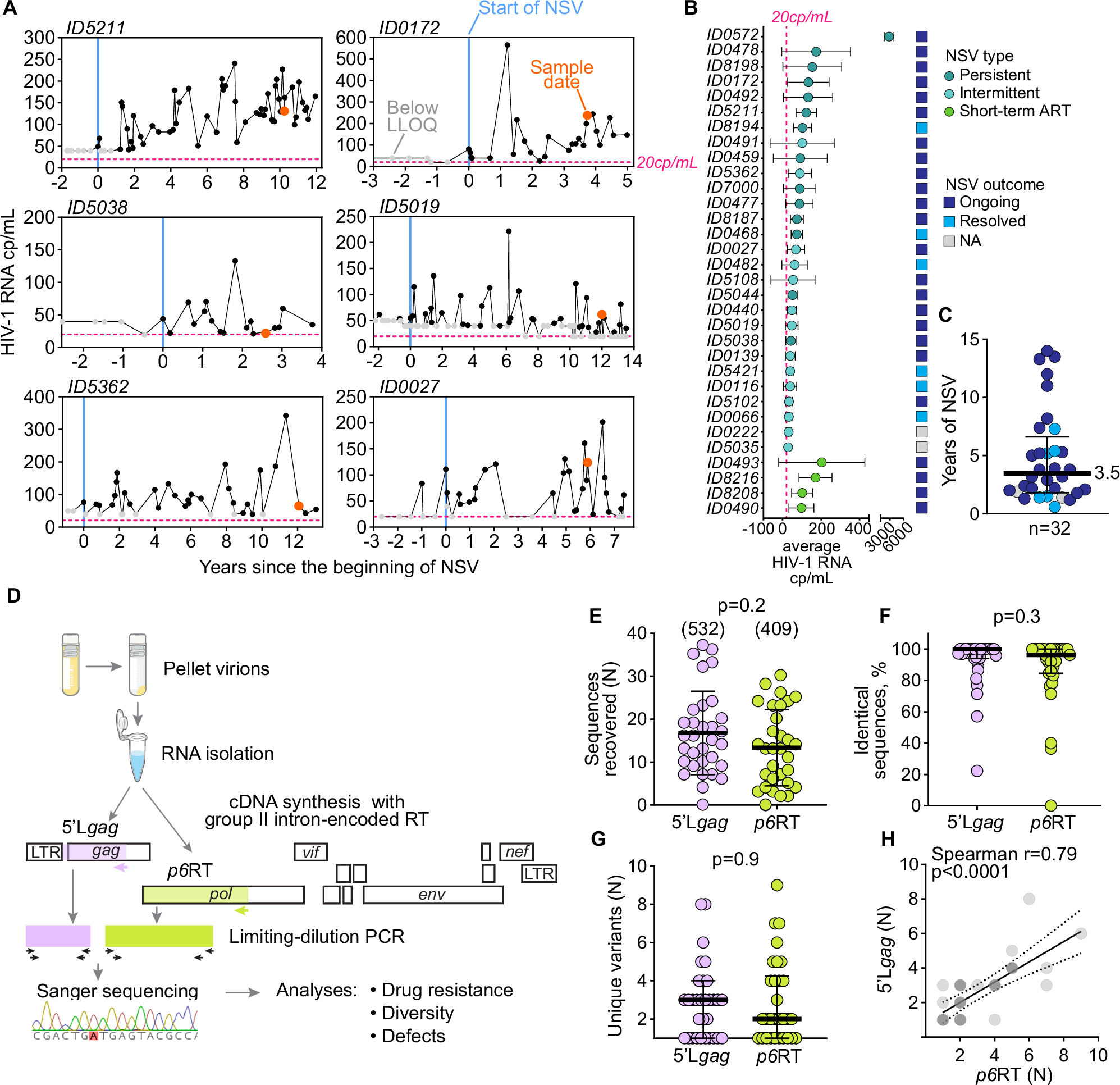
Traces of HIV-1 RNA can persist in plasma despite long-term suppressive antiretroviral therapy (ART). Some individuals develop nonsuppressible viremia (NSV), characterized by detectable HIV-1 RNA that raises concerns for virological failure, pathogenesis, and transmission. The sources of NSV remain poorly defined, in part due to limited tools to characterize plasma HIV-1 RNA. Both infectious and defective proviruses, including those with defects in the 5′ Leader (5′L), can contribute to NSV, but their relative contributions have not been quantified. Here we show that in over 50 participants, plasma viremia is markedly driven by highly clonal HIV-1 RNA populations carrying defects in the 5′L. Across individuals, dominant clones with 5′L defects clustered around the major splice donor (MSD) accounted for the vast majority of circulating HIV-1 RNA. To enable rapid, scalable profiling, we developed CLAWS (Capturing 5′ Leader Anomalies Without Sequencing), a digital PCR assay that distinguishes intact from defective 5′L RNA. CLAWS recapitulated sequencing-based estimates and detected low-abundance defective RNA early after ART initiation, revealing that defective genomes emerge early and become predominant during long-term therapy. These findings identify 5′L-defective genomes as the predominant driver of NSV and establish CLAWS as a practical tool for monitoring viremia in clinical and cure-related settings.