2026-06-09 コロンビア大学
<関連情報>
- https://www.publichealth.columbia.edu/news/new-research-links-even-low-alcohol-consumption-cancer-heart-disease-premature-death
- https://www.jsad.com/doi/full/10.15288/jsad.25-00435
アルコール摂取と健康に関する研究:低レベルの摂取では保護効果はなく、週14杯の飲酒で死亡率が25人に1人に上昇 Alcohol Intake and Health Study: No Protective Effect at Low Levels, With Mortality Increasing to 1 in 25 at 14 Drinks Per Week
Sinead George,Timothy S. Naimi,Katherine Keyes, Priscilla Martinez-Matyszczyk,Adam J. Milam , …
Journal of Studies on Alcohol and Drugs Published:June 08, 2026
DOI:https://doi.org/10.15288/jsad.25-00435
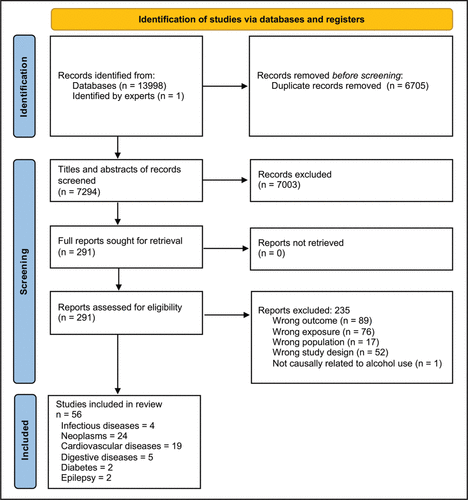
Abstract
Objective:
The purpose of this study was to estimate the lifetime risk of alcohol-attributable mortality and morbidity in the United States based on a person’s average lifetime weekly alcohol consumption to assess the impact of per-occasion alcohol consumption on health.
Method:
Lifetime risks were estimated using a cause-specific modeling approach that combined exposure data from national health surveys, relative risks, population data from the U.S. Census Bureau, mortality data from the Centers for Disease Control and Prevention, and morbidity data from the Institute for Health Metrics and Evaluation. A narrative review assessed the health impact of per-occasion alcohol consumption on health.
Results:
At low levels of consumption, no protective net effect of alcohol consumption on health was observed. Elevated mortality and morbidity risks were associated with alcohol consumption starting at relatively low levels. Males consuming >6.5 (95% CI [<1, 13.5]) and females consuming >7.0 (95% CI [<1, 11.5]) drinks per week had life-time alcohol-attributable mortality risks >1:1,000. At >8.5 (95% CI [2.5, 13]) drinks per week for both males and females, these risks increased to >1:100. At 14 drinks per week for males (the upper limit of the former Dietary Guidelines for males), the risk of an alcohol-caused death was 1:25 (4%). Drinking patterns also impacted risk. Above 1 drink per occasion, higher consumption was associated with progressively increased risks of breast cancer, cardiovascular disease, and injury.
Conclusions:
Alcohol consumption, including at what may be perceived as “moderate” levels, is associated with increased mortality and morbidity risks. These results support tightening alcohol use guidance in the United States, for both males and females, to no more than 1 drink per day.
Public health significance statement: The Alcohol Intake and Health Study shows that for Americans, even what is socially considered “moderate drinking” increases the risk of dying or developing health problems, helping people better understand the net health impact of alcohol. Furthermore, by identifying the levels of alcohol use that raise the risk of cancer, cardiovascular disease, and injury, these findings can guide individuals, families, and communities in making safer choices about drinking patterns. The results also support changing the U.S. Dietary Guidelines on alcohol to recommend that current adult drinkers consume 1 drink or less in a day.