2026-06-24 カリフォルニア大学サンディエゴ校(UCSD)
<関連情報>
- https://today.ucsd.edu/story/investigational-drug-could-control-cholesterol
- https://www.nature.com/articles/s41586-026-10697-z
食事性コレステロールは、LDLRのターンオーバーを促進するRal依存性経路を活性化する Dietary cholesterol activates a Ral-dependent pathway driving LDLR turnover
Xue Feng,Shuo Zhang,Yuqi Wang,Twisha Kurlagunda,Allyssa Sit,Priyadarshini Jaishankar,Pusu Yang,Sadatsugu Sakane,Se Yong Park,Churaibhon Wisessaowapak,Kaylee Nguyen,Jamie Yan,Himani Pothulu,Catherine Dinh,Felicia Chu,Yuyao Ren,Bichen Zhang,Patrick Secrest,Linmeng Han,Chao-Wei Hung,Preethi Veeragandham,Yuliya Skorobogatko,Tatiana Kisseleva,Philip L.S.M. Gordts,… Alan R. Saltiel
Nature Published:24 June 2026
DOI:https://doi.org/10.1038/s41586-026-10697-z
Abstract
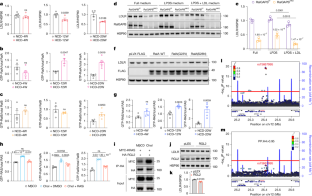
Metabolism of the hepatic low-density lipoprotein receptor (LDLR) is a key determinant of cholesterol homeostasis1,2. The molecular switches that coordinate LDLR trafficking and turnover in response to nutritional cues, including high dietary cholesterol, remain poorly defined3,4,5,6. Here we identify a new pathway regulated by Ral GTPases that links extracellular cholesterol signals to the intracellular trafficking machinery controlling LDLR turnover. Chronic dietary cholesterol activates the Ral proteins by increasing RAS activity, routing LDLR to lysosomes for degradation and inhibiting its recycling independently of transcriptional regulation or PCSK9. Constitutive activation of Ral via RalGAPB deletion or overexpression of constitutively active Ral mutants in hepatocytes reduces LDLR levels and impairs cholesterol clearance. Ral engages the endocytic RalBP1–REPS1 complex to promote LDLR internalization and lysosomal routing, where LDLR is degraded by the lysosomal protease cathepsin A (CTSA). Ral activation directs CTSA towards lysosomes for maturation while limiting its secretion, further promoting LDLR degradation in lysosomes. Genetic variants in this pathway significantly associate with altered cholesterol in humans. Pharmacological inhibition of CTSA activity increases hepatic LDLR function and improves cholesterol clearance, offering a potential new therapeutic strategy for hypercholesterolaemia and cardiovascular disease.